
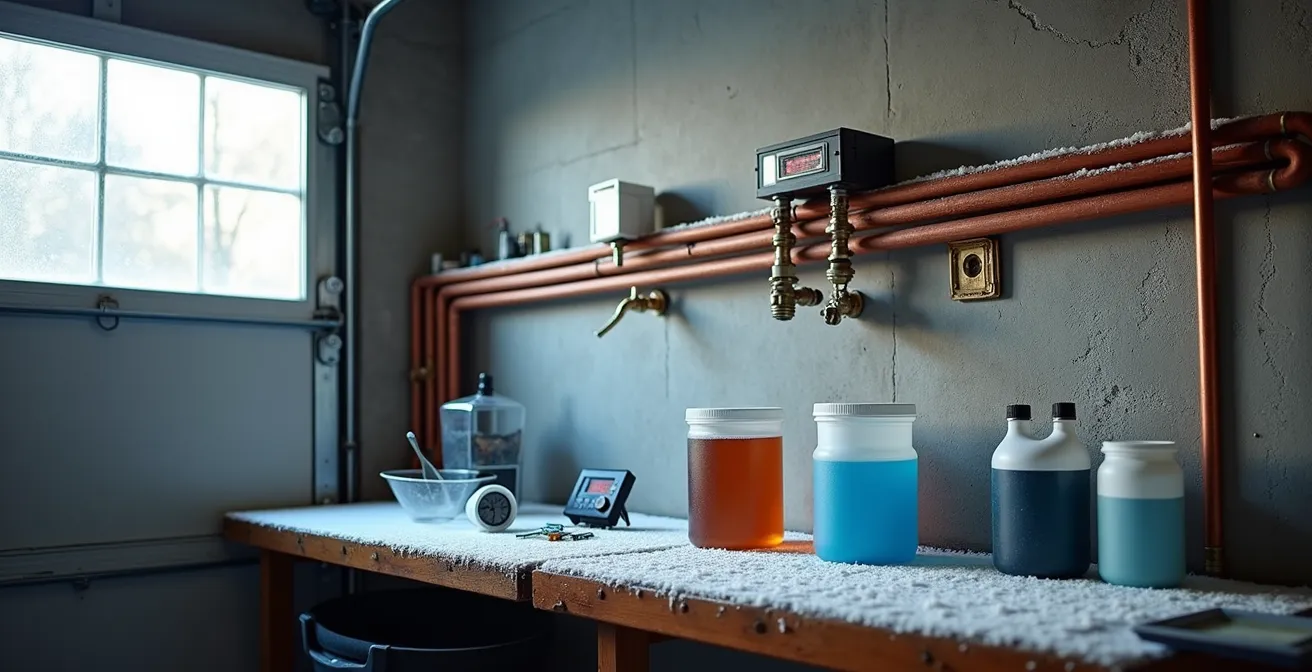
Relying on water alone for your garage’s radiant heating in Quebec is not a calculated risk; it’s an eventual catastrophe. The switch to propylene glycol is a mandatory upgrade for system survival.
- Glycol provides “burst protection” even if it turns to slush, unlike water which expands with destructive force.
- The higher viscosity and lower heat capacity of glycol require a systemic approach, impacting pump selection and air purging methods.
Recommendation: Treat your heating loop as a complete chemical and mechanical system. Annually test your glycol’s pH and ensure your concentration is appropriate for your specific region’s lowest temperatures, not just the provincial average.
As a Quebec homeowner with a heated garage or driveway, you appreciate the comfort of a hydronic system. But as winter nights plummet to -30°C or even -35°C, a terrifying question emerges: is the water in those pipes a ticking time bomb? Many believe that simply keeping the heat on is enough protection. This is a dangerous misconception. A power outage, a failed circulator pump, or a simple thermostat glitch can allow the water in your slab to freeze, expand, and rupture pipes, leading to catastrophic damage buried in concrete.
The common solution is to add “antifreeze,” but this view is dangerously simplistic. Upgrading to a propylene glycol-water mixture is not just adding a chemical; it’s a fundamental change in your system’s fluid dynamics and chemical stability. It requires a shift in thinking from simply preventing a solid freeze to managing viscosity, corrosion, and thermal efficiency. This isn’t about pouring a jug of fluid into a tank; it’s about re-engineering your system’s lifeblood to withstand the brutal, unforgiving reality of a Quebec winter.
This guide will move beyond the basics of “glycol prevents freezing.” We will delve into the science behind choosing the correct concentration for survival, maintaining the chemical health of your fluid to prevent internal corrosion, and adapting your hardware to handle this more demanding, yet essential, protective fluid. We will explore the critical differences between glycol types and why one is a safe necessity while the other is a toxic hazard. Finally, we will put this into the practical context of installing and maintaining these systems within a concrete slab, ensuring your investment is protected for decades.
Explore the critical aspects of using glycol in your hydronic system to ensure your home is prepared for the harshest winter conditions. This article details everything you need to know to make informed decisions for long-term protection and efficiency.
Summary: A Homeowner’s Guide to Glycol in Hydronic Heating
- 30% vs. 50% Glycol Mix: What Ratio Survives a -35°C Night?
- Glycol pH: Why an Acidic Fluid Corrodes Your Boiler from the Inside
- How to Purge Air Bubbles from a Viscous Glycol Circuit
- Glycol Pumps: Why Do You Need More Power Than for Pure Water?
- Ethylene vs. Propylene: Which One is Toxic and Banned in Residential Use?
- How to Insulate Your Cold Water Pipes for Under $50 CAD
- Heated Structural Slab: How to Secure PEX Tubing Before Pouring Concrete
- Is Radiant Floor Heating Worth the Cost for a Basement Renovation?
30% vs. 50% Glycol Mix: What Ratio Survives a -35°C Night?
The most critical decision when preparing your hydronic system is the glycol-to-water ratio. This isn’t a one-size-fits-all number; it’s a calculated defense against the lowest possible temperature your system will face. In Quebec, this means planning for the absolute worst-case scenario, like a multi-day power outage during a polar vortex. The key is understanding the difference between freeze protection and burst protection. Freeze protection is the point where ice crystals begin to form, turning the fluid into a slush. Burst protection is a lower temperature at which the fluid will not expand and rupture your pipes, even if it’s no longer pumpable. For a garage in Abitibi or Saguenay, aiming for mere freeze protection is insufficient; you need robust burst protection.
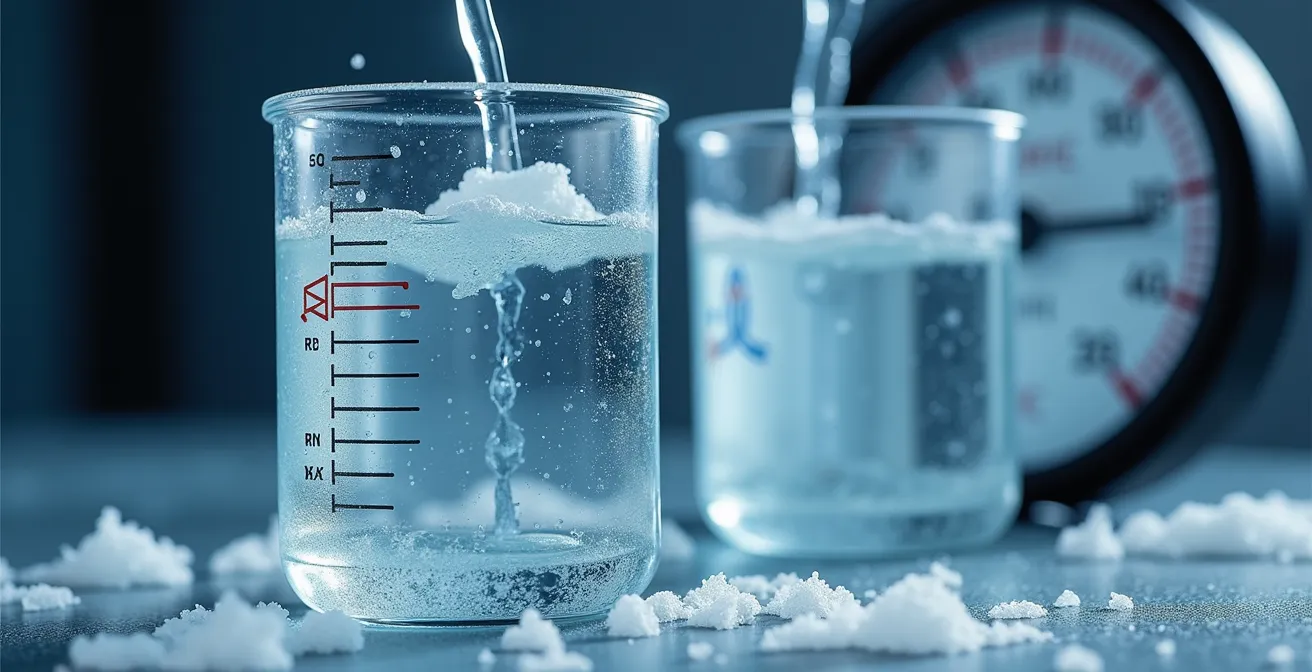
A 40% glycol mixture might seem adequate for a typical Montreal winter, offering a good balance of protection and heat transfer efficiency. However, for a night at -35°C, this is playing with fire. A 50% glycol concentration is the standard for solid freeze protection in these conditions, ensuring the fluid remains liquid enough to circulate. Critically, even a 33% mixture can provide burst protection down to -34°C, saving your pipes from destruction even if the system can’t circulate heat. The trade-off is efficiency: higher glycol concentrations are more viscous and transfer heat less effectively than water, but this is a small price to pay to avoid a cracked slab and thousands in repairs.
The following table, based on hydronic system best practices, illustrates the necessary concentrations for surviving the varied and often extreme temperatures across Quebec. As an analysis of fluid properties shows, the concentration must be matched to your region’s specific climate risks.
| Temperature | Freeze Protection Required | Burst Protection Required | Quebec Application |
|---|---|---|---|
| -23°C (-10°F) | 42% glycol | 28% glycol | Montreal typical winter |
| -34°C (-30°F) | 50% glycol | 33% glycol | Abitibi/Saguenay winters |
| -40°C (-40°F) | 54% glycol | 35% glycol | Extreme Quebec conditions |
Glycol pH: Why an Acidic Fluid Corrodes Your Boiler from the Inside
While concentration protects against cold, the pH level of your glycol solution protects your system from itself. Over time, glycol can degrade and become acidic. An acidic fluid is a silent killer for a hydronic system, as it aggressively corrodes metals like steel, copper, and aluminum found in your boiler, heat exchanger, and pumps. This isn’t a visible leak; it’s a slow, internal dissolution of your most expensive components. This corrosion creates sludge and particulate matter that clogs pipes, reduces heat transfer, and ultimately leads to premature failure of the entire system.
To prevent this, propylene glycol designed for hydronic systems includes a package of corrosion inhibitors. These additives buffer the fluid, keeping its pH in a safe, alkaline range (typically 9.0 to 10.0). However, these inhibitors are consumed over time, especially in systems with potential air leaks or high operating temperatures. This is why annual testing is not optional—it’s essential maintenance. Using simple litmus strips or a digital pH meter, you can monitor the health of your fluid. If the pH drops below 8.0, the inhibitors are depleted, and your system is vulnerable. At this point, a complete flush and refill is necessary to restore protection.
The quality of your mixture is paramount. Never use standard tap water unless its pH is verified; the minerals and chlorine can accelerate inhibitor breakdown. Always use demineralized, distilled, or reverse osmosis water when mixing your own solution. For maximum peace of mind and longevity, using a pre-mixed, inhibited glycol product is the superior choice. While non-inhibited glycol may only last 3-5 years, a high-quality inhibited fluid can protect your system for much longer. For instance, some premium formulations show that with proper maintenance, a pre-mixed solution can provide up to 20 years of service before needing replacement, making it a wise long-term investment.
Your Annual Glycol Health Checklist
- Source your water: If mixing your own glycol, use only demineralized, distilled, or deionized water. Avoid tap water to prevent mineral contamination.
- Test the pH: Annually, use pH test strips or a digital meter (available at pool supply stores) to check your fluid.
- Verify the target range: For a 50/50 propylene glycol/water mix, the ideal pH should be stable between 9.0 and 10.0.
- Assess longevity: Remember that high-quality, pre-mixed inhibited glycol like Sentinel X500 can last far longer than generic solutions.
- Plan for replacement: If the pH drops below 8.0, the corrosion inhibitors are depleted. Schedule a complete system flush and refill to protect your equipment.
How to Purge Air Bubbles from a Viscous Glycol Circuit
Air is the arch-nemesis of any hydronic system, but it’s particularly problematic in a glycol-based loop. The reason lies in one word: viscosity. A 50% glycol solution is significantly thicker, or more viscous, than plain water, especially at cold temperatures. This increased viscosity makes it much harder for tiny air bubbles to rise and be captured by standard air vents. Instead, they get trapped in the fluid, causing a cascade of problems. These bubbles can create airlocks that stop circulation completely, lead to noisy “gurgling” pipes, and, most destructively, cause pump cavitation—a phenomenon where tiny implosions of air bubbles at the pump impeller erode its surface and lead to premature failure.
Standard purging techniques are often insufficient for a viscous glycol mix. You need a more aggressive approach to achieve a high-velocity flush that can dislodge stubborn bubbles. This often involves using a powerful external circulation pump, which can be rented from Quebec suppliers like Simplex or Lou-Tec, to force the fluid through the system at a much higher speed than the onboard circulator can achieve. Maintaining a system pressure of at least 15 psi when cold is also critical to help keep any residual micro-bubbles compressed and in solution.
Furthermore, your system’s hardware must be suited for glycol. Standard air eliminators designed for water may not work effectively due to the lower surface tension of glycol mixtures. It is essential to install high-quality, glycol-rated air vents from reputable brands like Spirotherm or Caleffi, available from distributors such as Emco or Deschenes. These devices are specifically engineered to capture and release the micro-bubbles that are so persistent in glycol. Proper air elimination isn’t a one-time job; it’s an ongoing process, and having the right components is key to a quiet, efficient, and long-lasting system.
Glycol Pumps: Why Do You Need More Power Than for Pure Water?
Replacing water with glycol has a direct and significant impact on your circulator pump. Two physical properties are at play: higher viscosity and lower specific heat capacity. As we’ve discussed, a glycol solution is thicker than water, which means there is more friction as it moves through the pipes. This increased friction loss requires the pump to work harder to maintain the same flow rate. Secondly, glycol carries less heat than an equal volume of water. To deliver the same amount of warmth to your concrete slab, you need to pump the fluid faster, further increasing the demand on the circulator.
The cumulative effect of these factors is substantial. To compensate for the increased viscosity and flow rate requirements, a system with a 50% glycol solution may need a pump with 30-50% more capacity than one designed for water alone. Simply swapping the fluid without upgrading the pump is a recipe for disaster. An undersized pump will struggle, fail to provide adequate heat, and suffer a drastically shortened lifespan. When designing or retrofitting a system for glycol, the pump must be sized based on the specific head loss and flow rate calculations for the chosen glycol concentration at its lowest operational temperature.
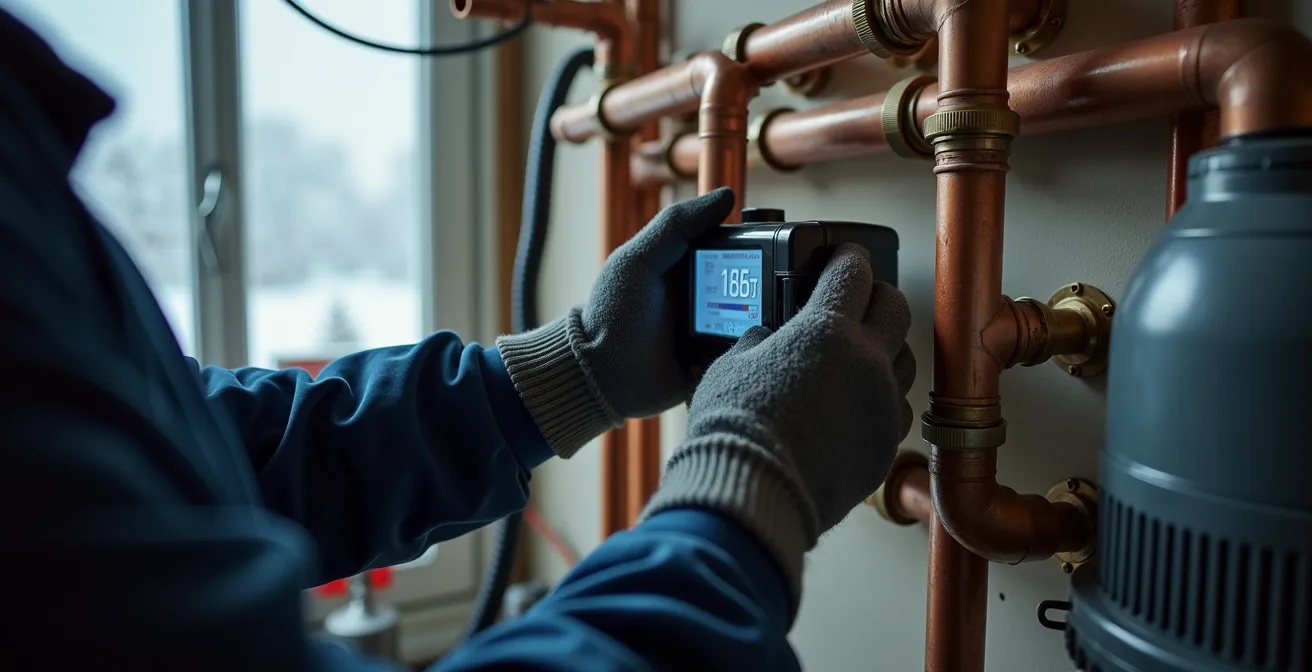
This is where modern technology offers a brilliant solution: variable speed circulators. Smart pumps, like the Grundfos ALPHA series, automatically adjust their speed to meet the system’s exact demand. They can provide the extra power needed to move viscous glycol in cold startup conditions while ramping down to save significant energy once the system is up to temperature. While once expensive, the cost of these pumps has become competitive with traditional circulators, and they can offer 50-75% in energy savings over their lifespan. For a glycol system in Quebec, a variable speed pump isn’t a luxury; it’s a smart investment in both performance and efficiency.
Ethylene vs. Propylene: Which One is Toxic and Banned in Residential Use?
Not all glycols are created equal. The two most common types, ethylene glycol and propylene glycol, have vastly different toxicity profiles, and choosing the wrong one for a residential application is a serious mistake. Ethylene glycol is an effective antifreeze, but it is highly toxic if ingested. Its sweet taste makes it a particular danger to children and pets. Because of this high toxicity, its use is heavily restricted and it is primarily found in industrial settings where stringent controls can prevent any possibility of it contaminating potable water sources. In a residential home, where a leak in a heat exchanger could potentially mix the hydronic fluid with drinking water, using ethylene glycol is an unacceptable risk.
For this reason, propylene glycol is the only acceptable choice for residential hydronic heating systems. It has a much lower toxicity profile and is classified as “Generally Recognized as Safe” (GRAS) by food and drug agencies for use in foods, cosmetics, and pharmaceuticals. This safety margin is non-negotiable in a home environment. Reputable HVAC professionals, such as those at Timberline Mechanical, use propylene glycol exclusively for residential projects. While its heat transfer properties are slightly less efficient than ethylene glycol, this minor performance difference is insignificant compared to the immense safety benefit it provides.
As the experts at EP Sales Inc. note in their “Using Glycol in Hydronic Heating Systems Guide”:
Modern HVAC experts try to avoid using ethylene glycol because of its toxicity. Nonetheless, it is commonly implemented in industrial settings where strict regulation prevents any chance of it seeping into drinking water.
– EP Sales Inc., Using Glycol in Hydronic Heating Systems Guide
Under no circumstances should these two types of glycol ever be mixed. Mixing them can compromise the inhibitor package and create an unknown and unpredictable fluid. When servicing or topping up your system, always verify you are using the same type of glycol—which, for any residential system in Quebec, must be propylene glycol.
How to Insulate Your Cold Water Pipes for Under $50 CAD
While your glycol loop is protected, don’t forget the other vulnerable plumbing in your garage: the cold water supply lines. A frozen and burst water pipe can cause just as much damage. Fortunately, insulating these pipes is an easy and incredibly cost-effective DIY project that can be done for less than $50. The goal is to prevent the cold ambient air of the garage from freezing the static water inside the pipes, especially in areas with little to no air circulation near exterior walls or the garage door.
The most common and effective material is foam pipe insulation. These foam tubes come pre-slit, allowing you to easily slip them over your pipes. For a typical garage project, a budget of $50 CAD is more than sufficient. You can find everything you need at a local hardware store like Home Depot Canada or RONA.
Here is a simple shopping list to get you started:
- Foam Pipe Insulation: Purchase enough linear feet to cover all exposed pipes. Choose a wall thickness of at least 3/4″ or 1″ for best results. (Approx. $25 for 30 feet)
- Aluminum Foil Tape: Use this to seal the longitudinal seams of the foam tubes and the joints between sections. This creates a continuous vapor barrier. (Approx. $10)
- Heavy-Duty Zip Ties: Use these every few feet to securely fasten the insulation to the pipe, ensuring there are no gaps. (Approx. $8)
When installing, focus your efforts on the pipes most at risk—those running along uninsulated concrete walls or near the garage door opening. Ensure every seam is taped shut. Even a small gap can allow cold air to reach the pipe, creating a cold spot that can become the point of failure. This simple, one-hour project provides significant peace of mind and protection against a very expensive and messy problem.
Heated Structural Slab: How to Secure PEX Tubing Before Pouring Concrete
Properly securing your PEX (cross-linked polyethylene) tubing before the concrete pour is fundamental to the long-term success of your radiant floor. If the tubing is not anchored securely, it can float or shift during the pour, leading to uneven heating, kinks that restrict flow, or even damage from workers’ tools. In Quebec’s climate, where the slab is subject to significant temperature cycles, ensuring the tubing is correctly positioned and stress-free is even more important. The tubing must be laid out in an even pattern, typically attached to the wire mesh or rebar used for reinforcing the slab.
There are several methods for attaching the PEX tubing, each with its own pros and cons regarding speed, cost, and durability in cold weather. It is absolutely critical to never use standard metal rebar ties to secure PEX, as their sharp edges can easily damage the pipe during installation or over time as the slab expands and contracts. Plastic or nylon zip ties are the most common method due to their low cost and speed, but they can become brittle in extreme cold. Wire ties designed for PEX are more robust. PEX rails are plastic channels that hold the tubing at a consistent spacing, offering the fastest installation but at a higher cost.
This table compares the common methods used by professionals in Quebec construction. The choice often depends on the scale of the project and the contractor’s preference.
| Method | Material | Installation Speed | Cold Weather Performance | Cost |
|---|---|---|---|---|
| Zip Ties | Nylon plastic | Fast | Can become brittle in extreme cold | $0.05/tie |
| Wire Ties (PEX-specific) | Steel wire | Moderate | Better in cold, won’t become brittle | $0.02/tie |
| PEX Rails | Plastic channels | Fastest | Excellent, maintains spacing perfectly | $2-3/linear foot |
Regardless of the method used, one final step is non-negotiable: pressure testing the loop with air right before the pour. Inflating the system to a specified pressure allows you to instantly detect any last-minute nicks or punctures that may have occurred during the setup. Finding and fixing a leak at this stage is simple; finding one after 20 tons of concrete has cured is a nightmare.
Key Takeaways
- Propylene glycol is the only safe and acceptable antifreeze for residential hydronic systems due to its non-toxic nature.
- System performance depends on a holistic approach: the right glycol concentration, stable alkaline pH, and a pump sized for higher viscosity.
- Insulation is critical, both for exposed water pipes and, most importantly, with a substantial layer (6+ inches) under any heated slab to prevent heat loss into the ground.
Is Radiant Floor Heating Worth the Cost for a Basement Renovation?
For a basement renovation in Quebec, deciding on the heating system is a major choice. Radiant floor heating, while having a higher upfront installation cost than traditional baseboard heaters or forced air, offers unparalleled comfort and significant long-term value. The gentle, even heat rising from the floor eliminates cold spots and drafts, creating a far more comfortable living space. This is especially true for a basement, where concrete floors can feel perpetually cold and damp. The operational efficiency of a hydronic system, particularly when paired with a high-efficiency boiler, can also lead to lower energy bills over time.
The economic viability of radiant heat in Quebec is strongly influenced by the province’s energy landscape. Because Quebec has among the lowest electricity rates in North America, electric boilers for hydronic systems are a very popular and cost-effective choice. This is in stark contrast to a province like Ontario, where high electricity rates make natural gas boilers the default option for hydronic floors. Thanks to Hydro-Québec, a Quebec resident can enjoy the supreme comfort of radiant heat without being penalized by high operational costs, making the initial investment much easier to justify.
However, the return on investment is entirely dependent on one crucial factor: insulation. Installing a heated floor without adequate sub-slab insulation is like trying to heat your home with the windows open. A significant portion of the heat will radiate downwards into the ground, wasting energy and money. Building code minimums are often insufficient for a heated slab. To maximize efficiency and comfort, it is strongly advised to install a robust thermal barrier. An analysis of efficient building practices confirms that for a heated slab, you should use at least 6 inches of rigid foam insulation, and even more in colder regions of Canada. This insulation ensures that the heat you pay for radiates upwards into your living space, making your basement warm, comfortable, and truly worth the investment.
To ensure your hydronic system is properly protected and optimized for Quebec’s climate, the next logical step is to have your current fluid tested and your system’s components evaluated by a qualified professional.