
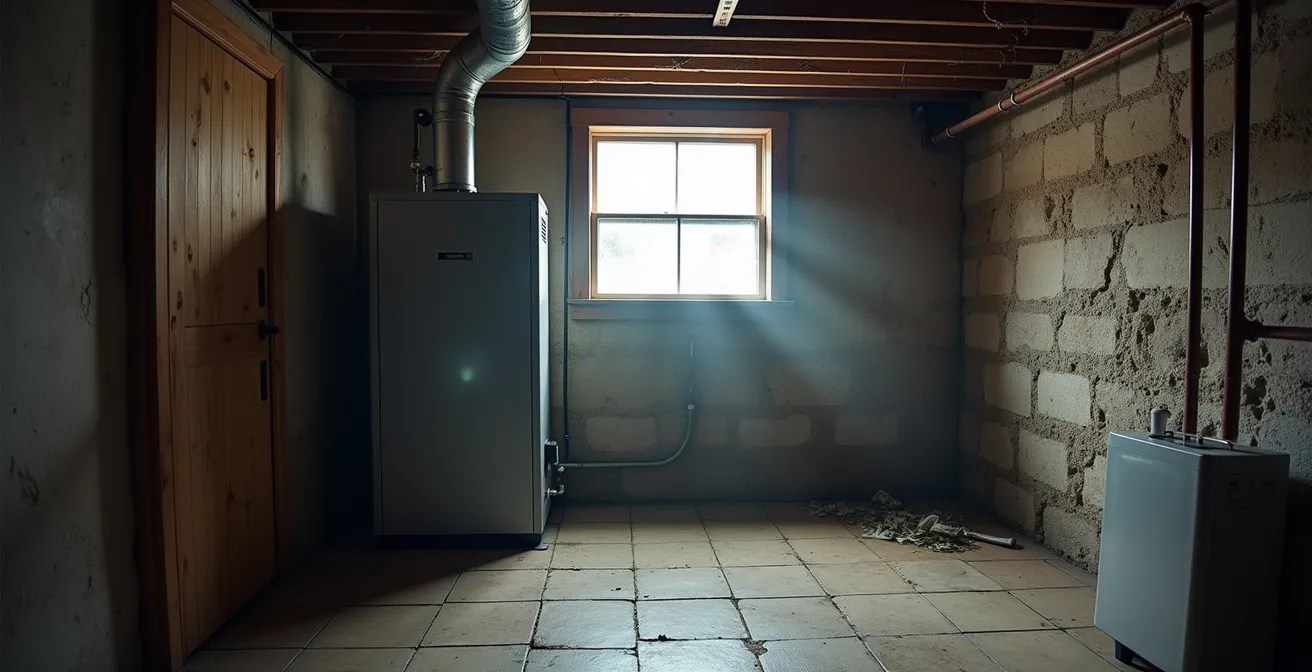
That 15% fuel increase from soot is a warning sign, not the main problem. The real danger is the cascade of expensive failures that follow, from cracked components to a complete system breakdown.
- Soot acts as an insulator, trapping extreme heat that cracks the combustion chamber and damages the burner.
- This leads to a combustion imbalance, causing even more soot and risking dangerous carbon monoxide leaks.
Recommendation: An annual cleaning and combustion analysis by a CMMTQ-certified technician isn’t just maintenance; it’s a crucial diagnostic to prevent a system failure and control your soaring Quebec energy bills.
If you’re a Quebec homeowner with a hot water heating system, you’ve likely watched your fuel bills climb with a sense of dread. It’s easy to blame rising oil prices, but a significant part of the problem might be lurking inside your boiler: a fine, black powder called soot. Many people know that soot is “bad,” but they underestimate its true impact. The common wisdom is that cleaning your boiler once a year is a good idea, a simple chore to keep things running.
The reality is far more critical. That layer of soot is more than just dirt; it’s an aggressive insulator that chokes your boiler’s ability to transfer heat to the water. This forces your system to run longer and burn more fuel for the same amount of warmth. But the inefficiency is just the beginning of the story. The real issue, and the focus of this guide, is the dangerous and costly cascade of failures that soot buildup initiates. It’s a chain reaction that begins with lost efficiency and can end with a cracked boiler and a system replacement.
We’ll move beyond the simple idea of “soot is an insulator” to explore the technical reality of what happens inside your system. We will dissect how a certified technician diagnoses these issues, why certain parts fail, and what warning signs you can’t afford to ignore in our cold Quebec climate. Understanding this process is the key to protecting your investment, ensuring your family’s safety, and taking back control of your heating costs.
This article breaks down the critical maintenance points of your oil-fired boiler, explaining not just the ‘what’ but the ‘why’ behind each one. Explore the sections below to understand how each component contributes to your system’s overall health and efficiency.
Summary: Decoding Your Boiler’s Performance and Preventing Costly Breakdowns
- Boiler sweeping: how often should you brush the heat exchanger to maintain efficiency?
- Combustion test: what do CO2 and flue gas temperature reveal about your boiler’s condition?
- Combustion chamber: why is cracked refractory insulation dangerous for the burner?
- Oil nozzle: why is replacing it annually non-negotiable?
- Water leak in the combustion chamber: is this the end of your cast-iron boiler?
- Smell of heating oil in the house: is it normal at startup or a dangerous leak?
- Combustion air intake: why you should never let it get blocked by snow.
- Gas vs Electric Central Heating: Which Is Best for Quebec Winters?
Boiler sweeping: how often should you brush the heat exchanger to maintain efficiency?
The heart of your boiler’s efficiency lies in its heat exchanger, a series of passages (firetubes) where hot gases from combustion transfer their energy to the water that heats your home. Soot accumulation on these surfaces acts like a layer of insulation, preventing this critical heat transfer. It’s a surprisingly effective insulator; soot layers just a few millimeters thick can increase fuel consumption by 15-20%. Your boiler is forced to burn more oil and run longer, sending that extra heat—and your money—straight up the chimney.
For an oil-fired boiler in Quebec, an annual professional cleaning and service is the absolute minimum. A qualified technician will not only brush and vacuum the firetubes but also perform a combustion analysis to ensure the system is recalibrated for peak performance. The cost of this service, typically between $200 and $300, is an investment, not an expense. With Quebec’s volatile heating oil prices, this investment often pays for itself within just a few months of winter operation through direct fuel savings.
While annual professional service is key, you can also monitor the situation. During the heating season, a quick check of the soot level at the barometric damper can give you an idea of the buildup. If it exceeds 1/8 of an inch, it’s a clear sign your boiler is losing its fight for efficiency and needs immediate attention.
Your Boiler Cleaning Action Plan
- Schedule an annual professional cleaning as a non-negotiable minimum for your oil-fired boiler.
- During the heating season, perform a monthly visual check of soot thickness at the barometric damper.
- If you observe soot exceeding 1/8 inch (about 3mm) in thickness, schedule a cleaning immediately, as efficiency is already compromised.
- Ensure the technician thoroughly vacuums and brushes the firetubes from top to bottom.
- Keep a log of cleaning dates and observed soot levels to track your boiler’s performance and efficiency over time.
Combustion test: what do CO2 and flue gas temperature reveal about your boiler’s condition?
A professional boiler service goes far beyond a simple cleaning. The most critical part of the process is the combustion analysis. Using a calibrated analyzer, a CMMTQ-certified technician measures the composition and temperature of the flue gases exiting your boiler. This test is like a blood test for your heating system; it provides a precise diagnosis of its health and efficiency. When a test shows 85% efficiency, it means 15 cents of every dollar you spend on fuel is wasted up the chimney. The analysis tells us exactly why.
Two key metrics are the CO2 level and the stack temperature. CO2 percentage indicates how completely the fuel is being burned. An ideal range is typically between 9-12%. A low CO2 reading suggests too much air is entering the mix, which cools the flame and carries heat away before it can be transferred to the water. Conversely, the stack temperature reveals how much heat is escaping. A high temperature (e.g., above 500°F or 260°C) is a red flag that the heat exchanger is coated in soot and failing to absorb the heat produced by the burner.
This data allows a technician to make precise adjustments to the air-to-fuel ratio, restoring the combustion balance and maximizing heat transfer. A final and critical measurement is Carbon Monoxide (CO), a dangerous byproduct of incomplete combustion. Any reading over 100 PPM is a serious safety concern that requires immediate action.
| Measurement | Normal Range | Problem Indicator | Action Required |
|---|---|---|---|
| CO2 Level | 9-12% | Below 8% | Adjust air-fuel ratio |
| Flue Temperature | 300-400°F (150-205°C) | Above 500°F (260°C) | Clean heat exchanger |
| Efficiency | 82-87% | Below 80% | Full service needed |
| CO Level | Under 100 PPM | Over 100 PPM | Safety concern – immediate service |
Combustion chamber: why is cracked refractory insulation dangerous for the burner?
The soot layer on the heat exchanger does more than just waste fuel; it initiates the “cascade failure” by creating immense thermal stress. By insulating the firetubes, soot traps intense heat inside the combustion chamber. This sealed box, typically lined with refractory insulation designed to withstand high temperatures, is pushed beyond its limits. In heavily sooted systems, field measurements have shown temperatures exceeding 1000°F (540°C), far above normal operating conditions.
This extreme heat causes the refractory lining to crack, crumble, or even melt. When pieces of this material fall away, they expose the boiler’s metal casting to direct flame impingement, which can lead to warping and permanent damage. More immediately, these cracks create an uneven surface that disrupts the carefully shaped flame pattern produced by the burner. The flame can become distorted, hitting cold surfaces it’s not supposed to, which in turn leads to incomplete combustion and the creation of even more soot—a vicious cycle.
A damaged chamber can also cause dangerous “flame rollout,” where the flame escapes the front of the boiler when it ignites, creating a fire hazard and potentially damaging the burner’s sensitive components and wiring. Signs of a failing chamber include rumbling or “puffing” sounds during startup and soot streaks around the burner’s mounting plate. Any of these signs warrant an immediate call to a professional.
Oil nozzle: why is replacing it annually non-negotiable?
At the heart of the burner is the oil nozzle, a tiny, precision-engineered component with a critical job: atomizing the heating oil into a fine, cone-shaped mist. This atomization is essential for the oil to mix properly with air and burn cleanly and completely. Over a single heating season, thousands of litres of oil pass through this small orifice under high pressure. This process causes microscopic wear on the nozzle’s internal channels, altering the spray pattern, angle, and droplet size.
A worn nozzle can no longer atomize fuel effectively. Instead of a fine mist, it may produce larger droplets or a distorted spray. These larger droplets don’t burn completely, resulting in the production of soot and carbon monoxide. This directly contributes to the buildup on the heat exchanger, kickstarting the very problem we’re trying to prevent. According to maintenance professionals who report a 5-10% efficiency loss from worn nozzles, this single, inexpensive part has a disproportionate impact on fuel consumption.
Replacing the nozzle is a non-negotiable part of any annual boiler service. It’s a cheap part, typically under $25, but its role in maintaining combustion balance is priceless. Attempting to clean a nozzle is a fool’s errand; the internal wear is invisible to the naked eye, and re-installing a worn nozzle guarantees poor performance, increased fuel costs, and accelerated soot accumulation throughout the system.
Water leak in the combustion chamber: is this the end of your cast-iron boiler?
Perhaps the most dreaded symptom a homeowner can find is water or steam inside the combustion chamber. In a cast-iron sectional boiler, this almost always points to a crack in one of the sections or a failure of the seals between them. This is often the final stage in the cascade of failures. The constant thermal stress from overheating (caused by soot) and rapid cooling cycles can cause the rigid cast iron to crack over time. When water leaks into the 500°F+ chamber, it instantly turns to steam, often accompanied by a hissing sound after the burner shuts off.
For an older cast-iron boiler, a leak in a section often signals the end of its service life. Sourcing a replacement section for an old model can be impossible, and the labour required to disassemble, replace, and re-seal the boiler is often so expensive that it approaches the cost of a new unit. At this point, you are faced with a critical decision: attempt a costly repair with no long-term guarantee, or replace the entire system?
In Quebec, this decision is heavily influenced by provincial and federal incentive programs. As Natural Resources Canada states regarding their incentive program, this moment can be an opportunity. Their analysis shows significant long-term savings are possible with a modern alternative.
Homeowners who switch from an oil furnace to an eligible heat pump system could save approximately $1,500 to $4,500 per year on their home energy bills
– Natural Resources Canada, Oil to Heat Pump Affordability Program
While the upfront cost of a heat pump is high, significant grants can make it a financially viable long-term solution, as this comparison shows.
| Factor | Repair Option | Replace with Heat Pump |
|---|---|---|
| Upfront Cost | $500 – $2,000 | $10,000 – $15,000 |
| Quebec Grants Available | None | Up to $10,000 (OHPA) |
| Annual Operating Cost | $2,500 – $4,500 | $800 – $1,500 |
| Expected Lifespan | 5-10 years | 15-20 years |
Smell of heating oil in the house: is it normal at startup or a dangerous leak?
The smell of heating oil in your home is alarming, but it’s important to distinguish between a minor nuisance and a serious danger. It’s relatively common to get a faint, dusty burning smell the first few times the boiler fires up for the season. This is usually just dust burning off the hot surfaces of the boiler and heat distribution pipes. However, a persistent or strong smell of raw, unburned heating oil is a major red flag that indicates a potential leak.
An oil leak, no matter how small, is a serious safety and environmental hazard. The most common culprits are failing gaskets on the oil filter housing, cracked fuel lines, or loose fittings at the burner or tank. A visual inspection of these areas may reveal a dark, damp patch or even an active drip. The smell is often strongest near the boiler or oil tank.
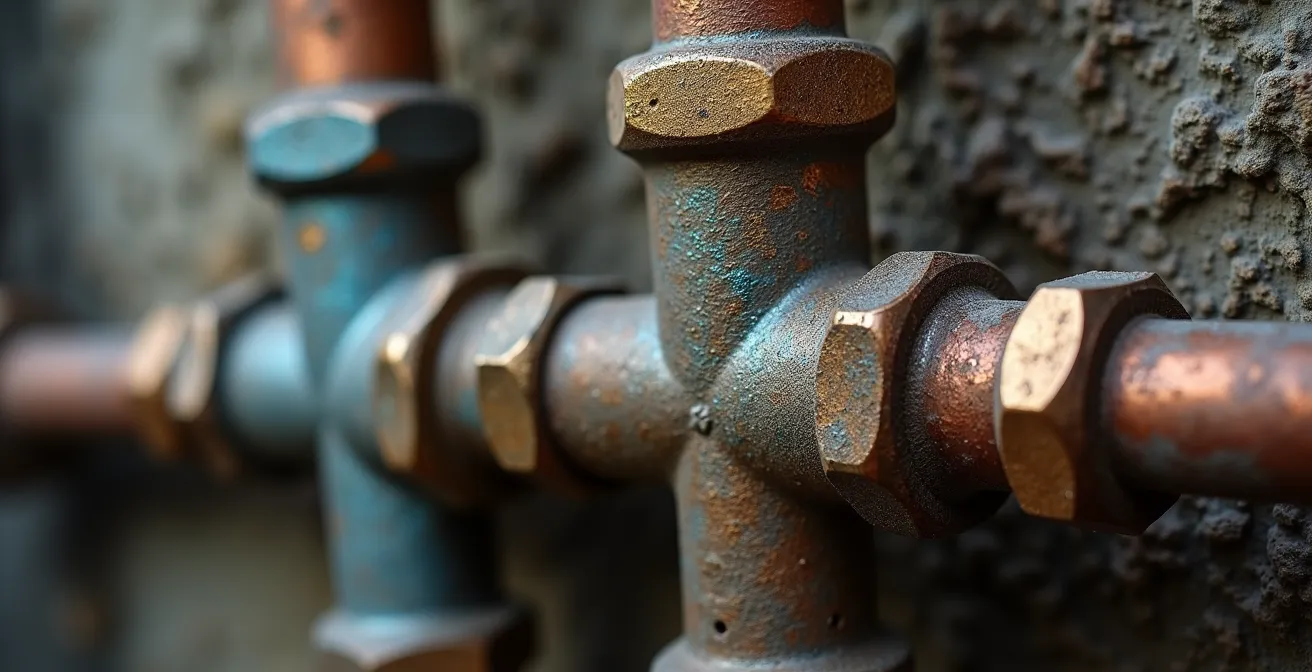
If you detect the smell of raw oil, you must act immediately. Do not wait to see if it goes away. A fuel leak can lead to soil and groundwater contamination, and the vapours can be harmful to breathe. Your priority is safety: ventilate the area, shut off the power to the boiler using the emergency switch, and call a CMMTQ-certified technician right away.
Emergency Checklist: What to Do If You Smell Oil
- Identify the smell: Is it a dusty, “burning” smell (less concerning) or a strong, raw oil smell (dangerous)?
- Visually inspect the oil filter housing, fuel lines, and fittings near the burner and tank for any signs of wetness or drips.
- Look closely at the floor beneath the boiler and tank for any dark stains indicating a leak.
- If a raw oil smell is present, immediately open windows and doors to ventilate the area.
- Locate the red emergency shut-off switch for your boiler (usually at the top of the basement stairs or near the unit) and turn it off. Call a CMMTQ-certified technician immediately.
Combustion air intake: why you should never let it get blocked by snow.
A boiler needs to breathe just like a fire in a fireplace. For every litre of oil it burns, it needs to draw in approximately 14,000 litres of air to provide enough oxygen for complete combustion. Modern, high-efficiency boilers often have a dedicated air intake pipe that runs directly from the burner to the outside of the house. This ensures it gets fresh, clean air and doesn’t create negative pressure in your home. However, in Quebec’s harsh winters, this essential lifeline can become a vulnerability.
A snowdrift from a storm or a pile of snow cleared from the walkway can easily block this intake vent. When the air supply is choked off, the burner is starved of oxygen. This creates a “rich” fuel mixture, leading to severe incomplete combustion. The immediate result is a massive production of soot and deadly carbon monoxide. In this state, a boiler that was running cleanly can become heavily sooted in just a matter of hours. This not only reverses all the benefits of a recent cleaning but, as heating system experts confirm, a low air-to-fuel ratio facilitates excessive soot build-up, accelerating damage to the entire system.
It is absolutely critical to keep your boiler’s intake and exhaust vents clear of snow and ice at all times. Before a major snowstorm, it’s wise to mark their locations with tall stakes so you can find them easily. After every storm, your first step before even thinking of running the heat should be to go outside and ensure all vents have at least a three-foot radius of clearance. This simple act of prevention can save you from a costly service call and, more importantly, a dangerous CO situation.
Key Takeaways
- Soot is not just dirt; it’s an insulator that traps heat, causing a cascade of failures from cracked chambers to burner damage.
- An annual combustion analysis by a CMMTQ-certified technician is more critical than the cleaning itself; it’s a diagnostic that restores efficiency and ensures safety.
- External factors, like a snow-blocked air intake in winter, can rapidly create dangerous conditions and undo all maintenance efforts.
Gas vs Electric Central Heating: Which Is Best for Quebec Winters?
When faced with a major repair or the end of your oil boiler’s life, the question of replacement becomes central. For decades, oil and natural gas were the mainstays of Quebec heating, but the landscape has shifted dramatically. With a strong focus on decarbonization and the availability of vast hydroelectric resources, electric options—particularly modern cold-climate heat pumps—have become the leading contenders. The decision rests on a balance of installation cost, long-term operating cost, and resilience.
Oil and natural gas systems have the advantage of being able to run on a generator during one of Quebec’s infamous ice storms, providing a high degree of resilience. However, their operating costs are significantly higher. According to a 2024 price comparison from Hydro-Quebec, the price index for oil is nearly five times that of electricity. This massive gap in energy cost means that despite a higher installation price, a heat pump offers dramatically lower annual bills.
Federal and provincial grants, like the Canada Greener Homes Initiative and the Oil to Heat Pump Affordability (OHPA) program, are designed to bridge this upfront cost gap. These programs can provide substantial financial assistance, making the switch from oil to a heat pump more accessible than ever. For any Quebec homeowner with an aging oil system, exploring these options is no longer just an environmental choice, but a sound long-term financial strategy.
| System Type | Annual Operating Cost | Installation Cost | Ice Storm Resilience |
|---|---|---|---|
| Electric Baseboard | $1,200 – $2,000 | $3,000 – $5,000 | Vulnerable – needs grid power |
| Heat Pump | $800 – $1,500 | $10,000 – $15,000 | Vulnerable – needs grid power |
| Natural Gas | $1,500 – $2,500 | $5,000 – $8,000 | Good – runs on generator |
| Oil Heating | $2,500 – $4,500 | $6,000 – $10,000 | Good – runs on generator |
Ultimately, understanding that your boiler is a complex system, where a single issue like soot can trigger a cascade of failures, is the key to responsible ownership. Proactive, professional maintenance isn’t about cleaning; it’s about diagnostics and prevention. To ensure the safety, efficiency, and longevity of your heating system, schedule a complete combustion analysis and service with a CMMTQ-certified technician today.