
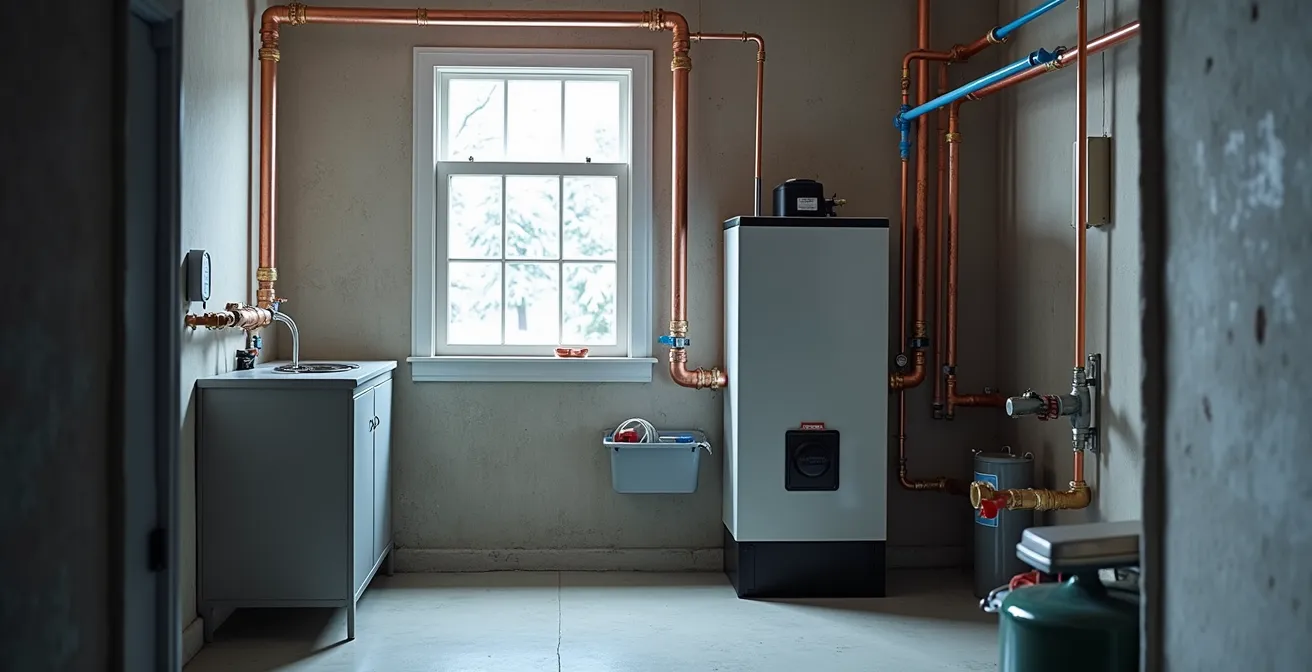
Your expensive new high-efficiency boiler is far more fragile than its cast-iron predecessor and is under constant attack from invisible threats within your heating system.
- Modern boilers use narrow passages and ECM pumps with powerful magnets, which are extremely vulnerable to “black sludge” or magnetite.
- Failing to install a magnetic filter not only risks catastrophic pump failure but can also void your manufacturer’s warranty.
Recommendation: Treat your hydronic system as a complete ecosystem. Installing a magnetic dirt separator, alongside an air separator, is not an upgrade but a mandatory step to protect your investment and ensure long-term performance.
Investing in a modern high-efficiency condensing boiler for your Quebec home is a significant financial commitment. You’re promised lower gas bills, a smaller carbon footprint, and superior comfort. However, a dangerous misconception is treating this advanced piece of equipment like the old, indestructible cast-iron beast it replaced. The truth is, the very technology that makes these boilers so efficient also makes them incredibly vulnerable to internal, invisible enemies: micro-air bubbles and a metallic sludge called magnetite.
Many homeowners focus only on the boiler unit itself, overlooking the critical life-support system it requires to survive. This article shifts the focus from the boiler to its surrounding hydronic ecosystem. We won’t just tell you *that* you need accessories; we’ll explain *why* the fundamental engineering of modern systems makes components like magnetic dirt separators a non-negotiable part of your investment protection strategy. Understanding this ecosystem is the key to ensuring your high-tech boiler doesn’t suffer a premature and costly failure.
This guide will walk you through the essential components that form a robust protective shield around your boiler, explaining their specific roles in combating the hidden threats lurking in your pipes. We will explore how each part contributes to a resilient and efficient heating system, designed to last for years to come.
Summary: The Essential Protective Ecosystem for Your Modern Boiler
- Microbubble Air Separator: Far More Effective Than an Old Automatic Vent
- Black Sludge (Magnetite): The Invisible Enemy That Kills Permanent Magnet ECM Pumps
- Hydraulic Separator: How to Hydraulically Isolate the Boiler from Heating Zones
- 3-Way or 4-Way Valves: How to Protect the Boiler from Cold Return Water
- Combined Pressure Gauge (Tridicator): How to Read Your System’s Health at a Glance
- Boiler Cleaning: How Often Should You Brush the Heat Exchanger to Maintain Efficiency?
- Point of No Pressure: Why Is the Tank’s Location Relative to the Pump Vital?
- Why Upgrade to an ECM Circulator Pump for Your Heating System?
Microbubble Air Separator: Far More Effective Than an Old Automatic Vent
The first invisible enemy in your heating system is air. You might recognize its symptoms as gurgling or bubbling noises. As the Save Home Heat Company notes, “If you hear funny gurgling or bubbling noises coming from inside the boiler or the piping and heaters, trapped air in the system could be the culprit.” While old systems used simple automatic air vents that only bled large air pockets, they are completely inadequate for modern boilers. High-efficiency systems are sensitive to dissolved microbubbles that these old vents miss. These tiny bubbles cause corrosion, reduce heat transfer, and create flow problems, directly impacting your boiler’s performance.
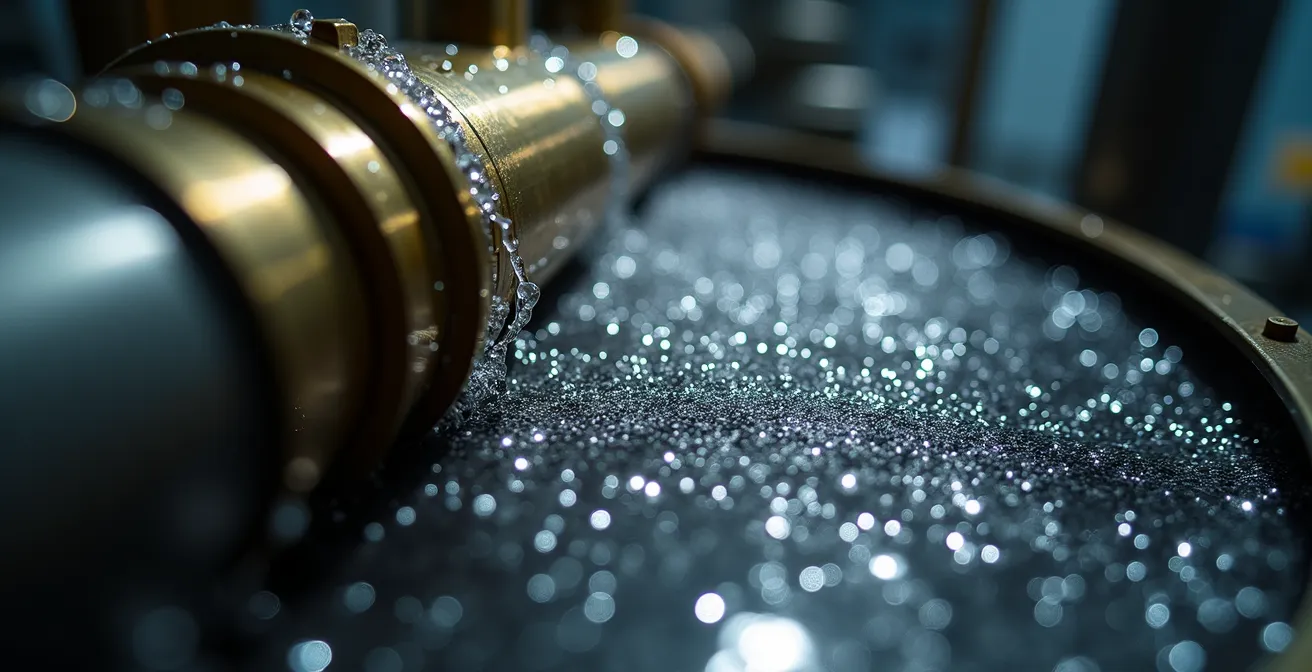
A modern microbubble air separator works differently. It is installed in the hottest part of the system, where water’s ability to hold dissolved air is lowest. Inside, a specialized mesh medium forces microbubbles to coalesce into larger bubbles that can be collected and automatically vented. This active removal of dissolved air is crucial for protecting internal components from oxygen-based corrosion. In fact, research shows that proper air removal has a significant financial benefit; effective deaeration can lead to a 13% reduction in gas consumption. Many homeowners in Montreal who have retrofitted their systems notice that their baseboard heaters are quieter than ever, a direct result of effective air elimination.
Black Sludge (Magnetite): The Invisible Enemy That Kills Permanent Magnet ECM Pumps
If air is a nuisance, magnetite is a killer. This fine, black, metallic powder is a form of iron oxide that forms naturally in all hydronic systems. In old boilers with large cast-iron passages and simple induction-motor pumps, it was a manageable problem. However, in high-efficiency systems, magnetite is the primary cause of catastrophic failure. The reason lies in the advanced circulator pumps, known as ECM (Electronically Commutated Motor) pumps. These pumps use powerful permanent magnets to achieve their high efficiency. Unfortunately, these same magnets act as a trap for magnetite, attracting the abrasive sludge directly into the pump’s tightest tolerances.
This accumulation grinds away at bearings and can cause the pump to seize completely, leading to a no-heat emergency and a costly replacement. The problem is so severe that most high-efficiency boiler manufacturers now require magnetic filter installation as a condition of their warranty. Failing to install one means you could be on the hook for thousands of dollars in repairs that would have otherwise been covered. As experts at U.S. Boiler Corporation explain, “The abrasive nature of magnetite accelerates wear on pumps, valves, and other moving parts, potentially leading to premature failure and costly repairs.”
The financial argument for a magnetic filter is undeniable. It represents a small upfront cost to protect the two most expensive components of your system: the circulator pump and the boiler’s heat exchanger.
| Component | Cost Range (CAD) | Lifespan | Installation Time |
|---|---|---|---|
| ECM Circulator Pump | $700-$1,200 | 5-10 years (without protection) | 2-3 hours |
| Magnetic Filter | $200-$350 | 10+ years | 1 hour |
| Annual Maintenance | $150-$200 | N/A | 30 minutes |
Hydraulic Separator: How to Hydraulically Isolate the Boiler from Heating Zones
In many Quebec homes, especially older plexes, a single boiler often serves multiple zones with different needs—for example, high-temperature cast-iron radiators on one floor and low-temperature radiant flooring on another. This creates a complex hydraulic challenge. When zones shut off, the flow rate through the boiler can drop dangerously low, causing it to short-cycle, overheat, and lose efficiency. A hydraulic separator, or “bottle,” solves this problem by acting as a hydronic traffic cop. It creates two distinct but connected loops: a primary loop for the boiler and a secondary loop for the distribution system.
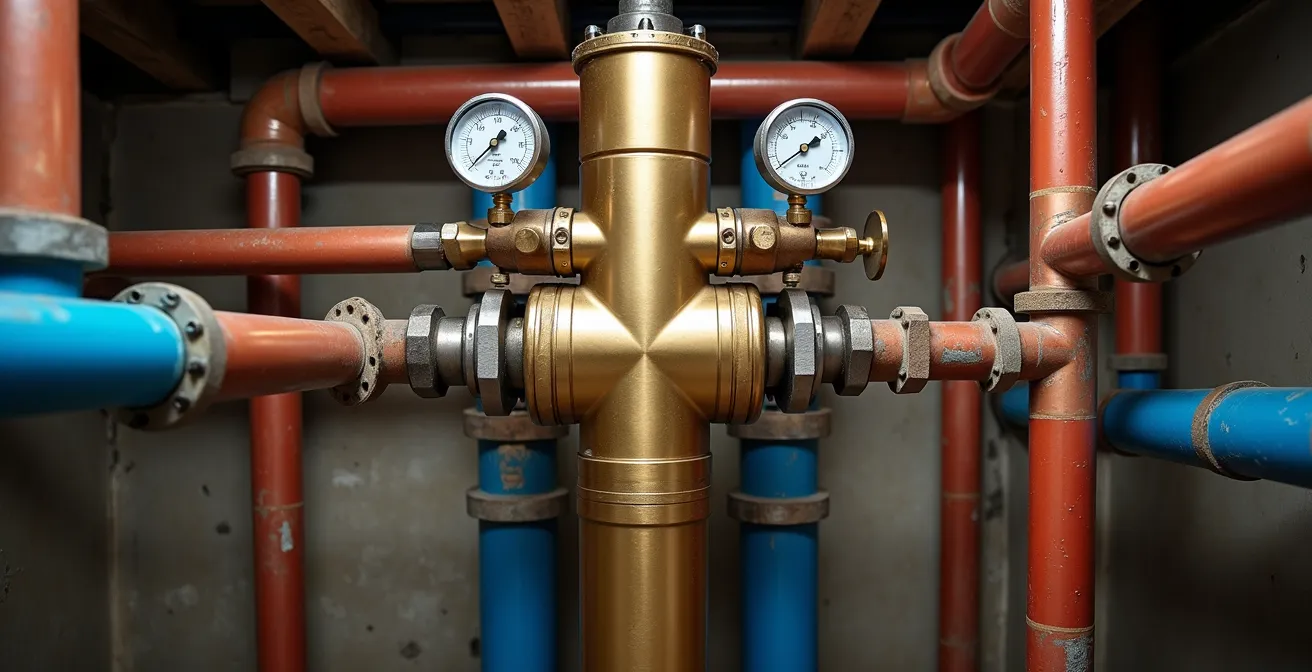
This separation allows the boiler to maintain its ideal, constant flow rate in the primary loop, regardless of how many zones are calling for heat in the secondary loop. This completely decouples the boiler’s operation from the rest of the system, protecting it from the damaging effects of low flow. Furthermore, many modern hydraulic separators are designed as multi-function devices, incorporating ports for air separation at the top and a magnetic dirt filter at the bottom, creating a central hub for system protection. This integrated approach simplifies installation and ensures all key protective functions are located in one serviceable unit.
Action Plan: Key Checks for a Hydraulic Separator Installation
- Placement: Confirm the separator is installed between the boiler’s primary loop and the secondary distribution zones.
- Flow Rates: Ensure the boiler pump is sized for the separator’s primary loop, allowing the boiler to maintain minimum flow regardless of zone demands.
- Air Removal: Verify an air separator is mounted at the top connection point for optimal and continuous air removal from the system.
- Dirt Collection: Check that a drain port at the bottom is accessible for purging magnetite and other debris collected.
- Monitoring: Confirm that pressure and temperature gauges are installed on both primary and secondary sides to monitor performance and differential (Delta-T).
3-Way or 4-Way Valves: How to Protect the Boiler from Cold Return Water
Condensing boilers achieve their high efficiency by extracting latent heat from flue gases. To do this, the return water temperature must be below approximately 55°C (130°F). However, there’s a danger: if the return water is *too* cold—a common occurrence during a Quebec winter, especially with high-mass systems like cast iron radiators—it can cause “thermal shock” to the heat exchanger. This rapid temperature change creates stress on the metal, potentially leading to cracks and premature failure. This is where mixing valves become essential protectors.
A mixing valve, either 3-way or 4-way, is a thermostatic device that actively manages the return water temperature. It works by taking a portion of the hot supply water from the boiler outlet and “mixing” it into the cold system return water before it re-enters the boiler. This pre-heats the return water just enough to prevent thermal shock while still keeping it cool enough to allow for flue gas condensation. Heating professionals in Quebec report excellent results using mixing valves, particularly in older homes with large cast iron radiator systems that hold a significant volume of cold water. By maintaining the boiler within its optimal temperature range, these valves not only protect the heat exchanger but also keep the boiler in its high-efficiency condensing mode for longer periods, maximizing your energy savings throughout our variable seasons.
Combined Pressure Gauge (Tridicator): How to Read Your System’s Health at a Glance
With all these protective components in place, you need a simple way to monitor the overall health of your hydronic ecosystem. That’s the job of the tridicator—a combination gauge that displays both system pressure and temperature on a single dial. It’s the dashboard for your heating system, providing an at-a-glance status report. Understanding how to read it can help you spot problems long before they become emergencies. The two most important readings are the cold pressure and the hot pressure. When your system is cold, the pressure (indicated by the black needle, measured in PSI) should typically be stable between 12-15 PSI for a standard two-story home.
As the boiler fires and the water heats up, it expands, and the pressure will rise. In a healthy system, the pressure will increase to around 18-25 PSI and then hold steady. If you notice the pressure consistently dropping over days or weeks, it’s a clear sign of a water leak somewhere in the system. Conversely, if the pressure rises too high (approaching 30 PSI), it could indicate a problem with your expansion tank. The red needle on the gauge simply shows the water temperature, which should correspond to your boiler’s setpoint when it’s actively heating. By regularly checking these values, you can develop a baseline for your system’s normal operation and quickly identify deviations that require a professional’s attention.
Boiler Cleaning: How Often Should You Brush the Heat Exchanger to Maintain Efficiency?
Even with the best air and dirt separation, proactive maintenance remains essential for peak performance. While a magnetic filter drastically reduces the amount of magnetite circulating, it doesn’t eliminate the need for regular boiler service. The primary maintenance task is cleaning the heat exchanger. Over time, combustion byproducts can coat the fire-side of the exchanger, while minerals and any remaining fine particulates can build up on the water-side. Both forms of buildup act as a layer of insulation, reducing the boiler’s ability to transfer heat to the water and lowering its overall efficiency.
The frequency of cleaning depends heavily on the quality of your system’s protection. A system without a magnetic filter may require annual, or even semi-annual, intensive cleaning to remove baked-on magnetite from the heat exchanger’s narrow passages. However, a well-protected system might only need a light brushing every two to three years. The goal of your investment in dirt and air separation is to make this maintenance easier, faster, and less frequent. This investment pays off significantly in the long run; an analysis by ADEY, a leading filter manufacturer, found that installing a MagnaClean filter could extend the life of a boiler by up to 7 years. This longevity is a direct result of keeping the internal components clean and operating as designed, turning maintenance from a frequent, costly repair into a simple, periodic check-up.
Point of No Pressure: Why Is the Tank’s Location Relative to the Pump Vital?
This is one of the most critical yet least understood concepts in hydronic heating. You can have the best air separator and dirt filter in the world, but if the expansion tank and circulator pump are installed in the wrong positions relative to each other, your system will constantly struggle with air problems. The “point of no pressure change” (or PONPC) is the spot in the system where the expansion tank is connected. At this single point, the system’s pressure remains constant whether the pump is on or off.
The alleged problem has more to do with the pumps location in relationship to the expansion tank. If the pump is moving water AWAY from the expansion tank connection, the air problem is not a ‘problem.’ Will an MBR [microbubble resorber] alleviate the conditions associated with this ‘problem’? Absolutely, but the problem will be back at the beginning of every heating season.
– Mark Eatherton, Heating Help Professional Forum Discussion
As expert Mark Eatherton points out, the correct configuration is to have the circulator “pump away” from the expansion tank. This means the tank is on the suction side of the pump. In this setup, the pump adds its pressure to the entire system, raising the pressure everywhere except the PONPC. Higher pressure makes it easier for air to be compressed and forced out by the air separator. If the pump is installed pumping *towards* the tank, it creates a pressure drop across the system, potentially pulling the pressure in some areas below atmospheric pressure. This can cause air to be sucked *into* the system through microscopic leaks or vents, creating a never-ending battle with air problems. This single installation detail is vital for the entire hydronic ecosystem to function correctly.
Key Takeaways
- Modern high-efficiency boilers are not “set-it-and-forget-it” devices; they are high-performance machines requiring a protective ecosystem.
- Magnetite (black sludge) is the number one enemy of modern ECM pumps and can void your boiler’s warranty if a magnetic filter is not installed.
- An effective hydronic protection strategy involves a multi-pronged approach: removing air, capturing magnetite, managing flow with a hydraulic separator, and preventing thermal shock with mixing valves.
Why Upgrade to an ECM Circulator Pump for Your Heating System?
After discussing at length how to protect an ECM circulator pump, the logical question is: why are they worth the investment in the first place? An ECM pump is a “smart” pump. Unlike a traditional single-speed circulator that runs at full power all the time, an ECM pump can adjust its speed and flow rate based on the real-time demands of your heating system. This variable-speed operation uses significantly less electricity—often up to 80% less than an old induction pump.
This efficiency isn’t just about saving money on your electricity bill; it’s about improving comfort and boiler performance. By precisely matching the flow rate to what the system needs, an ECM pump helps maintain a more stable and consistent temperature throughout your home, eliminating hot and cold spots. For the boiler, this means smoother operation, fewer on/off cycles (short-cycling), and a better ability to stay in its high-efficiency condensing mode. For Quebec homeowners, the financial incentive is even stronger. Upgrading to high-efficiency heating components often qualifies for significant government rebates. For instance, the Rénoclimat program offers substantial financial assistance for energy-efficient home renovations. Investing in an ECM pump, and the system to protect it, provides returns in energy savings, increased comfort, and government incentives, making it a cornerstone of a truly modern heating system.
By viewing your new boiler as the engine and these accessories as the essential transmission, cooling, and filtration systems, you adopt a mindset of asset protection. This comprehensive approach is the only way to secure your investment and enjoy the full benefits of high-efficiency heating for decades to come. For a personalized assessment of your home’s specific needs, the next logical step is to consult with a qualified hydronic heating specialist.
Frequently Asked Questions About Boiler Protection Valves
When should I use a 4-way valve instead of a 3-way?
Use a 4-way valve when protecting the boiler from cold return water in high-mass systems like cast iron radiators. It mixes return water with hot supply water to maintain minimum return temperature for the boiler while also modulating the supply temperature to the heating system.
What’s the ideal return water temperature for condensing boilers?
Condensing boilers need return water below 55°C (130°F) to enter their high-efficiency condensing mode. However, it should not be so cold that it causes thermal shock to the heat exchanger. Mixing valves are crucial for maintaining this optimal temperature range, ensuring both efficiency and longevity.
Can mixing valves improve system efficiency?
Yes, absolutely. By precisely maintaining optimal return water temperatures, mixing valves ensure that condensing boilers operate in their high-efficiency condensing mode as much as possible. This is especially important during Quebec’s variable shoulder seasons (spring and fall) when heating loads are lower.