
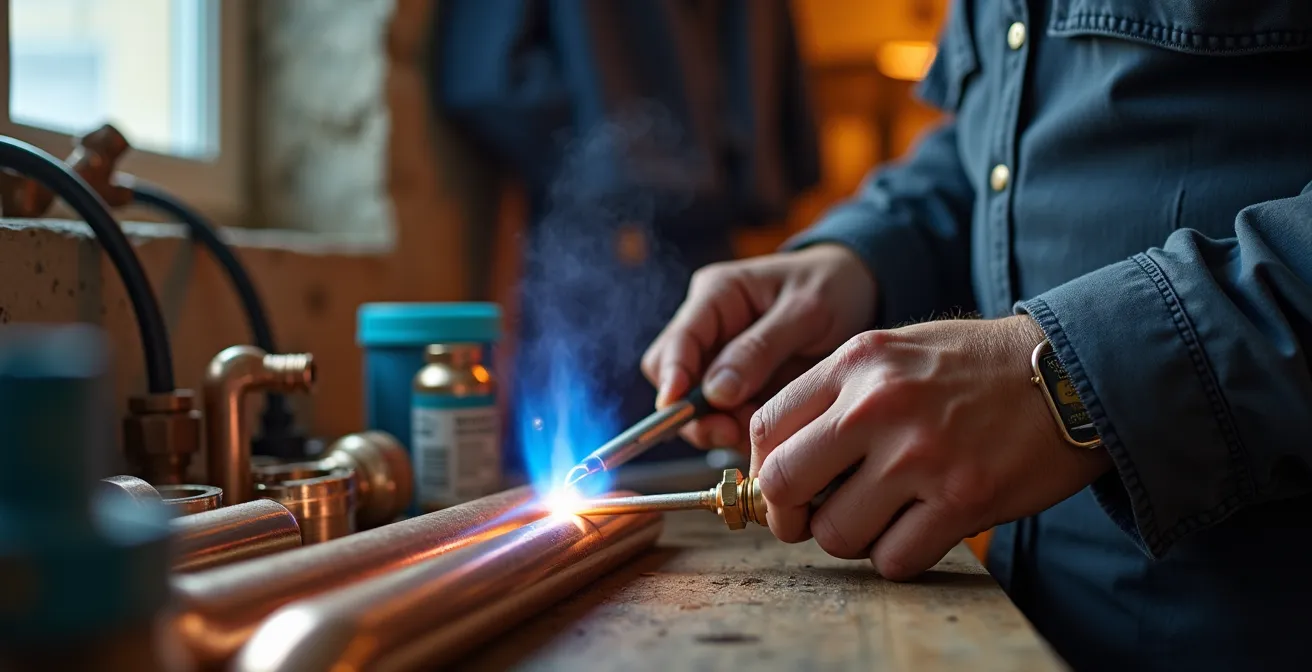
The real cost of plumbing isn’t the initial price tag, but the long-term price of failure and potential health risks.
- Copper naturally stops the growth of harmful bacteria like Legionella in your water lines.
- A properly installed copper system has a proven lifespan of 50-70 years, often double that of plastic alternatives.
- Soldered copper joints form a permanent metallurgical bond, not a mechanical seal that can degrade over time.
Recommendation: For any Quebec home, investing in Type L copper is the definitive choice for lasting peace of mind, superior health safety, and preserving your property’s value.
When renovating a home, especially in a place with demanding seasons like Quebec, every material choice carries weight. The debate between traditional copper piping and modern plastics like PEX for hot water lines often boils down to a simple, yet misleading, conversation about upfront cost. Plastic is cheaper and faster to install, and the conversation often ends there. This perspective, however, completely overlooks the fundamental science of the materials themselves and the long-term implications for your home’s structural integrity and your family’s health.
The allure of plastic convenience is powerful, but it comes at a hidden cost. It trades the proven, intrinsic qualities of a noble metal for the disposability of a polymer. The real question isn’t “Which is cheaper today?” but “Which material provides a safer, more durable infrastructure for my home for the next half-century?”. This is where copper’s inherent properties—its natural ability to purify, its immense strength, and its incredible longevity—are not just features, but essential pillars of a quality home.
This guide moves beyond the surface-level cost analysis. We will delve into the metallurgical science that makes copper the superior choice. We will explore why a properly soldered joint is fundamentally different from a plastic fitting, how copper protects your water from bacteria, and what specific types and techniques are essential for a leak-free system that will outlast the competition, especially within the unique context of Quebec’s building standards and climate.
To fully understand this investment in your home’s future, this article is structured to guide you through the key advantages and technical considerations of copper plumbing. Explore the topics below to see why this classic material remains the undisputed champion for hot water lines.
Summary: Why Is Copper Piping Still the Best Choice for Hot Water Lines?
- How does copper naturally prevent the proliferation of bacteria in your pipes?
- Copper vs PEX: is the price difference worth the 50-year lifespan?
- Lead-free soldering: the rules of the art to avoid future leaks
- The metal contact error that pierces your pipes of copper in 5 years
- Type M or Type L: which is mandatory for drinking water in Quebec?
- Chlorinated water: why CPVC or PEX resist better than thin copper?
- Blue (L) vs. Red (M): how to identify the copper thickness at a glance?
- How Does a PEX Manifold System Reduce Leak Risks in Your Home?
How does copper naturally prevent the proliferation of bacteria in your pipes?
One of the most profound yet often overlooked advantages of copper is its inherent ability to protect the water flowing through it. Unlike inert materials like plastic, copper is biochemically active. It possesses a natural antimicrobial property known as the oligodynamic effect. When water is in contact with copper, the metal releases ions that are lethal to a wide range of microorganisms, including harmful bacteria, viruses, and fungi. This isn’t a chemical coating that wears off; it’s an intrinsic property of the metal itself.
This is critically important for drinking water safety, particularly in preventing the growth of dangerous pathogens like Legionella pneumophila, the bacterium responsible for Legionnaires’ disease. This bacterium can thrive in the stagnant water and biofilm that can form inside plastic pipes. In a copper system, the environment is actively hostile to its survival. As one research team noted when studying its application in plumbing systems:
Copper is an antimicrobial that is commonly applied to premise plumbing systems for Legionella control. The oligodynamic effects of the silver and copper ions appear to be added to the effects of routine chlorination.
– Research team, Effects of Copper on Legionella pneumophila
Choosing copper is therefore a proactive step for your family’s health. It creates a plumbing infrastructure that doesn’t just transport water but actively helps maintain its purity. While municipal water treatment is the first line of defense, copper pipes provide a crucial, continuous second layer of protection right inside the walls of your home, something no plastic pipe can offer.
Copper vs PEX: is the price difference worth the 50-year lifespan?
The most common argument against copper is its initial cost. There is no denying that, on a per-foot basis, PEX plastic tubing is significantly cheaper. However, framing the decision solely on this metric is shortsighted. The true cost of a plumbing system must be evaluated over its entire operational life, a concept known as total cost of ownership. When you factor in longevity, durability, and resistance to failure, copper proves to be the wiser long-term investment.
A professionally installed copper plumbing system has a proven lifespan of 50 to 70 years. In contrast, PEX manufacturers typically warranty their products for 25 to 40 years. This means a copper system is expected to last twice as long, potentially for the entire time you own your home. In Quebec, where renovation projects are significant investments, choosing a material that will not need to be replaced in your lifetime provides invaluable peace of mind and adds tangible value to your property.
A recent case study on plumbing materials in Quebec highlights this reality. While acknowledging higher upfront costs, it emphasizes that for local homeowners, the reliability pays for itself. It notes that copper’s resilience to the province’s temperature extremes and its inherent properties are invaluable for those seeking to avoid future problems. The following table breaks down the key differences:
| Criteria | Copper Pipes | PEX Pipes |
|---|---|---|
| Initial Cost per Linear Foot | $3-$8 | $0.40-$0.50 |
| Lifespan | 50-70 years | 25-40 years |
| Pressure Resistance | Superior | Lower |
| Antimicrobial Properties | Natural protection | None |
| Quebec Winter Performance | Excellent if protected | Risk of UV damage during construction |
When you consider that a single plumbing failure can cause thousands of dollars in water damage, repair costs, and disruption, the initial savings of PEX begin to look much less attractive. Investing in copper is investing in a system designed not to fail, effectively buying insurance against future disasters.
Lead-free soldering: the rules of the art to avoid future leaks
A common misconception is that copper systems are prone to leaks at the joints. In reality, a properly soldered copper joint is not a weak point; it is a seamless, permanent metallurgical bond that is as strong, or even stronger, than the pipe itself. The risk of leaks comes not from the material, but from improper craftsmanship. Unlike the mechanical crimps and clamps of PEX systems, which rely on pressure and seals that can degrade, soldering creates a fused connection that becomes one with the plumbing.
The process, while requiring skill, is based on clear scientific principles. It involves cleaning the copper to a bright finish, applying flux to prevent oxidation and facilitate solder flow, and heating the joint to the precise temperature. The lead-free solder is then drawn into the joint by capillary action, creating a complete, 360-degree seal. This process, when done correctly, creates a connection impervious to pressure and temperature changes for decades.

For any homeowner or contractor, mastering these “rules of the art” is non-negotiable for ensuring a leak-free system. It’s a craft that pays dividends in reliability. The integrity of your entire plumbing system depends on getting every single joint right.
Your checklist for a perfect, leak-free solder joint
- Preparation is key: Thoroughly clean the exterior of the pipe end and the interior of the fitting with emery cloth or a wire brush until the copper is bright and shiny. Any dirt or oxidation will prevent a proper bond.
- Apply the right flux: Use a thin, even layer of lead-free flux, specifically rated for potable water systems (NSF-certified), on both cleaned surfaces. Do not over-apply.
- Heat the fitting, not the pipe: Direct the flame of a MAPP gas torch primarily onto the fitting. This draws the heat through the joint and allows the solder to be pulled in by capillary action.
- Apply solder correctly: Touch the lead-free solder (a 95/5 tin-antimony formula is standard) to the point where the pipe and fitting meet, on the side opposite the flame. Let the heat of the joint melt the solder, not the direct flame.
- Cool and clean: Allow the joint to cool naturally without disturbance. Once cool, use a damp cloth to wipe away any excess flux, which is acidic and can cause corrosion over time.
The metal contact error that pierces your pipes of copper in 5 years
While copper is incredibly durable, it has one specific vulnerability that every homeowner in Quebec should be aware of: galvanic corrosion. This destructive process, also known as electrolysis, occurs when copper is in direct physical contact with a different, less noble metal (like galvanized steel) in the presence of an electrolyte (water). This creates a small electrical circuit, causing the more reactive metal to corrode, but it also accelerates the corrosion of the copper, leading to pinhole leaks.
This isn’t a slow degradation over decades. As industry experts warn, electrolysis from dissimilar metal contact can cause failure within 5 years. A common place to find this error is where copper pipes are supported by galvanized steel hangers or straps in a basement, or where a copper line is directly connected to a steel water heater tank without a proper dielectric union. The constant, small electrical current literally eats away at the pipe wall until it fails.
The good news is that this is entirely preventable with proper installation and inspection. The key is to ensure copper is always isolated from other metals. This can be done using plastic-coated hangers, copper-plated supports, or special insulating fittings. When connecting to other types of pipes, like PEX or steel, using the correct brass transition fittings is essential. A quick inspection in your basement can save you from a major headache down the road. Look for these specific points of contact:
- Pipe hangers and straps: Ensure they are either copper, plastic, or plastic-coated. If you see a galvanized steel strap directly touching a copper pipe, it’s a problem waiting to happen.
- Connections to appliances: Check the connections to your hot water tank. There should be a dielectric union—a special fitting with a plastic sleeve that separates the steel tank nipple from the copper pipe.
- Contact with other systems: Verify that copper pipes are not resting against steel ductwork or other metal components without insulation between them.
- Electrical grounding: Ensure that if a grounding wire is attached to the plumbing, a proper jumper cable is used across components like water meters to maintain a continuous path and prevent the plumbing from becoming part of the circuit.
Type M or Type L: which is mandatory for drinking water in Quebec?
Not all copper pipe is created equal. When selecting copper for a residential project, you will primarily encounter two types: Type M and Type L. The difference is simple but crucial: wall thickness. Type L has thicker walls than Type M, making it stronger, more durable, and more resistant to pressure and corrosion. This distinction is critical in the context of Quebec’s plumbing codes and climate.
Type M (identified by red markings) is thinner and less expensive. While it is generally accepted by plumbing codes for many above-ground domestic water applications, its thinner walls make it more susceptible to damage and corrosion over time. Type L (identified by blue markings) is the thicker, more robust option. It is the standard for underground service lines and is highly recommended for all residential water supply applications where longevity is a priority.
While Type M might be technically “allowed” for some hot water lines, choosing Type L is a mark of quality construction. The thicker wall provides a significantly greater margin of safety against corrosion, water pressure fluctuations, and the stresses of temperature cycles common in the Quebec climate. This enhanced durability is why professional plumbers confirm that Type L copper lasts 50-70 years, often outperforming its thinner-walled counterpart significantly. The modest additional cost for Type L is a negligible price to pay for a much more resilient and long-lasting system.
For any homeowner undertaking a renovation, the choice should be clear. Insisting on Type L copper for all potable water lines is not “over-engineering”; it’s a smart, long-term investment in the durability and safety of your home’s plumbing infrastructure. It’s the choice that ensures your system will stand the test of time.
Chlorinated water: why CPVC or PEX resist better than thin copper?
Proponents of plastic piping often point to its resistance to chlorine, which is used as a disinfectant in municipal water supplies. They argue that chlorinated water can be aggressive towards copper, causing corrosion. While there is a kernel of truth to this, the context is critical. This issue, known as erosion-corrosion, primarily affects thin-walled Type M copper, and only under specific conditions of high water velocity and high temperatures.
This is another compelling reason to specify the use of thicker-walled Type L copper. Its superior thickness provides substantially better resistance to this type of erosion. Furthermore, the chemistry of the water itself plays a huge role. Research published by the American Chemical Society demonstrates the complexity of these interactions. One study on water chemistry factors found that elements like water pH and the presence of corrosion inhibitors (like orthophosphates, which are often added by municipalities) can significantly mitigate any corrosive effects on copper systems.
The visual of a water treatment facility reminds us that our water is a complex, engineered product. The choice of plumbing material must account for this reality.

Therefore, the argument that PEX or CPVC are universally “better” in chlorinated water is an oversimplification. A properly designed system using Type L copper is more than capable of handling municipally treated water for its full 50-70 year lifespan. The solution is not to switch to a less durable material like plastic, but to use the correct specification of copper, which has been the gold standard in these exact conditions for generations.
Blue (L) vs. Red (M): how to identify the copper thickness at a glance?
For a homeowner, being able to quickly identify the quality of copper used in their home is empowering. Fortunately, manufacturers make it simple by using a standardized color-coding system printed directly on the pipe. This allows you to verify at a glance whether you have the standard, thinner pipe or the more robust, premium option.
The two colors you will almost always see in a residential setting are red and blue. Red printing indicates Type M copper, the thinner-walled pipe. Blue printing indicates Type L copper, the thicker and more durable option. A third type, Type K (marked in green), has the thickest walls and is typically reserved for heavy-duty commercial or underground applications and is rarely seen inside a home. Knowing this simple code allows you to assess the quality of an installation instantly.
This knowledge proved invaluable for one Quebec homeowner, whose experience highlights the long-term benefit of investing in quality materials from the start.
When inspecting my Montreal home’s plumbing, I discovered blue-marked Type L copper throughout the system. My plumber explained this was installed by the previous owner who invested in quality – these thicker pipes have served the home for over 40 years without a single leak, surviving Quebec’s harsh temperature swings. The extra investment in Type L has clearly paid dividends in reliability and home value.
– Quebec Homeowner, Square One
So, the next time you are in your basement or looking at plumbing during a renovation, look for the color of the print. Seeing blue is a reassuring sign that a long-term, quality-first decision was made for the home’s plumbing system. It’s a simple visual cue that speaks volumes about the durability of the infrastructure hidden behind your walls.
Key takeaways
- A soldered copper joint creates a permanent metallurgical bond, far superior to the mechanical seals of plastic fittings.
- Always use thicker-walled Type L copper (blue marking) for potable water in Quebec for maximum durability.
- Preventing galvanic corrosion by isolating copper from other metals is the single most important maintenance check you can perform.
How Does a PEX Manifold System Reduce Leak Risks in Your Home?
One of the most compelling arguments for PEX is its compatibility with a manifold system. A manifold is a central hub from which individual, continuous lines of PEX tubing run directly to each fixture (a sink, a shower, a toilet). This design dramatically reduces the number of connection fittings hidden within walls and floors, as the only connections are at the manifold and the fixture itself. Since fittings are statistically the most likely points of failure in any plumbing system, this “home-run” layout inherently reduces leak risk.
This is a legitimate engineering advantage and a smart way to design a plumbing system. However, it’s an advantage of system *design*, not necessarily of material superiority. The debate then shifts from the number of joints to the quality and reliability of the joints that do exist. A copper system, though it may have more joints, relies on a fundamentally more reliable connection method.
The following table puts the reliability of these connections into perspective. A soldered joint’s main risk is human error during installation, but once made, the bond is permanent. Mechanical PEX fittings, however, introduce materials—brass fittings, steel crimp rings, rubber O-rings—that can degrade over time.
| Connection Type | Failure Mode | Long-term Reliability | Quebec Climate Performance |
|---|---|---|---|
| Soldered Copper Joint | Poor initial craftsmanship | Permanent metallurgical bond | Excellent freeze resistance when properly done |
| PEX Crimp Fittings | Dezincification of brass, improper crimping | Mechanical connection subject to degradation | Risk at critical connection points |
| PEX Push-Connect | O-ring degradation over time | Dependent on rubber seal integrity | Temperature cycling affects seal life |
Ultimately, the integrity of a PEX connection is limited by the lifespan of its weakest component. For copper, the connection is as permanent as the metal itself. As a professional analysis from This Old House concludes, the focus should be on the inherent nature of the bond. Their experts state:
A well-made solder joint is a permanent, metallurgical bond that is as strong and durable as the pipe itself. The risk is in the initial craftsmanship, not in the long-term material degradation of a mechanical joint.
– Professional plumbing analysis, This Old House – Copper Connection Methods
For any homeowner in Quebec facing this choice, the path to long-term security is clear. The proven durability, health benefits, and metallurgical integrity of a properly installed Type L copper system make it the unequivocal best investment for your home’s hot water lines. To ensure your project meets these standards, the next step is to consult with a qualified plumber who values quality craftsmanship.
Frequently asked questions on Why Is Copper Piping Still the Best Choice for Hot Water Lines?
What does blue printing on copper pipes mean?
Blue printing indicates Type L copper with thicker walls, commonly used for residential and commercial water supply applications requiring greater durability.
What does red printing on copper pipes signify?
Red printing typically indicates Type M copper with thinner walls, suitable for low-pressure residential applications where cost savings are prioritized.
Is green printing ever seen on residential copper pipes?
Green printing indicates Type K copper with the thickest walls, primarily used for deep underground burial or industrial applications, rarely seen in residential settings.