
Every reliable plumbing system begins with the right equipment. Whether you’re planning a new installation, upgrading an aging system, or simply trying to understand what’s already in your walls, the products you choose directly impact water quality, system longevity, safety, and long-term maintenance costs. From the copper pipes carrying fresh water to your kitchen sink, to the backflow preventer protecting Quebec’s municipal supply, each component plays a critical role.
This comprehensive resource introduces the essential categories of plumbing products and equipment used in Canadian residential and commercial settings. You’ll discover how different materials compare, why certain safety devices are mandatory, and what factors to consider when selecting components that will serve you reliably for decades. Our goal is to demystify the technical landscape and empower you to make informed decisions, whether you’re working with a contractor or tackling a project yourself.
Clean, consistently pressured water isn’t just convenient—it’s essential for health, appliance performance, and everyday comfort. The equipment responsible for delivering this quality often works silently behind the scenes, yet understanding these components helps you diagnose issues and make strategic upgrades.
Municipal water pressure in Quebec can vary significantly, sometimes exceeding 80 PSI in areas with elevation changes or near pumping stations. Without proper regulation, this excessive pressure stresses fixtures, causes water hammer, and dramatically shortens the lifespan of appliances like dishwashers and water heaters. A pressure-reducing valve (PRV) installed at your main supply line acts like a governor, maintaining a steady downstream pressure—typically 50-60 PSI—regardless of fluctuations in the municipal system.
Think of it like the shock absorbers in your car: they smooth out the bumps to protect everything downstream. When properly adjusted and occasionally serviced, a quality PRV can last 15-20 years while protecting thousands of dollars in plumbing infrastructure.
Quebec’s water sources vary from treated municipal supplies to private wells drawing from artesian aquifers. Each source presents unique challenges. Hard water, common in regions with limestone geology, leaves mineral deposits that clog aerators and reduce heating efficiency. Water softeners using ion exchange technology address this by replacing calcium and magnesium ions with sodium.
For homeowners on well systems, treatment needs may include sediment filters to remove particulates, UV sterilizers to neutralize bacteria, or specialized filters targeting iron, sulfur, or other contaminants specific to your water analysis. The Canadian Drinking Water Guidelines provide clear thresholds, and local laboratories can test your supply to identify exactly which treatment equipment you need—no more, no less.
The pipes coursing through your walls represent a long-term investment. Material selection affects everything from installation cost and freeze resistance to water purity and system flexibility. Modern plumbing offers several proven options, each with distinct advantages for different applications.
Copper piping has served Canadian homes for over a century, and for good reason. Its natural antibacterial properties actively inhibit bacterial growth on contact surfaces, contributing to water purity. Copper is available in three main types: Type M (thinnest wall, residential), Type L (medium wall, most common residential and light commercial), and Type K (thickest wall, underground and critical applications).
The material’s longevity is exceptional—properly installed copper systems routinely exceed 50 years of service. While initial material costs are higher than plastic alternatives, the return on investment becomes clear when you factor in durability, repair-free decades, and the increased resale value that quality materials bring to Quebec homes. Copper also handles freeze-thaw cycles better than many assume, though exposed runs still require insulation in our climate.
Cross-linked polyethylene (PEX) has revolutionized residential plumbing over the past two decades. Its flexibility eliminates many fittings, reduces installation time, and allows for creative routing during renovations—threading through existing walls without extensive demolition. The “home run” distribution system, where each fixture receives a dedicated line from a central manifold, simplifies troubleshooting and allows individual fixture shutoff without affecting the entire home.
PEX comes in three types—A, B, and C—differentiated by their manufacturing process. Type A offers the best freeze resistance and expandability for fittings, while Type B is more rigid but often more economical. For Quebec’s climate, freeze resistance is particularly relevant: PEX can expand to accommodate ice formation and return to its original shape, significantly reducing burst risk compared to rigid materials.
In commercial kitchens, laboratories, hospitals, and high-end residential installations, stainless steel piping represents the ultimate in purity and corrosion resistance. Grades 304 and 316 resist virtually all potable water corrosion, maintain inert contact with water chemistry, and tolerate extreme temperatures and pressures. The material requires specialized welding techniques—particularly sanitary orbital welding that creates smooth, bacteria-resistant joints—but the result is a system that can function flawlessly for the life of the building.
While the upfront investment is substantial, critical applications like pharmaceutical manufacturing or high-purity water systems justify this premium through eliminated contamination risks and minimal maintenance requirements over decades of service.
Modern plumbing codes mandate several protective devices that most homeowners never see but depend on daily. These components prevent scalding injuries, protect municipal water supplies from contamination, and ensure systems operate within safe parameters. Understanding these devices helps you maintain compliance and protect your household.
Water heaters in Canada are often set to 60°C (140°F) to prevent Legionella bacteria growth—a temperature that can cause third-degree burns in under five seconds. Anti-scald valves, particularly thermostatic mixing valves (TMVs), blend hot and cold water to deliver a safe maximum temperature to fixtures, typically 49°C (120°F) for general use or 43°C (109°F) for bathing.
These devices are particularly crucial in homes with young children, elderly residents, or anyone with reduced mobility or sensory perception. Quebec’s construction codes now require them in specific applications, and many insurance providers recognize their installation as a risk-reduction measure. Quality certified models feature fail-safe mechanisms that shut off hot water flow entirely if cold supply is interrupted, preventing scalding even during system failures.
Your home’s plumbing connects to the municipal water supply, but that connection is a two-way street without proper protection. Backflow preventers ensure that water only flows in one direction—into your property—preventing contamination of the public supply if pressure reverses. This can occur during water main breaks, firefighting operations, or even when a garden hose is submerged in a pool.
Commercial and industrial properties often require testable devices like Double Check Valve Assemblies (DCVA) or Reduced Pressure Zone devices (RPZ/RP), which must be inspected annually by certified technicians. Municipalities across Quebec enforce these requirements seriously—failure to test can result in water shutoff and significant fines. Residential applications typically use simpler vacuum breakers or dual-check valves, but any cross-connection (irrigation systems, boiler fills, commercial equipment) demands appropriate protection matched to the hazard level.
Valves are the control points of your plumbing system, allowing you to isolate sections for repairs, regulate flow, and respond quickly to emergencies. The quality of these components directly affects system reliability and your ability to perform maintenance without major disruption.
The ball valve has largely replaced traditional gate valves in modern installations due to its reliability and longevity. A quarter-turn of the handle rotates a perforated stainless steel ball within the valve body, providing immediate, complete shutoff with a clear visual indicator of position. Full-port ball valves maintain the same internal diameter as the pipe, ensuring no flow restriction when open.
Quality matters significantly with ball valves. Premium units feature PTFE (Teflon) seats that resist wear and maintain seal integrity even after years of service, while economy versions may use materials that degrade or seize. For critical locations—main shutoffs, water heater isolation, zone controls—investing in brass-bodied, stainless-balled valves with blow-out proof stems ensures decades of reliable operation. Always operate these valves gently; forcing a stuck valve can damage the seat and create leaks.
In hydronic heating systems and sophisticated plumbing layouts, zone valves allow automated or manual control of flow to different areas. These motorized valves respond to thermostats or timers, directing heated water only where needed and improving energy efficiency. Similarly, balancing valves in domestic hot water recirculation systems fine-tune flow rates to ensure quick hot water delivery without wasting energy pumping excess volume.
The selection of appropriate valve types—whether ball, gate, globe, or specialized designs—depends on the application. As a general principle: use ball valves for on/off control, globe valves for throttling and flow regulation, and check valves to enforce one-directional flow.
Beyond pipes and valves, several specialized components ensure system integrity, manage thermal expansion, and handle drainage safely. These “supporting players” often determine the difference between a system that functions adequately and one that performs flawlessly for decades.
When water heats, it expands. In a closed plumbing system—which describes virtually all modern installations with backflow prevention or check valves—this expansion has nowhere to go. Without accommodation, pressure can spike above 150 PSI, stressing pipes, fixtures, and the water heater itself, leading to relief valve discharge or even tank failure.
An expansion tank provides a cushion: a sealed vessel with a flexible diaphragm separating an air chamber from the water side. As heated water expands, it compresses the air cushion, maintaining safe system pressure. Proper sizing depends on water heater capacity, supply pressure, and temperature differential. The tank must be installed on the cold water supply side, properly supported, and with the air chamber precharged to match static water pressure. Checking this precharge annually—when the system is drained—takes minutes and prevents premature diaphragm failure.
In basements, mechanical rooms, commercial kitchens, and anywhere water spillage occurs, floor drains provide essential protection against flooding and facilitate cleaning. Quality units specify load class ratings (light-duty residential to heavy-duty vehicular traffic), sanitary design that prevents bacterial harboring, and trap configurations that maintain water seals against sewer gas intrusion.
Stainless steel bodies offer superior corrosion resistance in harsh environments, while cast iron remains standard for many commercial applications. Trap primers—small devices that automatically replenish evaporating trap water—prevent dry traps and odor issues in infrequently used drains, a common problem in seasonal properties or mechanical rooms.
Modern high-efficiency boilers—increasingly common in Quebec homes pursuing energy efficiency—require specific protective accessories to achieve their rated lifespan. Air eliminators remove dissolved gases that cause corrosion and noise; dirt separators and magnetite filters capture the iron oxide particles that circulating water generates over time; hydraulic separators or buffer tanks decouple primary and secondary circuits, preventing short-cycling and improving temperature stability.
These components aren’t optional extras—they’re essential to protecting investments that often exceed $5,000-$10,000. Manufacturers increasingly void warranties when proper system protection isn’t documented, making these accessories a practical necessity rather than a luxury.
Plumbing equipment spans a vast quality spectrum. Understanding what separates premium components from economy alternatives empowers you to invest strategically—splurging where it matters, economizing where it doesn’t.
In Canada, look for products certified to CSA (Canadian Standards Association) and NSF (National Sanitation Foundation) standards. NSF/ANSI 61 certification specifically addresses lead content and material safety for potable water contact—critical for fittings, pipes, and fixtures. The presence of these marks indicates third-party testing and compliance with health and safety standards that protect your family.
For brass fittings and fixtures, lead-free designation (maximum 0.25% lead content) became mandatory in recent years. Older installations may contain leaded brass, which can contribute to drinking water contamination, particularly in corrosive water conditions. When replacing components, always specify lead-free certified products.
Several factors signal superior quality: thicker walls in pipes and fittings resist pressure and corrosion longer; forged brass components outperform cast equivalents in strength; stainless steel internal components in valves resist corrosion better than brass or plastic; and replaceable parts (valve cartridges, seats, seals) extend service life and reduce waste.
Dezincification—the selective corrosion of zinc from brass alloys—creates weak, porous material prone to failure. Quality brass fittings use dezincification-resistant (DZR) alloys, often marked with a yellow band or DZR stamp. This small detail prevents catastrophic failures years down the line, when a fitting crumbles under normal pressure.
The cheapest component at purchase rarely proves economical over its service life. Consider a $15 economy ball valve versus a $45 premium model. If the economy valve fails after 8 years, requiring a $200 plumber visit for replacement, while the premium valve lasts 25 years, the total cost of ownership strongly favors the initial investment. This calculation becomes even more compelling for components installed in difficult-to-access locations or where failure causes significant damage—think valves behind finished walls or under concrete slabs.
Professional plumbers often prefer premium components not only for their reliability but because they reduce callback risk and preserve their reputation. When hiring contractors, asking about product specifications signals that you value quality and understand the long-term implications of material choices.
The plumbing products and equipment in your home form an interconnected system where quality compounds. Premium pipes deserve quality fittings; sophisticated controls justify protective devices; and critical safety components warrant certified, tested products. By understanding the purpose, options, and quality indicators for each component category, you transform from passive consumer to informed decision-maker—capable of asking the right questions, evaluating proposals, and building systems that deliver decades of reliable, safe service. Whether you’re planning a new installation or maintaining an existing system, this knowledge empowers you to invest wisely and protect what matters most: your family’s health, your property, and your peace of mind.
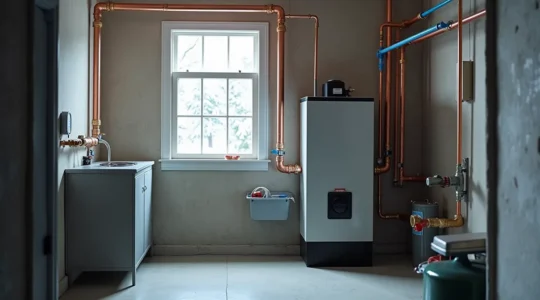
Your expensive new high-efficiency boiler is far more fragile than its cast-iron predecessor and is under constant attack from invisible threats within your heating system. Modern boilers use narrow passages and ECM pumps with powerful magnets, which are extremely vulnerable…
Read more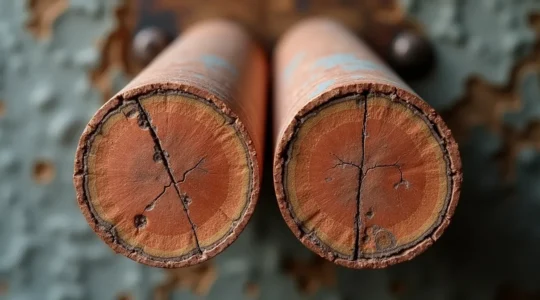
For any commercial or institutional project in Quebec, specifying Type L copper is the only professionally responsible choice to ensure long-term system integrity and mitigate liability. Type M’s thinner wall is non-compliant for critical applications like gas lines and cannot…
Read more
For most Quebec renovations, PEX is the superior choice due to its unmatched climate resilience and significant cost-effectiveness. It excels in freeze-thaw cycles, drastically reducing the risk of burst pipes during our harsh winters. It significantly cuts down on labour…
Read more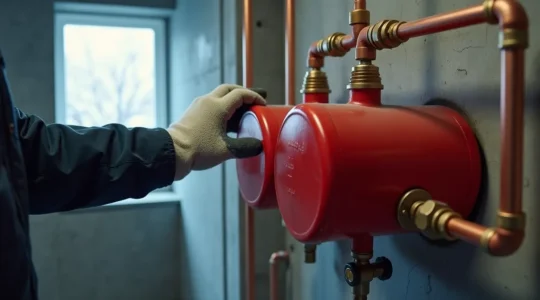
That puddle by your boiler isn’t just a nuisance; it’s a critical symptom. The leaking relief valve is rarely the problem itself but a sign that your heating system can no longer manage pressure changes from thermal expansion. The true…
Read more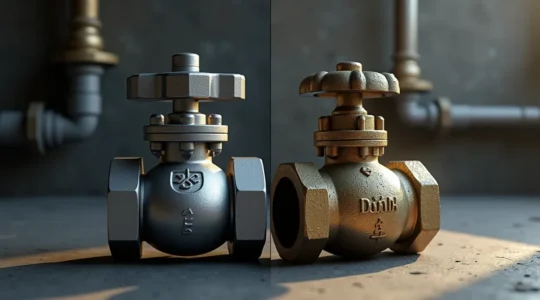
That old, stiff gate valve in your basement isn’t a charming relic; it’s an engineered failure waiting to happen, and relying on it is an act of plumbing negligence. Ball valves guarantee a reliable, leak-proof shutoff even after a decade…
Read more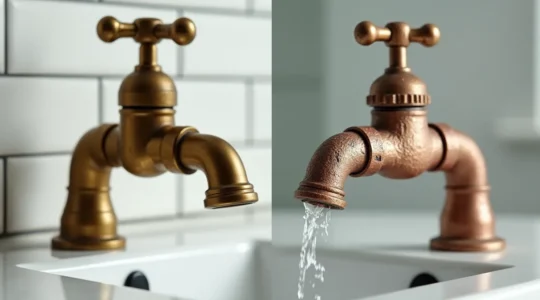
Contrary to the old adage, a fitting’s weight is not the ultimate sign of quality; its true durability is written in its metallurgical composition and its certification marks. The tell-tale pink stain on brass (dezincification) is a sign of imminent…
Read more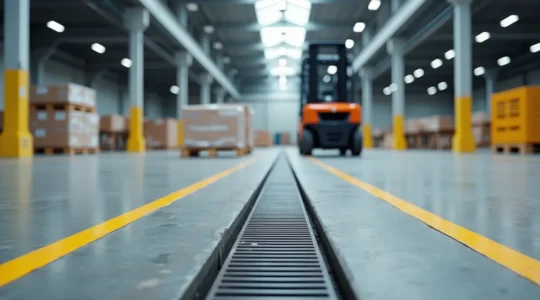
Choosing a trench drain in Quebec is not about picking the strongest part; it’s about engineering a complete system to survive the unique pressures of dynamic loads, extreme thermal shock, and local regulations. Forklift braking and turning can triple the…
Read more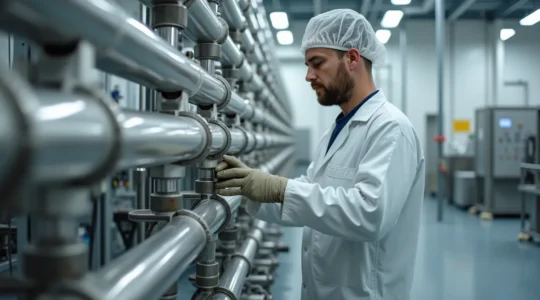
The critical decision for industrial piping isn’t merely stainless steel versus copper; it’s about mastering the physics of failure to prevent catastrophic downtime and ensure regulatory compliance in Quebec’s demanding environments. The correct material grade (e.g., 316L for chlorides) and…
Read more
The annual backflow preventer test is a mandatory legal assessment of your commercial property’s financial liability, not just a plumbing inspection. Under Quebec law, failure to certify your device annually exposes your business to daily fines, insurance cancellation, and legal…
Read more
A thermostatic mixing valve (TMV) isn’t just a safety gadget; it’s an active safety system legally required in Quebec for dual protection against severe scalding burns and Legionella bacteria. It actively shuts down water flow during a cold water supply…
Read more