
Every plumbing system, whether in a century-old Victorian home in Montreal’s Plateau or a modern condo in downtown Quebec City, shares a common vulnerability: without proper maintenance and timely repair, even the most robust installations will eventually fail. The difference between a minor inconvenience and catastrophic property damage often comes down to understanding what needs attention, when, and how to address it before small issues cascade into expensive emergencies.
Maintenance and repair form the backbone of reliable plumbing infrastructure. This comprehensive resource introduces the essential practices that keep water flowing safely, protect property values, ensure regulatory compliance, and safeguard the health of building occupants. From preventive scheduling that reduces long-term costs to emergency protocols that minimize damage during crises, we’ll explore the interconnected systems that demand your attention throughout the year.
Think of your plumbing system as the circulatory network of your building. Just as preventive healthcare catches potential problems before they become life-threatening, strategic maintenance identifies wear, corrosion, and inefficiencies while they’re still manageable. A study by insurance industry experts found that properties with documented maintenance programs experience significantly fewer catastrophic failures and file fewer claims related to water damage.
Quebec’s harsh climate compounds these challenges. The annual freeze-thaw cycles place extraordinary stress on pipes, joints, and exterior fixtures. A hairline crack that appears insignificant in July can split wide open during a February cold snap, flooding your basement in minutes. Regular inspections during shoulder seasons—spring and fall—allow you to spot deterioration before winter’s punishing temperatures arrive.
Beyond avoiding disasters, preventive maintenance delivers measurable financial returns. Heating systems maintained annually operate 15-20% more efficiently than neglected units, translating directly to lower energy bills. Replacing worn washers costs a few dollars; repairing water damage from a burst supply line can easily exceed several thousand. The math consistently favors anticipation over reaction.
When disaster strikes—a burst pipe at 2 AM, sewage backing up through basement drains, or a failed water heater flooding your mechanical room—the first three minutes determine whether you face a cleanup or a complete renovation. Understanding emergency protocols transforms panic into decisive action.
Every household member should know the exact location of the main water shutoff valve. In most Quebec homes, you’ll find it near where the municipal water line enters the building, typically in the basement close to the front foundation wall or in a utility room. Tag this valve with a brightly colored label, ensure it’s easily accessible (not buried behind storage), and test it twice yearly to confirm it hasn’t seized from corrosion.
Gate valves, common in older installations, require multiple full rotations to close completely. Ball valves, standard in recent construction, shut off with a simple quarter-turn. If your valve is stiff or leaking around the packing nut, schedule replacement before an emergency forces you to struggle with a corroded mechanism while water pours into your living space.
After shutting off water, your priorities shift to containment. Have these items in your emergency kit:
Never operate electrical equipment while standing in water. If flooding affects areas near your electrical panel, breaker boxes, or outlets, shut off power to those circuits at the main panel before entering the space. This seemingly obvious precaution is frequently overlooked in the stress of crisis management.
Reactive repairs cost approximately three to four times more than preventive maintenance addressing the same components. Creating a realistic maintenance calendar transforms this abstract principle into concrete savings. The challenge lies in balancing thoroughness with practicality—an overly ambitious schedule you’ll never follow helps no one.
Start with monthly quick checks: inspect visible pipes for corrosion or moisture, listen for unusual sounds from water heaters and pumps, test your sump pump by pouring water into the pit, and run water through rarely-used fixtures to prevent trap evaporation. These tasks require perhaps 20 minutes but catch the majority of developing problems.
Quarterly tasks dive deeper: clean aerators and showerheads affected by Quebec’s mineral-rich water, inspect washing machine supply hoses for bulging or cracking, test your backwater valve if equipped, and verify that all shutoff valves throughout the house operate smoothly. Documenting these inspections creates a valuable history if you later need to file insurance claims or demonstrate due diligence.
Annual professional service should include drain cleaning for main lines, water heater flushing to remove sediment buildup, heating system inspection and tuning, and pressure testing of backflow prevention devices where required. Many Quebec homeowners schedule these services in September, preparing systems for the demanding winter months ahead.
Service contracts offer predictable costs and priority scheduling—significant advantages during heating season when every plumber’s phone rings constantly. Quality contracts include emergency coverage, annual tune-ups, and discounted repair labor. However, read the fine print carefully. Some contracts exclude parts, limit covered components, or contain deductibles that erode value.
For investment properties or homes with older systems, contracts provide budget certainty. For newer construction with warranties still active, pay-as-you-go often makes more financial sense. Calculate the contract’s annual cost against typical service calls in your area to determine the breakeven point for your specific situation.
Quebec winters don’t forgive heating system failures. When outside temperatures plunge to -25°C and your furnace refuses to ignite, understanding basic diagnostics can mean the difference between a five-minute fix and an expensive emergency service call—or worse, a frozen pipe disaster while you wait for professional help.
Modern gas heating systems rely on flame sensors to verify combustion before allowing gas flow to continue. This critical safety component—a thin metallic rod positioned in the flame path—generates a minute electrical signal when heated. If this sensor becomes coated with carbon deposits or combustion residue, it can’t detect the flame, and the system shuts down as a safety precaution.
Cleaning a flame sensor is straightforward: shut off power and gas, remove the sensor (typically a single screw), gently polish the sensing rod with fine emery cloth or steel wool, and reinstall. This simple maintenance task, performed annually, prevents the majority of nuisance shutdowns during heating season.
Older furnaces and many gas water heaters use standing pilot lights rather than electronic ignition. These systems depend on thermocouples or thermopiles—devices that generate electrical current from heat—to hold open the gas valve. A thermocouple produces roughly 30 millivolts, sufficient for simple on/off control. A thermopile, actually multiple thermocouples wired in series, generates 500-750 millivolts, enough to power more complex valve systems.
When a standing pilot won’t stay lit after releasing the control knob, suspect a failed thermocouple. Testing requires a multimeter capable of reading millivolts. Position the sensing tip in the pilot flame, wait 60 seconds for it to heat fully, then measure voltage at the other end. Readings below 20 millivolts for thermocouples or 400 millivolts for thermopiles indicate replacement is necessary.
Boilers transfer heat from combustion gases to water through heat exchangers—networks of tubes or chambers where hot gases and water interact without mixing. Over time, combustion residue coats the gas side while mineral scale accumulates on the water side, both acting as insulators that reduce efficiency and force the burner to run longer for the same heat output.
Professional boiler maintenance includes brushing or pressure-washing exchanger surfaces, analyzing combustion gases to optimize the air-fuel mixture, and inspecting refractory materials that protect the firebox. These services typically occur annually, ideally in late summer before heating demands begin. Well-maintained boilers in Quebec commonly operate for 25-30 years; neglected units often fail within 15.
Isolation valves allow you to repair individual fixtures or sections without shutting down entire systems. More critically, they protect maintenance workers from unexpected water flow or pressure during repairs—a safety consideration formalized in lockout-tagout protocols required by occupational health and safety regulations across Canada.
Gate valves offer minimal flow restriction when fully open, making them ideal for main lines where you want maximum flow. However, they shouldn’t be used for frequent operation or throttling—they’re designed to be either fully open or fully closed. Quarter-turn ball valves provide better shutoff, resist corrosion, and withstand more operating cycles, explaining their dominance in new construction.
Specialty applications demand specific valve types. Backwater valves prevent sewage from flowing backward into your basement during municipal system overloads—a significant concern in older Quebec neighborhoods with combined storm-sewer systems. Check valves allow flow in only one direction, preventing backflow in supply lines. Pressure-reducing valves protect fixtures from excessive municipal water pressure that can exceed 550 kPa in some areas, well above the 400 kPa maximum most residential fixtures can handle safely.
Professional maintenance operations, particularly in commercial or multi-unit residential buildings, require formal lockout-tagout procedures. Before beginning work on any pressurized system, technicians must isolate energy sources (close valves, disconnect power), physically lock isolation points in the off position using keyed padlocks, and attach tags identifying who applied the lock and when.
These procedures prevent another worker from accidentally restoring water pressure or power while someone has hands inside equipment—a scenario that has caused numerous serious injuries. Even homeowners tackling DIY repairs should adopt this mindset: close the relevant valve, verify water has stopped, and place a visible warning note before beginning work.
Properties not connected to municipal sewage systems depend on private wastewater treatment—typically septic tanks and absorption fields. These systems require specific maintenance regimes and must comply with provincial environmental regulations designed to protect groundwater quality and public health.
Septic tanks separate solids from liquids through settling and bacterial digestion. Solids accumulate as sludge at the bottom and scum at the surface, gradually reducing the tank’s effective volume. Once solids occupy more than one-third of tank capacity, they begin escaping into the absorption field, clogging the soil and eventually causing system failure.
Provincial regulations typically require pumping every two to four years, though actual frequency depends on household size, water usage, and tank volume. A family of four with a standard 3,800-liter tank generally needs service every three years. Pumping during this maintenance visit isn’t simply vacuuming out contents—technicians should inspect baffles, check for cracks, and verify the tank isn’t leaking.
The absorption field (also called leach field or drain field) disperses treated wastewater into surrounding soil for final purification. This critical component represents the most expensive part of the system to replace, with costs often exceeding $15,000-$20,000 depending on soil conditions and site access.
Protect your field by directing surface water away from the area, never parking vehicles or placing structures over it (compaction destroys soil porosity), and avoiding water-intensive activities like filling a hot tub. Warning signs of field failure include soggy ground above the field, sewage odors, or slow drains throughout the house even after recent tank pumping. Early intervention when problems first appear can sometimes extend field life; waiting until complete failure occurs leaves no option but replacement.
During heavy rainfall events, municipal sewer systems can become overwhelmed, causing sewage to flow backward into homes through basement drains and toilets. Installing a backwater valve in your building drain provides mechanical protection against this scenario, automatically closing when reverse flow is detected.
Many Quebec municipalities now require backwater valves in new construction and some offer rebate programs for retrofitting existing homes. These devices need annual inspection to verify the flap moves freely and the chamber hasn’t accumulated debris that would prevent proper closing. This simple check protects against one of the most devastating and unsanitary types of water damage a property can experience.
Insurance companies increasingly require documented maintenance and specific protective measures before issuing or renewing coverage for water damage claims. These requirements reflect industry data showing that preventable failures account for the majority of expensive claims—costs ultimately passed to all policyholders through higher premiums.
Review your policy’s specific requirements, which commonly include annual inspection of washing machine supply hoses (replace any showing wear), testing sump pump operation, verifying roof flashings remain watertight, and confirming proper caulking around tubs and showers. Document these inspections with dated photographs stored in cloud backup or paper files kept off-site.
Properties with previous water damage claims face heightened scrutiny. You may be required to install leak detection systems that automatically shut off water when sensing moisture, upgrade to braided stainless steel supply hoses instead of rubber, or submit professional inspection reports confirming previous damage has been properly remediated.
Vacation properties or homes left unoccupied for extended periods trigger additional requirements. Most policies mandate either completely draining the plumbing system or maintaining minimum interior temperatures (typically 13-15°C) with daily monitoring. Some insurers now require smart monitoring systems that alert you to temperature drops or water flow anomalies when the property should be unoccupied.
When disaster does strike despite your best preventive efforts, thorough documentation dramatically improves claim outcomes. Before beginning emergency cleanup, photograph and video all affected areas from multiple angles, capturing water levels, damaged materials, and affected belongings. This evidence proves the damage extent before mitigation work alters the scene.
Maintain a home maintenance log recording all service work, repairs, and inspections. This demonstrates due diligence to adjusters and can be decisive when claims might otherwise be denied for “lack of maintenance.” Include receipts, contractor invoices, and before-after photos of any plumbing improvements or repairs.
Mastering maintenance and repair practices transforms plumbing from a source of anxiety into a manageable aspect of property stewardship. Whether you’re preventing basement floods through backwater valve installation, optimizing heating efficiency with annual service, or simply knowing where your shutoff valves are located, each element contributes to a resilient system that protects your investment and provides reliable service year-round. The knowledge gained here provides the foundation; the specialized topics within each area offer the depth needed to implement these practices confidently in your specific situation.
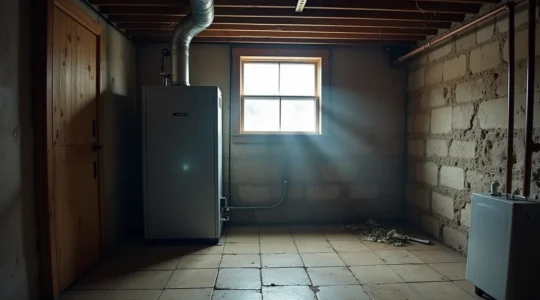
That 15% fuel increase from soot is a warning sign, not the main problem. The real danger is the cascade of expensive failures that follow, from cracked components to a complete system breakdown. Soot acts as an insulator, trapping extreme…
Read more
In summary: Your first move is always to stop the source. Immediately locate and shut off the main water valve. Safety first: Assess electrical risk. If water is near outlets or the breaker panel, do not touch it. Evacuate and…
Read more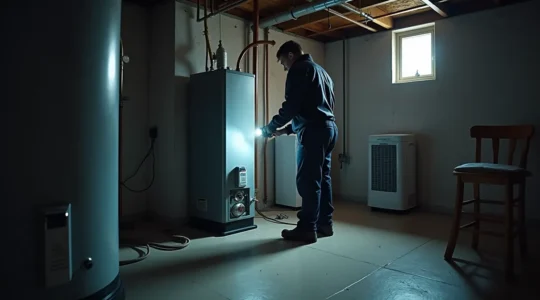
In summary: Your pilot light going out is usually a safety feature, not just a broken part. The most common cause is a dirty or failing thermocouple. The thermocouple is a small generator that uses the pilot’s heat to create…
Read more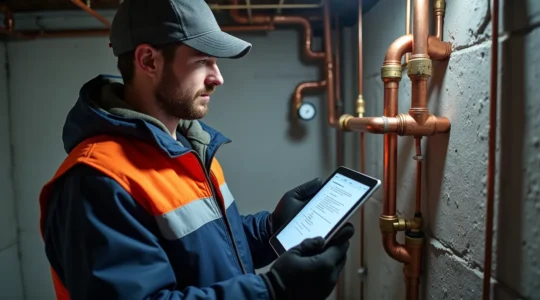
A standard pre-winter plumbing check isn’t enough in Quebec; your insurer can deny a water damage claim by citing simple maintenance oversights as “negligence.” Most homeowners focus on tasks like disconnecting hoses but miss critical points like rubber washing machine…
Read more
The high cost of emergency plumbing isn’t just about the hourly rate; it’s a failure of asset management that directly impacts your operational budget. Emergency calls are a reactive cost center, whereas preventive maintenance is a predictable investment in asset…
Read more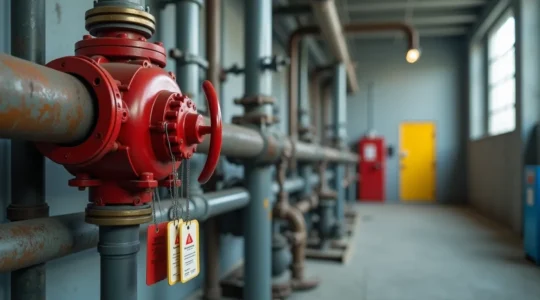
Lockout-tagout compliance in Quebec goes far beyond simply applying a lock; it legally requires achieving a verifiable zero-energy state, where the mechanical integrity of the gate valve is the most critical and often overlooked component. The choice between a gate…
Read more
In summary: Treat your septic system not as a tank, but as a living ecosystem sensitive to Quebec’s clay soil and cold climate. Focus on reducing the hydraulic load: separate rainwater, reuse greywater legally, and fix all leaks immediately. Protect…
Read more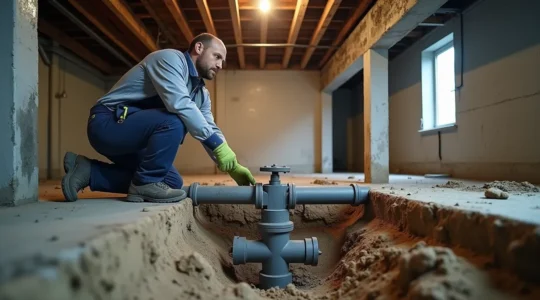
A backwater valve is mandatory in many Quebec regions not just for compliance, but as an act of sanitary and financial survival against increasingly overwhelmed municipal sewer systems. A poorly installed or neglected valve offers a dangerous false sense of…
Read more