
True Hilo mastery isn’t in the app’s settings—it’s in treating your home as a complete thermal ecosystem and gamifying your energy use.
- Understand and leverage Hilo’s pre-heating algorithm instead of fighting it for ultimate comfort and savings.
- Combine multi-zone heating with remote cottage control to establish total command over your energy footprint.
Recommendation: Start by auditing your home’s specific electrical system (voltages) and hunting for phantom loads to unlock the next level of rewards.
So, you’ve joined the Hilo smart home revolution. You have the sleek thermostats on the wall and the app on your phone. You’re ready to help the grid and earn some cash back this winter. That’s the first step. But if you’re a true tech enthusiast, you know there’s a difference between simply using a system and truly mastering it. Many users focus on the basics: lowering the temperature during challenges and checking their rewards. They treat their thermostats as simple on/off switches with a fancy interface.
The real secret to maximizing your Hilo rewards and comfort, however, lies in a deeper, more strategic approach. It’s about shifting your mindset from a passive participant to an active manager of your home’s energy. This means understanding the “why” behind the system’s actions, from its seemingly odd pre-heating cycles to its interaction with different heating hardware. It requires a bit of detective work into your home’s unique electrical personality and its thermal inertia.
But what if the key wasn’t just about turning things down, but about thinking like the grid itself? This guide is designed for the Hilo power user. We’re going to dive into the nitty-gritty of your system, moving beyond the surface-level app settings. We will deconstruct everything from the wiring behind your wall to the phantom energy loads that run up your bill in the dead of night. We’ll explore how to turn your multi-room house or even a remote cottage into a finely tuned, energy-efficient machine that works in perfect harmony with Hydro-Québec’s grid.
This article provides a complete roadmap for the Hilo enthusiast. Below, you’ll find a breakdown of the key areas we’ll explore, from foundational hardware issues to advanced optimization strategies, all tailored for the Quebec smart home owner.
Summary: Your Ultimate Guide to Hilo System Mastery
- Fil C manquant : comment installer un thermostat intelligent sur un vieux système à 2 fils ?
- Pourquoi votre thermostat intelligent chauffe-t-il la maison quand vous n’êtes pas là ?
- Contrôler le chauffage du chalet depuis Montréal : la tranquillité d’esprit absolue
- Thermostats pour plinthes vs basse tension : ne confondez pas les voltages !
- Lire vos données de chauffage : comment savoir si vous économisez vraiment ?
- Comment gérer les périodes de pointe hivernales pour maximiser vos crédits Hilo ?
- Système de zonage : comment chauffer le salon sans surchauffer les chambres ?
- Pourquoi votre consommation augmente-t-elle la nuit alors que tout est éteint ?
Missing C-Wire: How to Install a Smart Thermostat on an Old 2-Wire System?
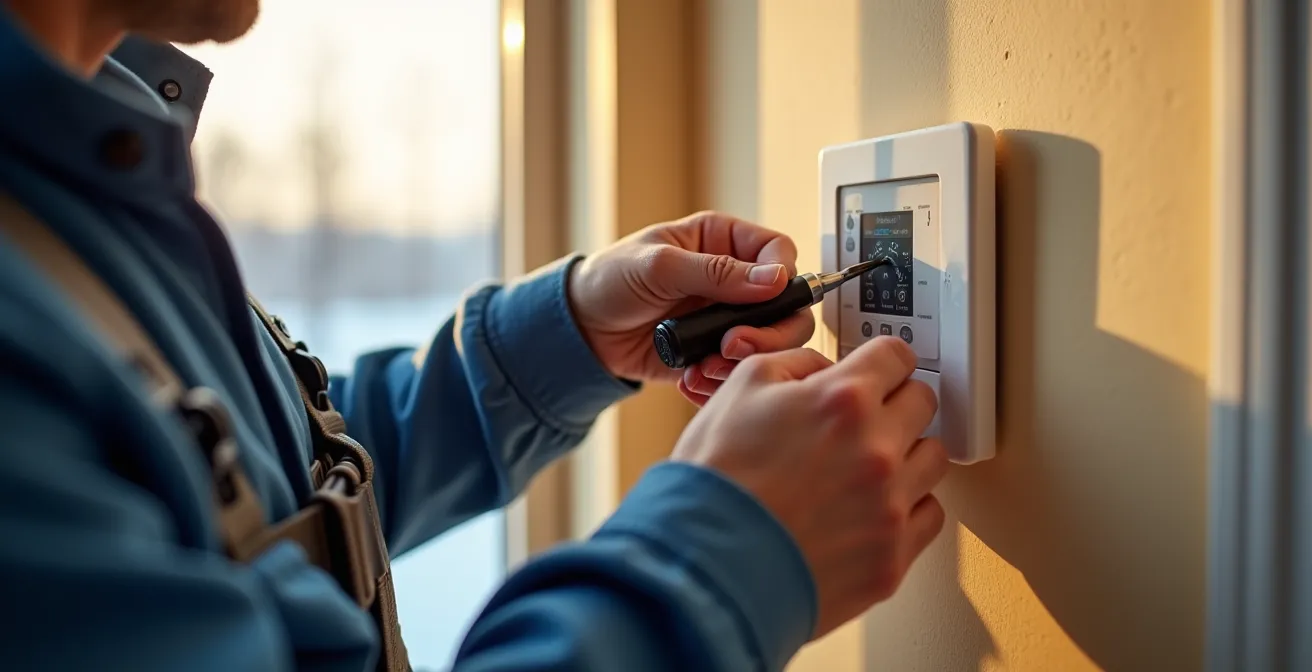
One of the first hurdles for smart thermostat adoption in older Quebec homes is the infamous “C-wire” (or “common wire”). Your old thermostat might only have two wires (R and W), which are enough to signal “on” or “off.” However, a smart thermostat is an “always-on” device; it needs a constant 24V power supply to run its Wi-Fi, screen, and processor. That’s what the C-wire provides. If you open your wall plate and only see two wires, you can’t simply plug in a low-voltage smart thermostat.
You have a few options. Some thermostat kits come with a power extender kit (PEK) that can cleverly use your existing wires to create a “phantom” common wire. However, this can be complex and isn’t always compatible. The most reliable solution is to have a new wire run from your furnace’s control board to the thermostat. This is a job for a professional, as it involves working with your central heating system’s electrical panel.
While it might seem like a hassle, getting the wiring right is the absolute foundation of a stable smart home system. Attempting a DIY workaround can lead to an underpowered thermostat that constantly disconnects or, worse, damages your HVAC control board. For low-voltage systems, investing in professional installation is a wise move for long-term stability and safety. According to Hydro-Québec’s guidelines, a professional installation can cost around $150, but it ensures your system is set up for success from the very beginning.
Why Does Your Smart Thermostat Heat the House When You’re Not There?
It’s a common and confusing scenario for new Hilo users: you’re on your way home, expecting to walk into a cool house that’s been saving energy all day, but you discover the heat has been running for the last hour. Is the thermostat broken? Is it ignoring your schedule? The answer is no; it’s actually being incredibly smart by leveraging your home’s thermal inertia. This behavior is a core feature of Hilo’s pre-heating algorithm, designed to maximize both your comfort and your earnings during challenges.
The system knows a Hilo challenge is ending soon and that you want your home to be at a comfortable 21°C when you walk in the door. Instead of waiting until the last minute and blasting the heat (which creates a huge, sudden spike in energy demand), it starts heating *before* the set time. It calculates how long your specific home takes to warm up and begins the process just in time, ensuring a gradual, efficient return to your comfort temperature. This prevents discomfort and helps smooth out the load on the Hydro-Québec grid.
Case Study: Hilo’s Automated Pre-Heating in Action
Hilo’s system is designed for systemic optimization. It automatically adjusts thermostats based on your chosen participation mode (moderate, bold, or extreme). By pre-heating homes before residents return, it successfully maintains comfort while lowering temperatures by at least 2°C during peak events. This intelligent management contributed significantly to the overall collective demand reduction, demonstrating the power of anticipating heating needs rather than just reacting to them.
So, when you see your thermostat heating an empty house, don’t fight it. It’s a sign of grid harmony in action. The system is working as intended, balancing your personal comfort with the collective goal of reducing peak demand. Understanding this logic is the first step to working *with* your thermostat, not against it.
Controlling Your Cottage from Montreal: The Ultimate Peace of Mind
For many Quebecers, a chalet is a cherished escape. It’s also a source of constant worry during the winter. Are the pipes going to freeze? Did I leave the heat on too high? This is where a Hilo smart system transforms from a convenience into an essential tool for peace of mind. The ability to monitor and control your cottage’s heating from hundreds of kilometers away is a game-changer, but it requires a solid foundation of connectivity.

Before you can enjoy remote control, you must ensure your cottage has a stable internet connection. According to the technical specifications, Hilo requires high-speed internet of at least 5 Mbps for its hub and devices to communicate reliably. In many rural areas of Quebec, this can be a challenge. It’s crucial to invest in a reliable rural internet provider and consider a backup power source (like a UPS) for your modem and router to maintain connectivity during the frequent winter power outages.
Once connected, you can set a minimum “frost protection” temperature (e.g., 5-7°C) to prevent pipes from freezing without wasting energy. Before heading up for the weekend, you can pre-heat the cottage a few hours in advance, ensuring you arrive to a warm and welcoming space instead of a frigid cabin. This level of control turns your cottage into a truly “smart” second home.
Your Action Plan: Remote Cottage Management During a Winter Storm
- Set minimum ‘frost protection’ temperature (typically 5°C) to prevent pipe freezing during an extended absence.
- Enable Hilo app notifications to receive extreme weather alerts directly from Environment Canada.
- Verify your cottage’s internet connection is stable before a storm’s arrival and consider a backup power supply for your router.
- If a power outage is likely, use the Hilo app to pre-heat the cottage 2-3 hours beforehand to build up thermal inertia.
- After the event, monitor the real-time energy consumption and temperature through the app to ensure everything is back to normal.
Baseboard vs. Low-Voltage Thermostats: Don’t Confuse the Voltages!
Not all heating systems are created equal, and this is critically important when choosing a smart thermostat in Quebec, where electric heating is prevalent. A major point of confusion is the difference between low-voltage (24V) and line-voltage (120V/240V) systems. Installing the wrong type of thermostat isn’t just a mistake—it’s a serious fire hazard.
Low-voltage thermostats are for central heating systems like furnaces or central heat pumps. They use a thin 24V wire (often requiring the C-wire we discussed) to send a signal to a central control board. In contrast, line-voltage thermostats are designed for electric baseboard heaters (plinthes électriques) or convectors. These thermostats directly handle the high-power electrical load of the heater itself. The Hilo ecosystem offers specific smart thermostats for each type, and it’s essential you use the right one.
The following table breaks down the compatibility of Hilo’s thermostats with different heating systems common in Quebec homes. As highlighted by a comparative analysis on the official Hilo product page, matching your system’s voltage and wattage is non-negotiable.
| Heating System Type | Voltage Range | Wattage Capacity | Hilo Bonus Amount |
|---|---|---|---|
| Electric Baseboard (120V) | 120V | 150-2,000W | $110 per thermostat |
| Electric Baseboard (208V) | 208V | 260-3,400W | $110 per thermostat |
| Electric Baseboard (240V) | 240V | 300-4,000W | $110 per thermostat |
| Low-voltage/Central | 24V | N/A | $150 per thermostat |
Because line-voltage installations involve high-power wiring, this is not a DIY job for the average homeowner. Hydro-Québec itself makes a clear recommendation on this matter. In their official installation guide, they state:
We recommend hiring a master electrician to install your thermostats. Under Québec’s Building Act, electrical equipment must be installed by a member of the Corporation des maîtres électriciens du Québec (CMEQ).
– Hydro-Québec, Smart Thermostats Installation Guide
This isn’t just a suggestion; it’s a legal and safety requirement. Always have your line-voltage thermostats installed by a CMEQ-certified professional.
Reading Your Heating Data: How to Know If You’re Really Saving?
You’ve survived a few Hilo challenges, and you see the rewards trickling into your account. But are you maximizing your potential? The Hilo app provides a wealth of data, but learning to read it is key to gamifying your savings and turning good results into great ones. It’s the essential feedback loop for any power user. Don’t just look at the dollar amount; dive into the consumption graphs.
The app shows you your energy usage (in kWh) hour by hour. Look for the distinct “V” shape during a challenge: a sharp drop at the beginning, a low plateau during the event, and a rise as the pre-heating kicks in. How deep is that “V”? How much did you reduce your baseline consumption? Compare challenge days with non-challenge days to see the real impact. Are there small spikes during the challenge? Maybe a family member took a long, hot shower, or the dishwasher was run by mistake. This data allows you to identify and correct those behaviors.
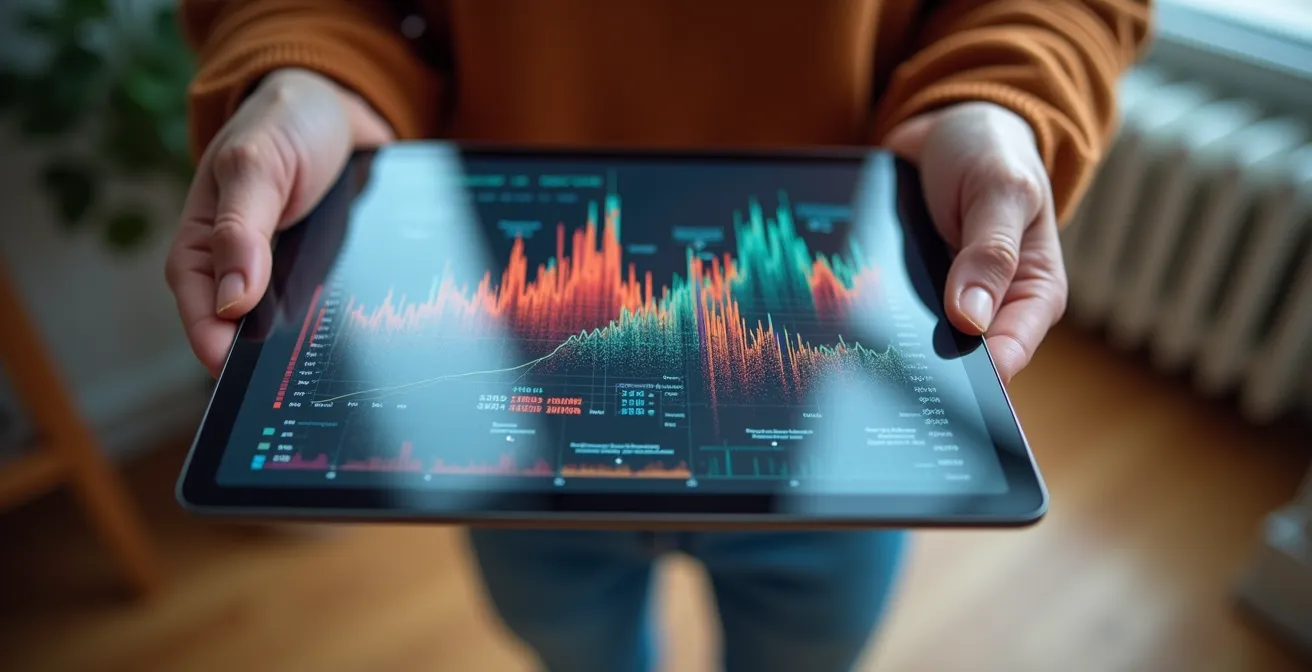
The goal is to understand your home’s unique energy signature. This data-driven approach allows you to make informed decisions. Maybe you’ll notice that your home has excellent thermal inertia and stays warm for longer than you thought, allowing you to opt for the “Extreme” challenge mode more often. Or perhaps you’ll see that your savings are good but not great, prompting you to investigate other energy hogs in your home. This analysis is how you go from being a participant to being a strategist. The financial proof is in the results, with a recent report confirming that Hilo customers accumulated an average of $135 in rewards during a single winter.
How to Manage Winter Peak Periods to Maximize Your Hilo Credits?
Hilo challenges are the heart of the program—the moments where you can make the biggest impact on the grid and your wallet. These peak demand events, typically on the coldest winter mornings and evenings, are when Hydro-Québec’s grid is under the most strain. Your job as a Hilo user is to reduce your consumption as much as possible during these short windows. Mastering this isn’t about sacrifice; it’s about smart preparation.
The key is to think ahead. About an hour before a challenge begins, you should actively pre-heat your home by 2-3°C above your normal comfort level. This “charges” your home with heat, using cheaper, off-peak electricity. Then, as the challenge starts, your well-insulated home will coast through the period, slowly releasing that stored heat. During the challenge, it’s not just about the thermostat. It’s a full-home effort. Avoid using other major appliances like the dishwasher, washing machine, or dryer. Postpone that long, hot shower until after the challenge period. Closing curtains and blinds provides an extra layer of insulation, helping to retain the pre-heated warmth.
By adopting this strategic approach, you’re not just earning a few dollars; you’re becoming an active partner in maintaining the stability of Quebec’s energy supply. The collective impact is massive. For instance, during the 2024-2025 winter, data shows that Quebec customers achieved a 530 MW collective demand reduction during peak events—equivalent to taking a huge power plant offline. Your small adjustments, multiplied across hundreds of thousands of homes, make a tangible difference.
Zoning System: How to Heat the Living Room Without Overheating the Bedrooms?
One of the most powerful—and often underutilized—features of a multi-thermostat smart home is heating zonation. Why heat your entire house to 21°C when you only use the living room and kitchen in the evening? Why keep the bedrooms toasty warm during the day when nobody is in them? A zoning strategy allows you to create different temperature zones in your home, delivering comfort where you need it and savings where you don’t.
With Hilo, this is incredibly easy to implement. You can group your thermostats into logical zones within the app. For example, create a “Living Area” zone (living room, dining room, kitchen) set to 21°C in the evenings, and a “Bedrooms” zone set to a cooler 18°C. At night, you can reverse this, letting the living areas cool down while ensuring the bedrooms are comfortable for sleeping. This simple act of not heating unused spaces can lead to significant energy savings, all while improving your overall comfort.
Case Study: Multi-Thermostat Zoning in a Quebec Home
The Hilo system is built for this kind of systemic optimization. A single household can create a sophisticated network of heating zones. This allows for precise temperature management, such as maintaining living areas at a comfortable 21°C while keeping bedrooms cooler at 18°C. All zones are managed centrally via the Hilo app, creating a perfect balance of customized comfort and maximized energy savings. The financial incentive is also significant, with bonuses offered for each thermostat added to the system.
This strategy is scalable. The Hilo system is robust enough to handle a large number of devices, allowing for granular control over even large homes. According to Hilo’s product specifications, Hilo supports up to 10 smart thermostats for baseboard heaters, plus additional low-voltage units. This allows you to create a truly customized heating map of your home, ensuring not a single kilowatt-hour is wasted on an empty room. It’s the ultimate expression of smart energy management.
Key Takeaways
- Mastering Hilo is about systemic optimization: understanding your home’s thermal properties and electrical DNA.
- Work with Hilo’s pre-heating algorithm and use data analysis to gamify your energy savings during challenges.
- Always use a CMEQ-certified electrician for line-voltage installations to ensure safety and compliance in Quebec.
Why Is Your Consumption Increasing at Night When Everything Is Off?
You’ve turned off the lights, the TV is off, and everyone is asleep. You’d expect your energy consumption to be at its lowest point. Yet, when you check your Hilo data, you see mysterious spikes in usage throughout the night. This is a classic case of “phantom loads”—devices and systems that consume energy when you least expect it. Hunting down these energy vampires is the final frontier of home energy optimization.
In a typical Quebec home, there are a few usual suspects. The first and most significant is often your electric hot water tank. It’s programmed to maintain a high water temperature 24/7. As the water cools, the heating element kicks in, causing a significant energy spike, even at 3 a.m. In fact, reports from Hydro-Québec indicate that hot water can account for up to 20% of annual electricity use. Installing a timer on your water heater or switching to a smart model can solve this.
Another major factor is the heating system itself. The coldest part of the night is often just before dawn. Your heating system will naturally cycle on more frequently during these hours to maintain its setpoint temperature. On extremely cold nights, a heat pump’s less efficient auxiliary or emergency heat might activate, causing a large jump in consumption. For those in rural areas, the well pump cycling on to refill its pressure tank can be another hidden load. Finally, don’t forget the car’s block heater, which can be a significant draw if not managed with a timer.
Now that you’re armed with these advanced strategies, it’s time to move beyond being a passive user and become the master of your smart home ecosystem. Start by auditing your home’s unique characteristics, apply these tactics during the next Hilo challenge, and watch your rewards and comfort level reach new heights.