

In summary:
- Achieving even temperature is not about quick fixes but about managing your house as a complete thermal ecosystem.
- Strategic, seasonal adjustment of your duct dampers is the most powerful and overlooked tool at your disposal.
- Understanding your system’s data, like heating curves and energy consumption per degree-day, is key to real savings.
- Proper maintenance and system settings prevent efficiency loss and avoid high-cost auxiliary heating from Hydro-Québec.
If you live in a multi-story Quebec home, you know the feeling. In winter, the basement is an icebox while the upstairs bedrooms are sweltering. In summer, the reverse is true. This constant battle with the thermostat, where one room’s comfort comes at the expense of another’s, is a common frustration for many residents. You’ve likely tried the common advice: closing vents in some rooms, checking your filters, or even getting your ducts cleaned. While these steps aren’t wrong, they are often superficial and fail to address the root of the problem.
The persistent temperature imbalance in your home is a symptom of a system that isn’t working in harmony. The real key to a uniformly comfortable home isn’t about fighting your HVAC system, but about understanding and directing its power. It’s about treating your house not as a collection of separate rooms, but as a single, dynamic thermal ecosystem. The solution lies in a methodical approach to balancing airflow (aéraulique) and, where applicable, water temperature (hydronique), tailored specifically to our demanding Quebec climate and unique energy landscape with providers like Hydro-Québec.
This guide will move beyond the simple tips. We will explore the technical principles that govern your home’s comfort, providing you with the knowledge a technician uses to diagnose and solve these issues. From strategically adjusting dampers to interpreting your heating data, you will learn how to make your system work for you, creating a balanced environment and potentially reducing your energy bills in the process.
For those interested in a visual deep dive into the components we’ll be discussing, the following technical webinar provides a detailed look at the boots and registers that form the endpoints of your ductwork system.
To help you navigate these advanced strategies, this article is structured to address the most critical aspects of system balancing. Each section tackles a specific component or concept, providing you with a complete toolkit for optimizing your home’s thermal performance.
Summary: A Technician’s Guide to HVAC Balancing in Quebec
- Dampers: Should you close basement registers in summer and open them in winter?
- Outdoor sensor: How does the heating curve optimize the boiler’s water temperature?
- Lowering the temperature at night: Real savings or overconsumption on recovery?
- Drain Water Heat Recovery (Power-Pipe): Is it profitable for a family of 4?
- Clogged coils: How does dust reduce your heat pump’s efficiency by 30%?
- Reading your heating data: How do you know if you’re really saving money?
- Constant vs. proportional pressure: Which mode to choose for zone valves?
- How to Cut Your Hydro-Québec Bill by 20% This Winter?
Dampers: Should you close basement registers in summer and open them in winter?
This is the cornerstone of dynamic air balancing and the most effective, no-cost adjustment a homeowner can make. The principle is simple: direct the conditioned air where it’s needed most, based on natural convection. In summer, cool, dense air sinks, so you want to push more of it to the upper floors. In winter, warm, light air rises, so you need to force more of it into the lower levels and basement.
However, the common advice to “close the vents” is often applied too aggressively. Completely shutting off vents in the basement during Quebec’s humid summers is a mistake. It starves the area of air circulation, creating stagnant, cool surfaces ideal for condensation and mould growth. In fact, professional inspection data reveals that nearly 92% of Canadian basements show evidence of mould, a problem exacerbated by poor airflow. The goal is to redirect, not block. Partially closing basement dampers forces more air pressure upstairs without completely sacrificing circulation below.
Conversely, in winter, you should fully open basement registers and partially close those on the top floor. This forces the furnace to push warm air into the coldest part of the house, which will then naturally rise and help heat the floors above. This single strategy fights the natural tendency for the upstairs to overheat. Mastering this seasonal adjustment is fundamental to creating a balanced thermal ecosystem.
Your Action Plan: Seasonal Damper Adjustment
- Summer Strategy (May-Sept): Open all registers on the top floor(s) fully. Go to your basement and partially close the dampers on the supply ducts, aiming for about a 75% closure (or leaving them 25% open). This maintains minimal airflow to control humidity while redirecting the majority of the cool air upstairs.
- Humidity Monitoring: During Quebec’s humid summer months, set your basement dehumidifier to maintain a relative humidity between 40-45%. Check for condensation on basement windows, which is a sign of excessive moisture that requires more airflow or dehumidification.
- Winter Strategy (Oct-Apr): Reverse the process. Open all basement registers fully. Partially close registers on the top floor, especially in rooms that tend to overheat. This forces more warm air into the lower level.
- System Pressure Check: Never fully close more than 25% of your home’s total supply registers. Doing so can create excessive static pressure in your ductwork, which can strain and damage the furnace’s blower motor over time.
- Fine-Tuning: Live with the changes for a few days. Adjust individual room vents slightly to fine-tune comfort, but make your major adjustments at the source dampers in the basement for the biggest impact.
Outdoor sensor: How does the heating curve optimize the boiler’s water temperature?
For homes with hydronic (hot water) heating systems, the outdoor sensor is the brain of your operation’s efficiency. Instead of heating water to a fixed, high temperature (e.g., 180°F) regardless of the weather, a system with an outdoor sensor uses what’s called a heating curve or “outdoor reset.” This curve is a pre-programmed relationship: the milder it is outside, the lower the temperature of the water circulated through your radiators or in-floor tubing. When a frigid -25°C Montreal winter day hits, the boiler will produce hotter water than on a mild -2°C day.
This modulation is the key to both comfort and efficiency. It delivers a gentle, continuous amount of heat that perfectly matches the home’s heat loss, rather than harsh cycles of overheating and cooling. This prevents the system from “overshooting” the thermostat’s setpoint and wasting energy. For modern condensing boilers, operating at lower water temperatures also allows them to condense flue gases more often, extracting latent heat and pushing their efficiency well above 90%.
In Quebec, this becomes even more critical for bi-energy systems that combine a heat pump with a boiler or furnace. A smart thermostat, like a Honeywell T9, uses outdoor temperature data to decide the most economical moment to switch from the heat pump to the more expensive auxiliary heat source, according to your specific Hydro-Québec Flex D rate plan. Setting this balance point correctly (e.g., -12°C instead of -15°C) can prevent costly auxiliary heat activation during peak pricing events, directly impacting your utility bill.
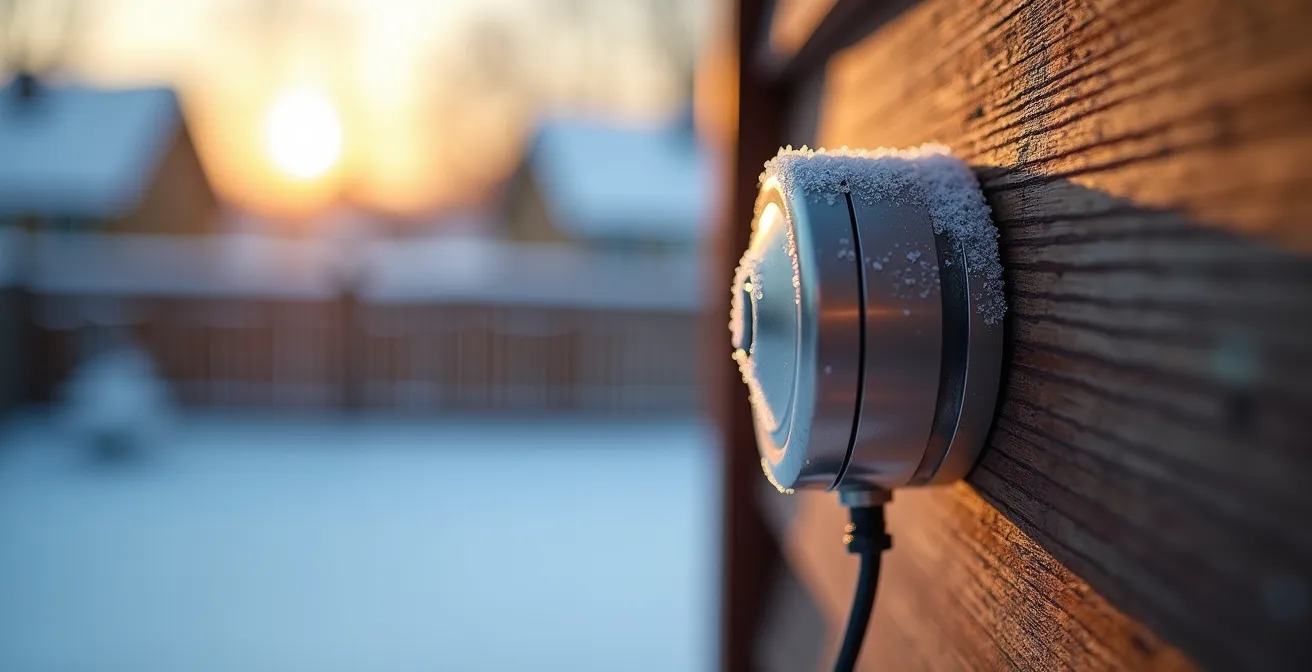
As you can see, the outdoor sensor is not just a thermometer; it’s a critical input for your entire heating strategy. It allows the system to anticipate the home’s needs proactively, ensuring every BTU of energy is used as effectively as possible. A properly calibrated heating curve is essential for the synergy of your thermal ecosystem.
Lowering the temperature at night: Real savings or overconsumption on recovery?
This is a long-standing debate, but the physics are clear: a temperature setback saves energy. A home is constantly losing heat to the outside, and the rate of heat loss is directly proportional to the temperature difference between inside and outside. By lowering your thermostat at night, you reduce this temperature difference for several hours, thereby reducing the total amount of heat that escapes. The energy required to bring the temperature back up in the morning is less than the energy saved during the night. In fact, research from the Canada Mortgage and Housing Corporation confirms that a 3°C (about 5-6°F) night setback for eight hours can save 5-15% on heating costs.
The myth of “overconsumption on recovery” stems from inefficient systems and improper programming. If your morning recovery cycle engages expensive auxiliary heat strips (the “toaster elements” in an electric furnace or heat pump air handler), you can indeed negate your savings. This is where modern thermostats with a “smart recovery” feature are crucial, especially for Quebec’s long winters and bi-energy rate plans. As an HVAC expert notes, this feature is designed to prevent costly energy spikes.
A properly programmed smart recovery feature slowly raises temperature before scheduled time without using auxiliary strips, crucial for Quebec’s long winters.
– HVAC Expert from JustAnswer, HVAC Smart Thermostat Balancing Guide
This feature learns how long your home takes to heat up and starts the recovery process early and gradually, using the most efficient heat source (like the heat pump) and avoiding the high-draw auxiliary heat. For a resident of Quebec, successfully implementing a night setback strategy is less about the setback itself and more about managing the recovery. By monitoring your Hydro-Québec portal, you can see if your recovery period is causing a spike in consumption. If it is, you need to adjust your thermostat’s smart recovery settings or lockout temperature for the auxiliary heat to ensure your setback translates into real savings.
Drain Water Heat Recovery (Power-Pipe): Is it profitable for a family of 4?
A Drain Water Heat Recovery (DWHR) unit, often known by the brand name Power-Pipe, is a simple but remarkably effective technology. It’s a section of copper pipe that replaces a vertical section of your main plumbing drain stack. Inside, a coil of smaller copper tubing carries the cold municipal water on its way to your water heater. As hot water from a shower flows down the drain, it heats the drainpipe, and that heat is transferred to the cold water inside the coil, pre-heating it before it even enters the tank. This means your water heater has less work to do, saving energy every time someone showers.
For a Quebec family of four, a DWHR system is particularly profitable. The primary reason is our very cold municipal water, which can be as low as 6-8°C in the winter. This creates a large temperature difference between the drain water and the incoming cold water, maximizing the rate of heat transfer. The profitability of these systems is directly tied to this differential, as shown by comparative data.
| Factor | Quebec | Warmer Climates |
|---|---|---|
| Cold Water Inlet Temp | 6-8°C winter | 12-15°C |
| Energy Recovery Rate | 60-65% | 40-45% |
| Annual Savings (4 person) | $200-300 CAD | $100-150 USD |
| Payback Period | 5-7 years | 8-12 years |
| With Rénoclimat Grant | 3-4 years | N/A |
As the data clearly indicates, the payback period in Quebec is significantly shorter. For a family of four with regular shower schedules, annual savings can easily reach into the hundreds of dollars. Furthermore, these systems often qualify for government grants like Quebec’s Rénoclimat program, which can slash the payback period in half, making the investment even more attractive. For any family looking to reduce their water heating costs—which can account for up to 20% of a home’s energy bill—a DWHR system is one of the most cost-effective upgrades to consider in our climate.
Clogged coils: How does dust reduce your heat pump’s efficiency by 30%?
Your heat pump works by moving heat, not creating it. In winter, the outdoor unit’s coil extracts heat from the cold air and moves it inside. In summer, it reverses the process, extracting heat from your home’s air and expelling it outside. This heat transfer happens at the surface of the coil’s fins. For this to work efficiently, air must be able to pass freely over those fins. When the coil gets clogged with dust, dirt, cottonwood seeds, or leaves, it’s like putting a blanket on it. This layer of debris insulates the coil, drastically reducing its ability to absorb or release heat.
The system’s compressor must then work much harder and longer to achieve the thermostat’s setpoint. This not only drives up your electricity consumption but also puts immense strain on the components, leading to premature failure. The 30% efficiency loss figure is not an exaggeration; in severe cases, it can be even higher. A dirty coil forces the unit into longer, more frequent defrost cycles in the winter, which use energy-intensive electric heating elements. Essentially, you’re paying more for less heating and cooling.

In Quebec, our distinct seasons create a specific cleaning schedule. The fluffy “snow” from cottonwood trees in late spring is a primary culprit for clogging coils, followed by falling leaves in autumn. Keeping your heat pump’s coils clean is one of the most important maintenance tasks you can perform to protect your investment and maintain your home’s energy efficiency. A simple cleaning can restore the unit’s performance and have an immediate impact on your Hydro-Québec bill.
A seasonal cleaning schedule is essential for our climate:
- Late May/Early June: Perform a thorough cleaning after the cottonwood season ends. This is the most critical cleaning of the year.
- Mid-July: A quick inspection during the peak of summer humidity ensures optimal cooling performance.
- Late October: A vital fall cleaning after all the maple and oak leaves have dropped is necessary to prepare the unit for the demanding winter season.
- Winter Checks: During winter, simply ensure the unit is clear of snow drifts and that the defrost cycle is functioning correctly (it shouldn’t run constantly).
Reading your heating data: How do you know if you’re really saving money?
Making adjustments to your HVAC system without measuring the results is like flying blind. To know if your efforts in balancing dampers or setting back your thermostat are truly effective, you need to become familiar with two key tools: your Hydro-Québec online portal and the concept of Heating Degree Days (HDD). HDD is a measurement designed to quantify the demand for energy needed to heat a building. It’s the number of degrees that a day’s average temperature is below a baseline (usually 18°C). Data for your specific location is freely available from Environment Canada.
By tracking your daily electricity consumption from your Hydro-Québec account and dividing it by the daily HDD value, you can calculate a key performance indicator: your home’s energy intensity, expressed as kWh per HDD (kWh/HDD). This metric normalizes for weather, allowing you to make true apples-to-apples comparisons. If you make a change to your system and your kWh/HDD value goes down, you are definitively saving energy, regardless of whether the month was colder or milder than the last.
This data-driven approach moves you from guessing to knowing. It allows you to test the impact of each change methodically and quantify your success in a tangible way. It also helps you spot problems, like the expensive morning recovery spikes from a poorly configured thermostat.
Case Study: Montreal Duplex HDD Analysis
A Montreal resident tracked the consumption of their 1970s duplex using their Hydro-Québec portal and HDD data from Environment Canada. They established a baseline consumption of 0.85 kWh/HDD. After implementing a nightly 3°C setback and performing a seasonal damper adjustment (directing more heat to the lower level), their consumption dropped to 0.72 kWh/HDD. This represented a real, weather-normalized energy saving of over 15%. Critically, by analyzing their hourly data on the Hydro portal, they identified large consumption peaks in the morning, showing that the furnace’s auxiliary heat was engaging during recovery. They then adjusted their thermostat’s “smart recovery” timing to start earlier and more gradually, which successfully eliminated these expensive spikes and maximized their savings.
Constant vs. proportional pressure: Which mode to choose for zone valves?
This question applies to homes with more advanced hydronic systems that use multiple zone valves or thermostatic radiator valves (TRVs) to control the temperature in different areas independently. These systems are often paired with a modern, variable-speed circulator pump. These pumps have different control modes, most commonly “Constant Pressure” and “Proportional Pressure.” Choosing the right one is key to efficiency and quiet operation.
Constant Pressure mode does exactly what its name implies: the pump adjusts its speed to maintain the same level of pressure, regardless of how many zones are calling for heat. This mode is best for simpler systems with only two or three large zones. It provides predictable and stable flow, ensuring that even the furthest zone gets the heat it needs when it opens.
Proportional Pressure mode is more sophisticated. In this mode, the pump’s target pressure drops as the flow demand decreases. When many zones are open, the pump provides high pressure. As zones close, the pump reduces its speed and the pressure target, saving energy. This is the ideal mode for systems with many smaller zones, such as a Quebec condo with TRVs on every radiator. It significantly reduces energy consumption and can eliminate the noise (whistling or water rushing) that can occur when only one or two small zones are open against a high-pressure pump.
| System Type | Recommended Mode | Reason |
|---|---|---|
| 2-3 Large Zones (e.g., floors) | Constant Pressure | Simple control, stable flow |
| 4+ Small Zones (e.g., rooms with TRVs) | Proportional Pressure | Maximum energy savings, noise reduction |
| Typical Quebec Condo with TRVs | Proportional Pressure | Optimized for multi-zone efficiency |
| Single Family Home with one zone | Constant Speed (or lowest Constant Pressure setting) | Predictable performance, no zoning to manage |
While a variable-speed pump offers baseline savings, selecting the correct control mode based on your home’s specific zoning strategy is what unlocks its full potential. As a detailed analysis of HVAC systems shows, matching the mode to the system type is crucial for both energy efficiency and acoustic comfort. It ensures your hydronic system operates as a smart, responsive network rather than a brute-force machine.
Key Takeaways
- True home comfort comes from managing your house as an interconnected thermal ecosystem, not just treating individual rooms.
- Seasonal damper adjustments are your most powerful tool for directing airflow where it’s needed most, correcting the natural stratification of hot and cold air.
- Data is your best friend. Use your Hydro-Québec portal and Heating Degree Day (HDD) metrics to measure the real impact of your adjustments and prove your savings.
How to Cut Your Hydro-Québec Bill by 20% This Winter?
Achieving a significant reduction in your winter heating costs is not the result of a single magic bullet, but the cumulative effect of a holistic, system-wide strategy. We have moved beyond basic advice and delved into the technical mechanics of your home’s thermal ecosystem. By combining the principles of dynamic air balancing, smart system programming, diligent maintenance, and data-driven analysis, a 20% reduction in your Hydro-Québec heating consumption is an entirely realistic goal.
Think of it as a pyramid of actions. The base of the pyramid is maintenance: keeping your heat pump coils clean to ensure your system operates at peak efficiency. The next layer is balancing: using your dampers to actively direct warm air to the lower levels of your home, fighting thermal stratification at its source. Above that is smart control: implementing a nightly setback and ensuring your thermostat’s recovery cycle doesn’t trigger expensive auxiliary heat. Finally, at the peak of the pyramid, is measurement: using kWh/HDD calculations to verify that each of these changes is contributing to real, weather-normalized savings.
Each action builds upon the last. A clean heat pump is more effective at recovery. A balanced airflow makes the setback more comfortable. And data analysis proves the value of both. By methodically implementing these strategies, you transform from a passive energy consumer into an active manager of your home’s comfort and efficiency. You begin to work *with* your HVAC system, not against it, orchestrating its components to deliver maximum comfort for the minimum cost-per-BTU.
Take control of your home’s thermal ecosystem. Start by applying one of these strategies today—clean your outdoor coil or perform a seasonal damper adjustment—and observe the results on your Hydro-Québec portal. This is the first step toward a more comfortable home and a lower energy bill.