
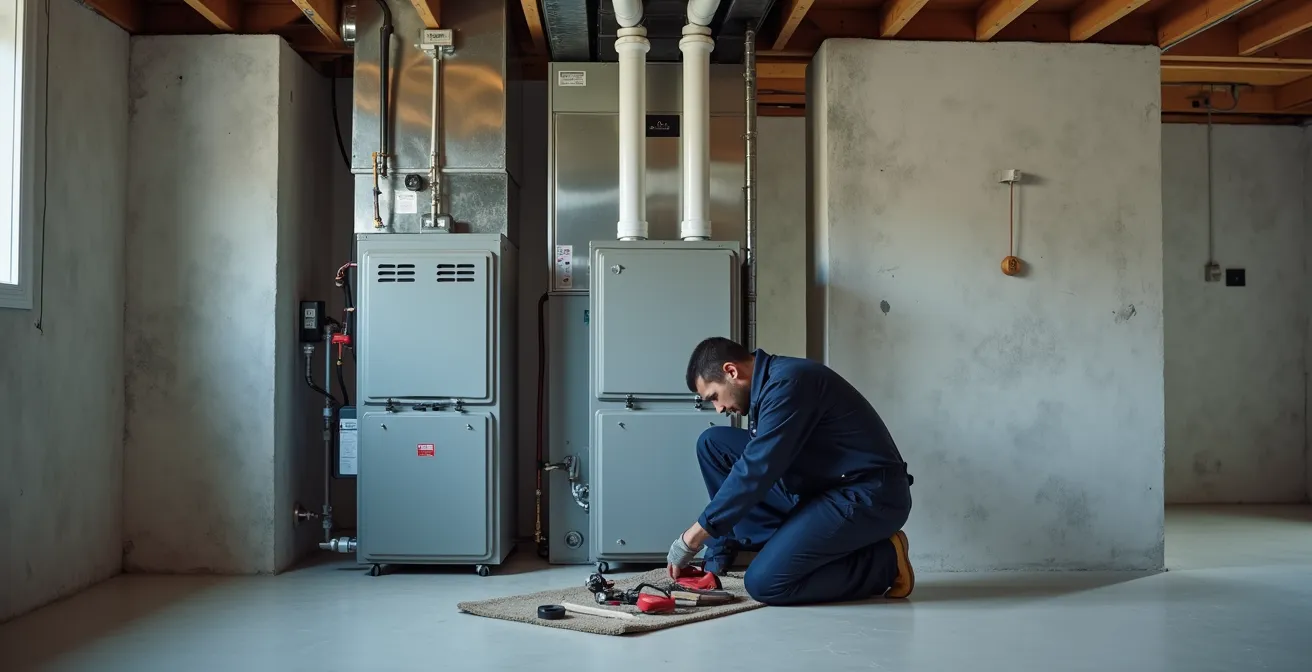
Your old furnace wastes up to 20% of your gas money up the chimney. A 96% efficiency furnace doesn’t just plug that leak; it fundamentally changes how heat is made through condensation. This guide reveals that true savings come not just from the efficiency rating, but from mastering the consequences of this technology: managing the acidic water it creates, re-engineering your venting with PVC, and leveraging its smarter, multi-stage operation. Understanding these physical changes is the key to unlocking real, long-term savings on your Energir bill.
As another Quebec winter sends temperatures plummeting, the arrival of your Énergir bill can feel like a second cold snap. For homeowners with older, atmospheric gas furnaces, a significant portion of that bill—as much as 20 cents on every dollar—is spent heating the outside air via a hot chimney. The common solution appears simple: upgrade to a high-efficiency 96% AFUE (Annual Fuel Utilization Efficiency) furnace. The promise is that only 4 cents per dollar will be lost, leading to immediate savings.
However, this perspective only scratches the surface. Most advice stops at the efficiency number, failing to explain the profound mechanical and physical shifts this upgrade entails. The real story of savings isn’t just about plugging a leak; it’s about harnessing a completely different kind of technology. The transition from 80% to 96% efficiency is a leap from dry, hot exhaust to a wet, cool, and acidic process. This change impacts everything from your chimney’s structure to the very air your furnace breathes.
But what if the key to maximizing your savings wasn’t just buying a 96% furnace, but truly understanding the physics of condensation that powers it? This article moves beyond the marketing claims to reveal the critical, often-overlooked factors that turn a high-efficiency furnace from a simple appliance into a high-performance heating system. We will explore why this new technology produces water, why your old chimney becomes obsolete, and how to leverage its advanced features for unparalleled comfort and safety, specifically within the demanding context of a Quebec home.
text
To fully grasp how these savings are generated and how to protect your investment, this article breaks down the essential components and considerations of a high-efficiency system. The following sections will guide you through each critical aspect, from the creation of condensate to the economics of emergency repairs.
Summary: Unlocking the True Value of a 96% High-Efficiency Furnace
- Why Does Your Furnace Produce Water and How to Avoid a Basement Flood?
- PVC vs. Metal Pipes: Why Change the Chimney When Replacing?
- Two-Stage vs. Modulating Furnace: Which Offers the Best Constant Comfort?
- Furnace Error Code: When to Call a Pro Before You Freeze?
- Combustion Air Intake: Why Never Block It by Snow?
- Bi-Energy: Is It Really Ecological to Keep a Gas Furnace?
- Combustion Test: What Do CO2 and Flue Gases Temperature Reveal About Your Boiler’s State?
- Why Does an Emergency Plumber Cost 3x More Than Scheduled Maintenance?
Why Does Your Furnace Produce Water and How to Avoid a Basement Flood?
The secret to a 96% efficiency rating lies in a process your old furnace could never perform: extracting latent heat from exhaust gases. A standard furnace burns natural gas and sends hot flue gases—around 150-200°C—straight up the chimney. A high-efficiency furnace, however, uses a secondary heat exchanger to cool these gases down so much (below 55°C) that the water vapour within them condenses into liquid. This phase change releases a significant amount of extra heat, which is then used to warm your home instead of being wasted.
This process, however, creates a critical byproduct: condensate. This isn’t just water; it’s a mild acid. Because it’s created from combustion gases, furnace condensate has a corrosive acidity, with pH levels typically between 3.0 and 5.0, which can damage materials not designed to handle it. A properly installed system directs this condensate through PVC pipes to a floor drain or a small condensate pump. If this system fails, you could be facing a significant water leak in your basement.
Given Quebec’s hard water, mineral deposits and algae can easily clog the drain line or pump. Regular maintenance is not optional; it’s essential for flood prevention. Key preventive measures include:
- Regularly cleaning the condensate pump reservoir to remove mineral buildup.
- Testing the pump’s float switch to ensure it activates correctly.
- Flushing the drain line with white vinegar periodically to prevent blockages.
- Ensuring the floor drain is clear, especially before the spring thaw.
- Installing a water alarm near the furnace as an inexpensive, early-warning system.
Neglecting this simple maintenance can lead to pump failure, overflow, and costly water damage, completely negating the energy savings you sought in the first place.
PVC vs. Metal Pipes: Why Change the Chimney When Replacing?
When you replace an old 80% furnace with a 96% model, you can’t simply connect the new unit to your existing metal chimney. This is one of the most critical and non-negotiable aspects of the installation, driven by the physics of condensation. Your old furnace relied on a negative pressure draft, where hot, buoyant exhaust gases naturally rose up the masonry or metal chimney. The high temperature kept the gases in a vapour state, preventing corrosive moisture from forming inside the chimney.
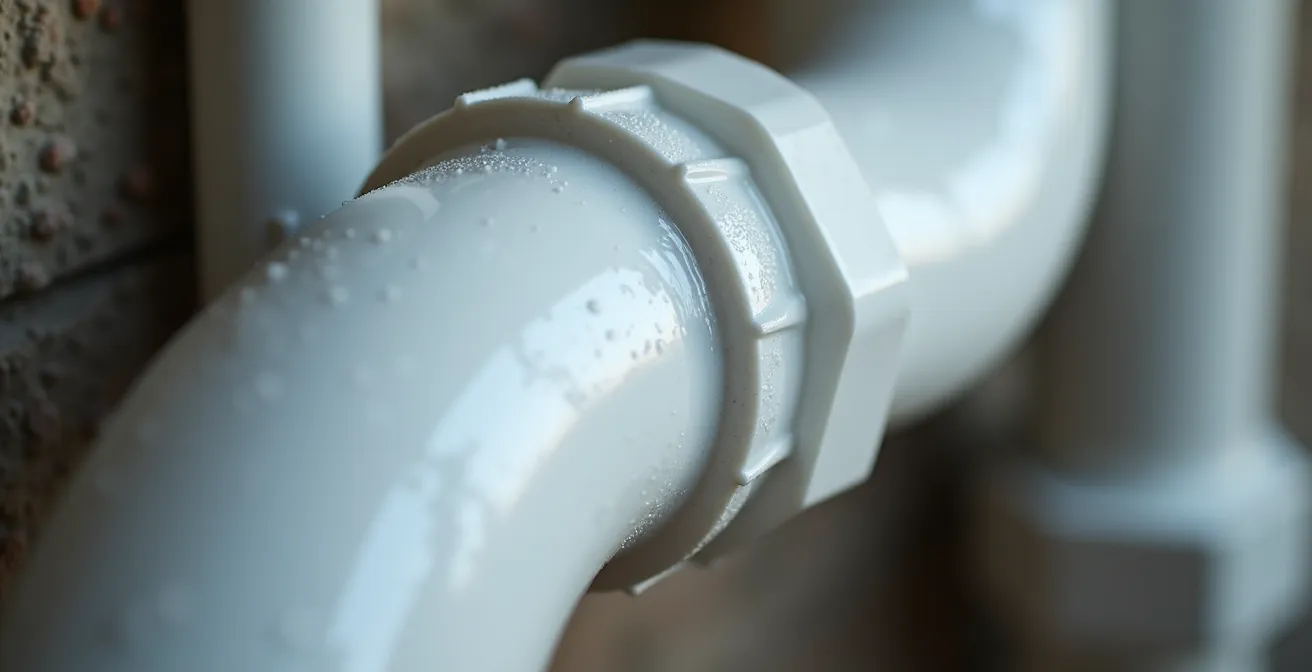
A 96% condensing furnace operates completely differently. As we’ve seen, its exhaust gases are cool (below 55°C), so they lack the buoyancy to rise on their own. Instead, the furnace’s internal fan pushes them out under positive pressure. If these cool, wet gases were vented into a cold, oversized metal or masonry chimney, the condensate would immediately form on the interior walls, rapidly corroding the metal or deteriorating the mortar. This is why high-efficiency furnaces must be vented with sealed, corrosion-resistant PVC pipes.
This change in venting technology offers significant advantages in flexibility and cost, but it requires a complete departure from the old system. The table below highlights the key differences.
| Feature | PVC Venting (96% Furnace) | Metal Chimney (80% Furnace) |
|---|---|---|
| Flue Gas Temperature | Below 55°C (130°F) | 150-200°C (300-400°F) |
| Venting Method | Positive pressure with Schedule 40 PVC | Negative pressure draft |
| Installation Location | Can vent horizontally through wall | Must vent vertically through roof |
| Condensate Resistance | PVC resists acidic condensation | Mortar damaged by acidic condensate |
| Installation Cost | Lower – simpler routing options | Higher – requires chimney liner |
In essence, the move to 96% efficiency is not just an appliance swap; it’s a complete re-engineering of your home’s combustion and exhaust system for superior safety and performance.
Two-Stage vs. Modulating Furnace: Which Offers the Best Constant Comfort?
Beyond efficiency ratings, the greatest benefit you will *feel* from a modern furnace is its ability to deliver consistent, stable heat. This is a stark contrast to older, single-stage furnaces that operate on an “all or nothing” basis, creating noticeable temperature swings and that “whoosh” of hot air. High-efficiency models solve this with two primary technologies: two-stage and modulating.
A two-stage furnace has two levels of output: a low setting (typically around 65% of its total capacity) and a high setting (100%). Most of the time, especially during the milder days of a Quebec autumn or spring, the low setting is more than enough to maintain your home’s temperature. It runs for longer, gentler cycles, which improves air filtration, maintains more even temperatures, and is significantly quieter. The high stage is reserved for the coldest days or for quickly raising the temperature after a setback.
During extreme cold weather events, the two-stage variable-speed furnaces operate using 100% power. However, on most days, they operate with a minimal output of 60-65% to reduce power usage.
– Durastar Technical Specifications, Durastar Two-Stage Variable-Speed Furnaces Guide
A modulating furnace takes this concept even further. Instead of just two stages, it can adjust its heat output in tiny increments, often between 40% and 100% capacity. It constantly communicates with the thermostat to deliver the precise amount of heat needed to match your home’s heat loss at any given moment. This results in the most stable temperature, the highest operational efficiency, and the quietest performance. The most advanced models, for example, can achieve peak fuel efficiency, as Trane’s most efficient modulating furnace achieves up to 97.3% AFUE by almost never having to run at full power.
While a two-stage model offers a massive comfort upgrade over a single-stage, a modulating furnace provides the ultimate in stable, efficient, and unobtrusive home heating.
Furnace Error Code: When to Call a Pro Before You Freeze?
A modern high-efficiency furnace is equipped with a sophisticated diagnostic system that communicates problems through a series of flashing LED lights or a digital display. These error codes are your first line of defence, providing crucial information about the furnace’s status. In the middle of a January cold snap in Quebec, knowing how to interpret these codes can be the difference between a quick DIY fix and a costly emergency call—or worse, frozen pipes.
The most common winter-related errors involve the pressure switch, which ensures the venting system is clear before allowing the furnace to fire. Snow, ice, or even a bird’s nest blocking the intake or exhaust pipes will trigger this error. Other codes can point to issues with the flame sensor, the igniter, or the blower motor. While some problems, like a dirty flame sensor, can be addressed by a handy homeowner, others signal a serious safety risk that demands immediate professional attention.
An “ignition lockout” code on a -25°C night is a critical emergency, as your home can lose heat rapidly. Similarly, a “rollout switch” error indicates that flames may be escaping the combustion chamber, creating a fire and carbon monoxide hazard. Having a basic understanding of which codes are warnings and which are alarms is an essential skill for any owner of a high-efficiency furnace.
Your Action Plan: Quebec Winter Furnace Error Code Triage
- DIY Check in a Blizzard: For pressure switch errors (often codes 31-33), safely check your exterior intake and exhaust vents for snow or ice blockages and clear them.
- Can Wait Till Morning: For intermittent flame sensor issues (e.g., code 34), you may be able to wait for safer conditions to clean the sensor with fine steel wool.
- Call Emergency Now (-25°C): For ignition lockout codes (e.g., 12-14), the risk of frozen pipes within hours is high. Do not delay in calling for service.
- Call Emergency Now (Safety Risk): A rollout switch open code (e.g., 45+) indicates a potential carbon monoxide danger. Shut down the system and call a professional immediately.
- DIY Check (Simple Fix): For reversed polarity codes (e.g., 11), first check that the furnace power switch is on and the circuit breaker has not tripped.
When in doubt, especially concerning ignition or safety switch errors, always prioritize safety and contact a certified HVAC technician.
Combustion Air Intake: Why Never Block It by Snow?
Unlike old atmospheric furnaces that drew combustion air from the surrounding basement (competing with you for oxygen and creating drafts), a 96% furnace uses a sealed combustion system. This means it draws fresh air for the burner directly from the outdoors through a dedicated PVC intake pipe, which typically runs alongside the exhaust pipe. This design is inherently safer, as it eliminates the risk of backdrafting and pulling dangerous combustion byproducts like carbon monoxide into your home.
It also boosts efficiency. By using cold, dense outdoor air for combustion instead of pre-heated indoor air, the furnace operates under optimal conditions. However, this design introduces a vulnerability unique to snowy climates like Quebec: blockage. During and after a heavy snowfall or drifting snow, the intake pipe can become completely buried. If the furnace cannot draw in enough air, its safety sensors will prevent it from firing, leaving you without heat precisely when you need it most.
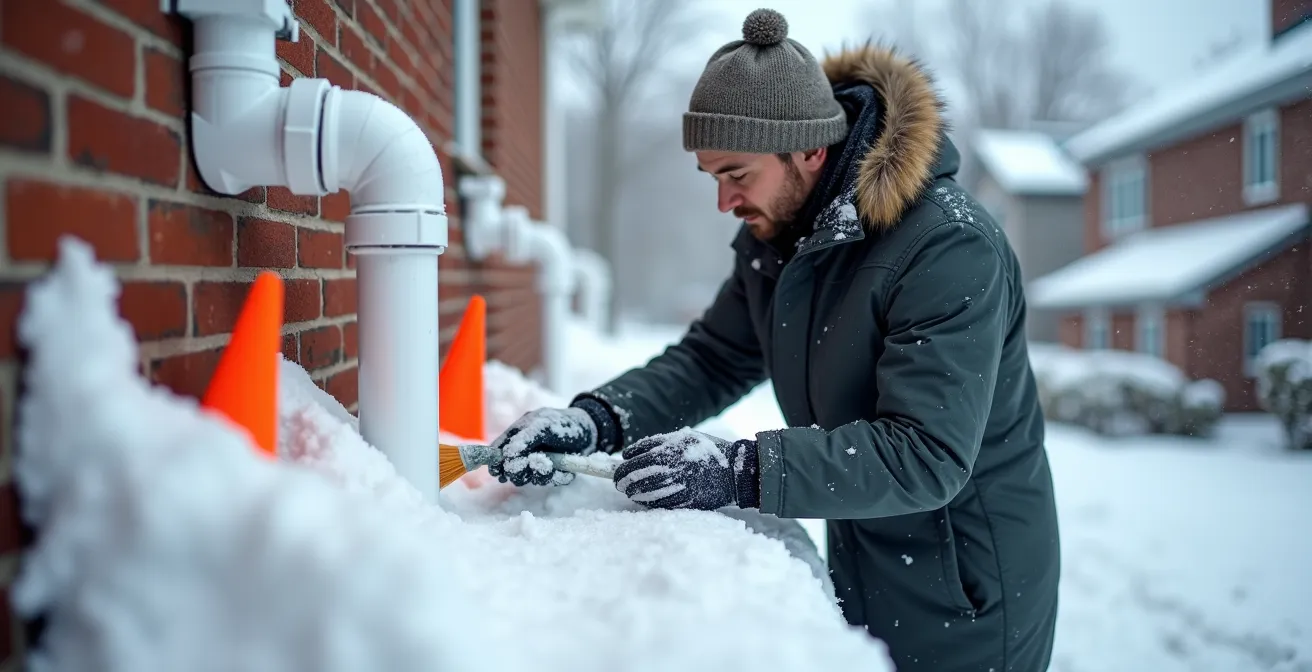
Regularly clearing snow away from your vent terminals is a critical piece of winter maintenance. To prevent recurring issues in areas with high snow accumulation, several professional solutions exist:
- Snorkel Kit: A technician can install vertical extensions on the pipes, raising the intake and exhaust points well above the expected snow line. This is highly effective in high-snowfall regions.
- Heat Tape: Electrically heated cables can be wrapped around the pipes to prevent ice from forming and blocking the vents during freeze-thaw cycles.
- Visual Markers: Simple, brightly coloured flags installed next to the vents can serve as a visual reminder to clear the area after a storm.
Making vent clearance a regular part of your winter routine is a simple action that ensures your high-performance furnace can perform when it matters most.
Bi-Energy: Is It Really Ecological to Keep a Gas Furnace?
In Quebec, where electricity from Hydro-Québec is largely renewable and relatively inexpensive, the idea of keeping a natural gas furnace might seem counterintuitive from an ecological standpoint. However, the bi-energy approach, which pairs an electric heat pump with a high-efficiency gas furnace, represents one of the most intelligent and eco-friendly heating solutions for our climate.
A heat pump works by moving heat, not creating it. It’s incredibly efficient at extracting heat from the outdoor air and moving it inside, even on cool days. But as Quebec temperatures drop towards -12°C or -15°C, its efficiency plummets, and it relies on a far less efficient backup electric resistance element, placing a massive strain on the power grid during peak winter demand. This is where the bi-energy system shines. The system automatically switches from the electric heat pump to the 96% natural gas furnace during these periods of extreme cold. This strategy dramatically reduces peak demand on the electrical grid, which is a major goal for Hydro-Québec.
Financially, this is a powerful combination. You benefit from the heat pump’s low-cost operation for most of the year, while the gas furnace provides reliable, cost-effective heat during the coldest spikes. The overall result is often a lower annual heating cost than either an all-electric or all-gas system. For instance, studies show that upgrading from 80% to 96% AFUE in cold climates saves $300-$500 per year, making the gas portion of the system highly economical.
| Heating System | Annual Cost (2000 sq ft home) | Peak Grid Impact | Carbon Footprint |
|---|---|---|---|
| 100% Electric (Heat Pump) | $1,800-2,200 | Very High | Low (Quebec hydro) |
| Bi-Energy (HP + 96% Gas) | $1,200-1,500 | Low | Very Low |
| 100% Natural Gas (96% AFUE) | $900-1,200 | None | Moderate |
| 100% Natural Gas (80% AFUE) | $1,100-1,500 | None | Higher |
It provides an optimal balance of low running costs, reduced carbon footprint, and decreased strain on the provincial power grid, making it both an economically and ecologically sound choice.
Combustion Test: What Do CO2 and Flue Gases Temperature Reveal About Your Boiler’s State?
An annual maintenance visit for your high-efficiency furnace should always include a combustion analysis. This isn’t just a formality; it’s a “blood test” for your heating system. A technician inserts a probe into the exhaust vent and uses a digital analyzer to measure the precise composition and temperature of the flue gases. This data provides an objective, real-time snapshot of your furnace’s health, safety, and efficiency.
The two most critical readings are the flue gas temperature and the level of carbon monoxide (CO). The temperature confirms that the condensation process is working correctly. As explained by heating experts, this is the core of high-efficiency operation.
In the secondary heat exchanger, additional heat is released from the flue gas and water vapor begins to form. This change of state from water as a vapor to a liquid releases latent heat in the secondary heat exchanger, bringing the furnace to an even higher level of efficiency.
– Trane Technical Documentation, What Is a Condensing Furnace?
If the flue temperature is too high, it means you’re not achieving full condensation and are losing efficiency up the vent. The CO reading is a direct measure of safety. While zero CO is ideal, small amounts are normal, but levels rising above 100 parts per million (ppm) in the flue gas can indicate incomplete combustion, a dirty burner, or a cracked heat exchanger—a potentially lethal situation. Other key metrics like Carbon Dioxide (CO2) and Oxygen (O2) reveal how well the fuel and air are mixing, directly impacting how much money you spend on gas.
A professional combustion report should show CO2 levels between 8-10% for optimal combustion, and O2 levels around 3-5%. Too much oxygen means excess air is being heated and wasted, reducing efficiency. By analyzing these numbers, a technician can make precise adjustments to the gas pressure and air intake to tune your furnace for peak performance, ensuring every dollar spent on fuel is converted into useful heat.
This simple test transforms maintenance from a routine chore into a strategic tune-up that guarantees safety, maximizes savings, and extends the life of your investment.
Key Takeaways
- The 96% efficiency comes from condensing water vapor, which produces a corrosive liquid (condensate) that must be safely drained to prevent basement flooding.
- High-efficiency furnaces require sealed PVC venting because their cool exhaust gases cannot rise naturally and would destroy a traditional metal or masonry chimney.
- Preventive maintenance is not optional; it is the most effective way to avoid costly emergency repairs, ensure safety, and guarantee your furnace operates at its peak efficiency.
Why Does an Emergency Plumber Cost 3x More Than Scheduled Maintenance?
The sticker shock of an emergency heating service call on a frigid night is a painful reality for many homeowners. The cost can easily be three times or more than that of a scheduled annual maintenance visit. This price difference isn’t arbitrary; it reflects the true costs associated with providing immediate, 24/7 service in hazardous conditions. Emergency rates must cover overtime wages as mandated by Quebec’s Normes du travail, priority dispatching, and the operational challenges of travel and work during a winter storm.
More importantly, the cost of the emergency call is often just the beginning. A furnace failure caused by neglect can lead to cascading consequences. The most immediate risk in a Quebec winter is frozen and burst pipes, which can cause thousands of dollars in water damage. The final bill for an emergency furnace repair plus the subsequent plumbing and restoration work can dwarf years’ worth of maintenance fees. The financial case for prevention is overwhelming; a typical scheduled condensate pump cleaning costs around $150, versus an emergency replacement at $500+, not including any resulting water damage.
Ultimately, a 96% efficiency furnace is a sophisticated piece of equipment. Its high performance is directly tied to its condition. The small, predictable cost of an annual tune-up is an investment in reliability, safety, and peace of mind. It ensures all the systems we’ve discussed—condensate drainage, venting, combustion—are working in harmony to deliver the savings and comfort you expect. It’s the single most effective way to protect yourself from the stress, danger, and extreme expense of a mid-winter heating failure.
Don’t wait for a frantic, middle-of-the-night call. To ensure your high-efficiency furnace delivers on its promise of savings and operates safely all winter, schedule a comprehensive combustion analysis and preventive maintenance with a certified gas technician today.