
When winter temperatures in Quebec regularly plunge below -25°C, your heating system becomes more than a convenience—it’s the foundation of your home’s comfort and your family’s well-being. Yet heating technology has evolved dramatically in recent years, presenting homeowners with choices that extend far beyond the traditional oil or electric baseboards that once dominated the residential landscape. Understanding these options, their real-world performance in our demanding climate, and how they interact with your home’s ventilation and air quality systems can seem overwhelming.
This comprehensive resource brings together the essential knowledge you need to make informed decisions about home heating and comfort. Whether you’re planning a system conversion, optimizing an existing setup, or simply trying to understand why your energy bills keep climbing, you’ll find practical explanations of the technologies, performance metrics, and maintenance considerations that matter most in Quebec’s unique environment.
The foundation of any heating decision starts with understanding the fundamental differences between available systems and their suitability for your specific situation. Quebec homeowners today can choose between several distinct heat distribution methods—forced air, hydronic (hot water), radiant floor, and individual heat pumps—each with unique advantages depending on your home’s construction, insulation levels, and usage patterns.
The concept of energy conversion lies at the heart of modern heating efficiency. Traditional systems convert fuel (oil, natural gas, or electricity) directly into heat, with varying degrees of efficiency. A conventional oil furnace might achieve 80-85% efficiency, meaning 15-20% of your fuel literally goes up the chimney. In contrast, condensing systems capture additional heat from combustion gases, pushing efficiency ratings above 95%. Heat pumps operate on an entirely different principle: they move existing heat from outdoor air (even cold air contains usable thermal energy) into your home, achieving the equivalent of 200-350% efficiency under optimal conditions.
When comparing heating systems, consider these critical factors specific to Quebec’s reality:
The performance rating systems you’ll encounter—AFUE for furnaces, HSPF for heat pumps, ENERGY STAR certifications—provide standardized comparisons, but understanding what these numbers mean in practical terms for your monthly heating bills requires looking beyond the labels to real-world applications in our climate.
Heat pumps have revolutionized home heating in Quebec, but their performance characteristics in extreme cold require careful understanding. Unlike southern regions where heat pumps operate year-round without backup, Quebec installations must contend with a fundamental challenge: heat pump capacity decreases as outdoor temperatures drop, precisely when your heating demand increases.
Modern cold-climate heat pumps maintain effective heating down to -25°C or even -30°C, a dramatic improvement over older models that struggled below -10°C. However, “maintaining effectiveness” doesn’t mean maintaining full capacity. A heat pump rated for 12,000 BTU/h at -8°C might deliver only 7,000-8,000 BTU/h at -25°C. This capacity reduction isn’t a defect—it’s thermodynamic reality.
This explains why proper system sizing is crucial. Oversizing a heat pump to meet extreme cold-day demands creates inefficiency during the 90% of winter days when temperatures are more moderate, leading to short cycling and reduced comfort. The optimal approach typically involves sizing the heat pump for temperatures around -15°C to -18°C and relying on supplementary electric resistance heating during the coldest stretches—a compromise that maximizes efficiency while ensuring reliability.
The Coefficient of Performance (COP) tells you how many units of heat you receive for each unit of electricity consumed. A COP of 2.5 means your heat pump delivers 2.5 kW of heat for every 1 kW of electricity—essentially 250% efficiency. Marketing materials often highlight impressive COP values of 3.5 or 4.0, but these figures typically apply at mild temperatures like +7°C.
At -25°C, that same heat pump might achieve a COP of only 1.5-1.8. This is still more efficient than electric baseboard heating (which has a COP of 1.0), but the difference is less dramatic than many homeowners expect. Understanding this performance curve helps set realistic expectations for winter electricity consumption and prevents the disappointment some new heat pump owners experience during their first Quebec winter.
When outdoor temperatures hover between 0°C and -8°C with high humidity, frost accumulates on the outdoor unit’s coil, blocking airflow and reducing efficiency. Heat pumps automatically enter defrost mode periodically, temporarily reversing operation to melt this frost. During these 5-10 minute cycles, the system stops heating your home and may even draw heat from indoors.
Proper outdoor unit positioning minimizes defrost frequency and protects the equipment from our harsh conditions. Elevated mounting prevents snow burial, adequate clearance ensures airflow, and sheltered positioning (while maintaining ventilation) reduces exposure to prevailing winds and blowing snow. Some homeowners install protective covers or wind barriers, but these must be carefully designed to avoid restricting airflow—a common mistake that severely impacts performance.
Quebec’s building codes and energy efficiency programs have progressively tightened home construction standards, creating well-insulated, air-sealed envelopes that dramatically reduce heating costs. However, this tightness creates a new challenge: without adequate ventilation, indoor air quality deteriorates rapidly from humidity, cooking emissions, off-gassing from materials, and simply the CO₂ from occupants breathing.
Mechanical ventilation has shifted from optional to essential in tight homes. Heat Recovery Ventilators (HRV) and Energy Recovery Ventilators (ERV) both exchange stale indoor air with fresh outdoor air while recovering much of the heat that would otherwise be lost. The critical difference lies in moisture handling.
HRVs transfer only heat between airstreams, making them ideal for Quebec homes where winter humidity levels often run too high due to cooking, showers, and indoor plants. An HRV exhausts excess moisture while preheating incoming fresh air, typically recovering 60-95% of the heat depending on model efficiency and outdoor temperatures.
ERVs transfer both heat and moisture, which can be advantageous in extremely dry winter conditions or in homes with humidity levels that are too low. However, for most Quebec applications, HRVs provide the better solution by helping manage the moisture accumulation that leads to window condensation and potential mold issues in tight homes.
Even the most sophisticated ventilation system fails to deliver healthy air if poorly maintained. Filter replacement every three months and core cleaning annually are non-negotiable maintenance tasks. A clogged HRV core can reduce efficiency from 85% to below 50%, essentially throwing heat out the window while bringing in inadequately tempered fresh air.
Proper airflow balancing ensures the system exchanges the right volume of air for your home’s size—typically 0.3-0.5 air changes per hour. Unbalanced systems create pressure imbalances that can cause door-closing issues, drafts, and even backdrafting of combustion appliances. Many homeowners overlook this crucial step, assuming factory settings suit all homes equally, but ductwork length, configuration, and static pressure variations require customized balancing for optimal performance.
For homes relying on natural gas or propane, condensing technology represents the efficiency frontier. These systems extract so much heat from combustion gases that water vapor condenses within the heat exchanger—hence the name. This phase change releases additional thermal energy, pushing efficiency ratings to 95-98% compared to 80-85% for conventional furnaces and boilers.
The condensation process creates a practical challenge: the acidic condensate requires proper drainage, typically to a floor drain or condensate pump. In Quebec’s cold climates, any drainage line passing through unheated spaces requires careful insulation and sometimes heat tracing to prevent freezing. Annual maintenance should include cleaning the condensate trap and verifying drainage function—blockages can trigger safety shutoffs and system failure during the coldest weather.
Another consideration involves venting. Condensing systems produce such cool exhaust gases that traditional chimneys create condensation problems and poor draft. Instead, these systems use PVC or ABS plastic piping vented horizontally through an exterior wall. While this simplifies installation in some situations, it creates visible exterior vents that require protection from snow accumulation and proper termination heights to prevent intake/exhaust vent snow blocking.
Modern condensing systems incorporate modulating burners that adjust flame intensity to match heating demand precisely, rather than simply cycling on and off. This modulation improves comfort by eliminating temperature swings, reduces wear from constant starts and stops, and maintains peak efficiency across a wider range of operating conditions—particularly valuable during Quebec’s variable spring and fall weather when heating demands fluctuate throughout the day.
Oil heating systems, once dominant in rural Quebec areas beyond natural gas distribution networks, face an uncertain future. Environmental concerns, price volatility, and advancing alternatives have prompted many homeowners to consider conversion. However, this transition involves more than simply installing new heating equipment—it requires addressing the existing oil infrastructure responsibly.
Underground storage tanks present particular concerns as they age. Corrosion can lead to leaks that contaminate soil and groundwater, creating environmental liabilities costing tens of thousands of dollars to remediate. Current regulations require inspection and eventual removal of abandoned tanks. Even if you convert to another heating source, you cannot simply leave an old oil tank in place indefinitely.
The decommissioning process typically involves several stages:
For homeowners maintaining oil systems until conversion becomes feasible, diligent maintenance extends equipment life and reduces failure risks. Annual professional service, periodic tank inspections, and fuel line monitoring help ensure safe operation. Understanding your current heating costs per kilowatt-hour allows accurate comparison with alternative systems—many homeowners are surprised to find their actual oil heating costs significantly exceed their estimates when calculated comprehensively.
Radiant floor heating delivers warmth through thermal radiation and conduction rather than heating air, creating a fundamentally different comfort experience. The gentle, even heat rising from below eliminates cold spots and drafts while allowing slightly lower thermostat settings—people feel comfortable at 19-20°C with radiant floors versus 21-22°C with forced air systems.
Installation approaches divide into two main categories. Wet systems embed tubing in concrete slabs, providing excellent thermal mass that smooths temperature fluctuations and stores heat—particularly advantageous when paired with time-of-use electricity rates. Dry systems install tubing beneath existing flooring or within specially designed subfloor panels, making them feasible for renovations without major floor height changes.
Flooring selection significantly impacts performance. Tile and stone provide the best thermal conductivity and durability, though their hardness isn’t everyone’s preference. Engineered hardwood specifically rated for radiant applications offers good performance with proper installation. Thick carpets and heavy underlayments act as insulators, blocking heat transfer and reducing efficiency—if you want radiant heating, plan your flooring choices accordingly.
The thermal inertia of radiant systems requires adjusted expectations. Unlike forced air that responds within minutes, radiant floors may take hours to reach target temperatures from a cold start. This slow response makes them poorly suited to setback thermostats—they work best maintained at consistent temperatures. However, this same thermal mass provides remarkable stability once at temperature, maintaining comfort even during temporary heating interruptions.
Even the most efficient heating system underperforms if improperly sized, poorly distributed, or inadequately maintained. System sizing requires accurate heat loss calculations accounting for your home’s insulation levels, air sealing quality, window performance, and orientation. The common practice of using rules of thumb or simply matching previous equipment capacity perpetuates inefficiencies and compromises comfort.
Zoned heating systems allow different temperature settings for various home areas, reducing energy waste in unused spaces while improving comfort in occupied rooms. Modern thermostats and zone controllers make this practical even in existing systems. A well-designed zoning strategy considers usage patterns, solar gain variations, and architectural features—understanding that the south-facing master bedroom and north-facing guest room have completely different heating needs.
Regular maintenance extends equipment life and maintains efficiency. Annual professional service should include:
Between professional visits, homeowners should monitor system behavior. Unusual noises, longer run times, uneven heating, or rising energy consumption often signal developing problems that cost less to address early. Keeping maintenance records and energy bills creates a baseline for spotting concerning trends before they become expensive emergencies.
Home heating in Quebec’s demanding climate requires understanding the interplay between equipment choice, proper sizing, installation quality, and ongoing maintenance. The systems you select and how you operate them fundamentally shape your comfort, energy costs, and environmental impact for years to come. By grasping the principles behind these technologies—from heat pump thermodynamics to ventilation balancing—you gain the knowledge needed to ask the right questions, evaluate contractor proposals critically, and make decisions aligned with your priorities and budget. The investment in understanding these systems pays dividends in comfort, efficiency, and peace of mind throughout our long heating season.
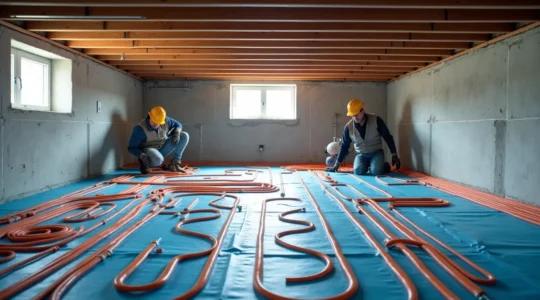
For a Quebec homeowner, radiant floor heating is worth the investment only if you approach it as ‘thermal resilience engineering’, not just a comfort upgrade. Hydronic systems embedded in concrete create a ‘thermal battery’, providing stable, efficient heat that outsmarts…
Read more
Your insurer’s 20-year rule isn’t just a deadline; it’s a clear warning about a significant financial and legal liability sitting in your basement. The primary danger is invisible internal corrosion, a silent process that can lead to catastrophic leaks without…
Read more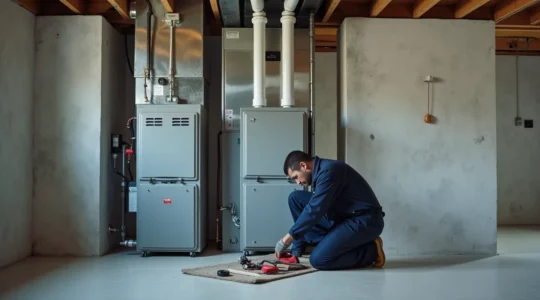
Your old furnace wastes up to 20% of your gas money up the chimney. A 96% efficiency furnace doesn’t just plug that leak; it fundamentally changes how heat is made through condensation. This guide reveals that true savings come not…
Read more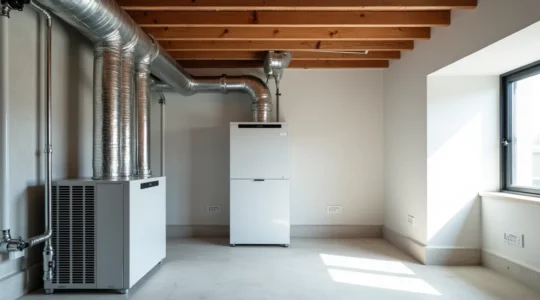
That persistent condensation on your new home’s windows isn’t a sign of faulty windows; it’s a symptom that your airtight home can’t breathe. Under Quebec’s Novoclimat standards, an HRV isn’t just an appliance—it’s the mandatory respiratory system of your house….
Read more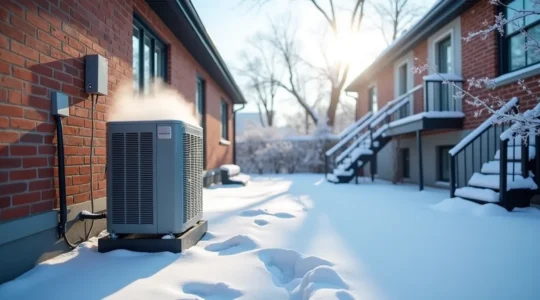
Contrary to marketing claims, a heat pump’s advertised COP is almost meaningless for a Montreal winter at -30°C. True performance is hidden in technical data sheets revealing output at -15°C and -25°C, not in the standard ratings. Quebec-specific installation errors—like…
Read more
For a Quebec homebuyer, the best heating choice isn’t gas versus electric; it’s the system that delivers the highest degree of calibrated comfort and long-term value. The performance of forced-air systems hinges on air quality management, including proper filtration and…
Read more
The optimal heating system for a 1980s Quebec bungalow is not the one with the highest efficiency rating, but the one that is correctly sized and integrated into the home’s complete thermal envelope, maximizing long-term return on investment (ROI). A…
Read more