
Quebec homeowners face a unique energy landscape. With some of the coldest winters in North America and electricity as the primary heating source for most homes, understanding energy efficiency isn’t just about environmental responsibility—it’s about maintaining comfort while keeping utility costs manageable. The good news? Quebec’s abundance of hydroelectric power creates opportunities for savings that simply don’t exist elsewhere, particularly for those who know how to optimize their consumption patterns.
Energy efficiency in the context of plumbing, heating, and building systems goes far beyond simply turning down the thermostat. It encompasses everything from the thermal performance of your home’s envelope to the efficiency of your circulator pumps, from government subsidy programs to the strategic use of Hydro-Quebec’s rate structures. This comprehensive overview connects these elements, giving you a foundation to make informed decisions about where to invest your time, attention, and resources for maximum impact.
Before making any improvements, you need to understand where your energy actually goes. Many Quebec homeowners are surprised to discover that their assumptions about energy use don’t match reality. That constant hum from your decades-old dehumidifier in the basement? It might be consuming more electricity than your refrigerator.
The term “phantom loads” or “energy vampires” refers to devices that consume electricity even when not actively in use. In Quebec homes, common culprits include older set-top boxes, gaming consoles in standby mode, and inefficient circulator pumps that run continuously regardless of actual heating demand. A simple plug-in power meter, available at most hardware stores for under twenty dollars, can reveal consumption patterns that would otherwise remain invisible on your monthly Hydro-Quebec bill.
Quebec’s dramatic seasonal temperature swings create equally dramatic variations in energy use. A typical home might use three to four times more electricity in January than in July. Understanding this pattern helps you prioritize improvements. Investments that reduce heating demand—better insulation, air sealing, or optimized heating controls—deliver returns for roughly six months of every year, making them particularly cost-effective in our climate.
Quebec offers some of the most generous energy efficiency incentive programs in Canada, yet many homeowners leave money on the table simply because they don’t know what’s available or how to access it. These programs can transform expensive renovations into surprisingly affordable investments.
Most significant rebate programs require a pre-renovation energy assessment by a certified advisor. Think of this as a diagnostic appointment for your home. The advisor uses specialized equipment, including thermal imaging cameras and blower door tests, to identify exactly where your home is losing energy. This assessment serves two purposes: it qualifies you for rebates and provides a prioritized roadmap for improvements based on your specific home’s weaknesses.
Not all improvements qualify for rebates, and the devil is in the details. Insulation must meet minimum R-value thresholds. Windows must carry specific ENERGY STAR certifications appropriate for Quebec’s climate zone. Heat pumps must appear on approved product lists. Working with contractors familiar with these requirements prevents the frustration of completing work only to discover it doesn’t qualify for the expected rebate.
Even with substantial rebates, upfront costs can be significant. Several options exist for Quebec homeowners:
Hydro-Quebec’s rate structure includes features that can dramatically impact your costs, particularly for homes with high consumption or those considering the addition of electric vehicle charging or significant new electrical loads.
The dual-energy (DT) rate offers lower electricity prices for customers who can shift to an alternative heating source during the roughly 100 coldest hours of winter when grid demand peaks. For homes with compatible systems—typically those with both electric and fossil fuel heating capability—this can translate to substantial annual savings. However, the equipment requirements are specific, and the environmental implications of increased fossil fuel use deserve consideration.
Hydro-Quebec’s residential rate structure includes tiered pricing that increases after you exceed specific consumption thresholds. Understanding where your household falls relative to these thresholds helps you evaluate whether efficiency improvements will bump you into a lower pricing tier, amplifying your savings beyond simple kilowatt-hour reduction.
If your heating system is the engine keeping your home comfortable, the building envelope is the insulated container that determines how hard that engine must work. In Quebec’s climate, envelope performance is paramount.
Your home’s envelope includes every surface separating conditioned interior space from the outside: walls, ceiling, foundation, windows, doors, and all the connections between these elements. Weakness in any one area compromises the whole system. It’s like having a high-performance winter coat with excellent insulation but a broken zipper—the quality of the insulation becomes almost irrelevant.
Before adding insulation, address air leakage. Air carries moisture and energy far more effectively than conduction through building materials. Common leakage points in Quebec homes include:
When it comes to insulation materials, Quebec homeowners typically choose between spray polyurethane foam and cellulose. Polyurethane offers superior R-value per inch and simultaneously air seals, making it ideal for challenging areas like rim joists or where space is limited. Cellulose, made from recycled paper, costs less and works beautifully in attics where depth isn’t constrained. Neither choice is universally “better”—the right material depends on the specific application.
Thermal bridges are continuous paths of conductive material that bypass insulation, creating localized cold spots and energy loss. Steel support beams, concrete foundation elements, and even wooden studs create thermal bridges. While you can’t eliminate structural thermal bridges, you can mitigate them through techniques like exterior insulation layers or strategic placement of continuous insulation to interrupt the conductive path.
Windows represent a compromise—we need them for light and views, but they’re always the weakest thermal element in your envelope. For Quebec homes, triple-pane windows with low-E coatings and argon or krypton gas fills offer the best performance. Strategic window placement can also leverage passive solar gains, using winter sun to contribute to heating while overhangs prevent summer overheating.
Once you’ve optimized your envelope to reduce heating demand, ensuring your heating system operates efficiently becomes the next priority. Modern hydronic heating systems offer sophisticated control options that earlier generations couldn’t access.
The heating curve defines the relationship between outdoor temperature and the water temperature your boiler or heat source produces. A properly adjusted curve provides just enough heat to maintain comfort without overshooting, reducing cycling and improving efficiency. Think of it as cruise control for your heating system—maintaining steady state rather than repeatedly accelerating and braking.
Nighttime temperature setbacks can reduce consumption, but the approach requires nuance in Quebec’s climate. Deep setbacks in poorly insulated homes can lead to extended recovery periods that consume more energy than they save. In well-insulated homes, however, modest setbacks of 2-3 degrees Celsius during sleeping hours offer genuine savings without comfort compromise.
Adjusting ventilation registers and balancing hydronic distribution ensures each area of your home receives appropriate heating without overheating other zones. This is particularly important in multi-level homes where natural stratification already works against even temperature distribution.
Greywater heat recovery systems capture thermal energy from shower and bath drain water, preheating incoming cold water before it reaches your water heater. In a typical Quebec household, this can reduce water heating energy consumption by 25-40%, with the system paying for itself within several years through reduced electricity use.
If you have hydronic heating, your circulator pumps move hot water through your distribution system. Older circulators run at constant speed regardless of demand, consuming hundreds of kilowatt-hours annually. Modern ECM circulators with Delta-P (differential pressure) control modulate their speed based on system demand, reducing electricity consumption by 60-80% while also eliminating the characteristic humming noise of older units. Most can be retrofitted into existing systems without piping modifications, making them among the most cost-effective upgrades available.
Faced with numerous potential improvements, how do you prioritize? Start with low-cost, high-impact measures: air sealing, programmable thermostats, and identifying energy vampires. These investments typically pay back within a year or less. Next, address envelope improvements in order of severity as identified by your energy assessment—you’ll get better guidance from measured data than from general assumptions.
Major system replacements—boilers, water heaters, or heat pumps—should align with natural end-of-life timing when possible, but don’t limp along with a failing system just to squeeze out another year. The efficiency improvements in modern equipment are substantial, and the reliability matters for Quebec winters where heating isn’t optional.
Energy efficiency isn’t a destination but an ongoing process of optimization. As your home’s performance improves and your understanding deepens, new opportunities become apparent. The combination of Quebec’s climate, our electricity-based heating paradigm, and available incentive programs creates a compelling case for systematic efficiency improvements that deliver comfort, cost savings, and reduced environmental impact simultaneously.
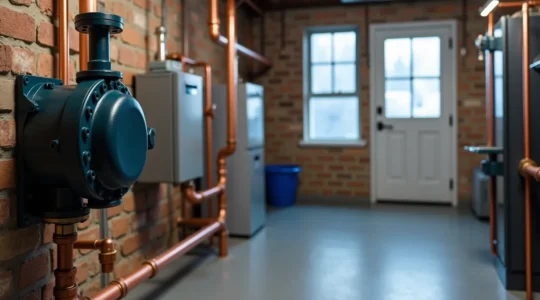
Your old, single-speed circulator pump is likely the secret energy hog and noise-maker in your heating system, silently inflating your Hydro-Québec bill. An ECM pump actively cuts its own electricity use by up to 85% by intelligently adapting its speed…
Read more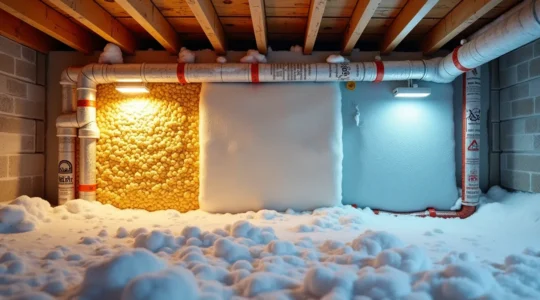
In summary: Solving frozen pipes requires treating the crawl space as a complete system, not just insulating the pipes. Air sealing, especially at the rim joists, is more critical than simply adding high R-value insulation. Closed-cell spray foam is superior…
Read more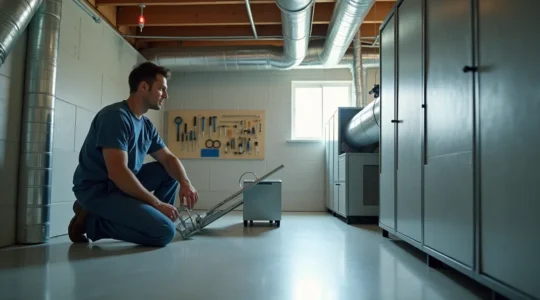
In summary: Achieving even temperature is not about quick fixes but about managing your house as a complete thermal ecosystem. Strategic, seasonal adjustment of your duct dampers is the most powerful and overlooked tool at your disposal. Understanding your system’s…
Read more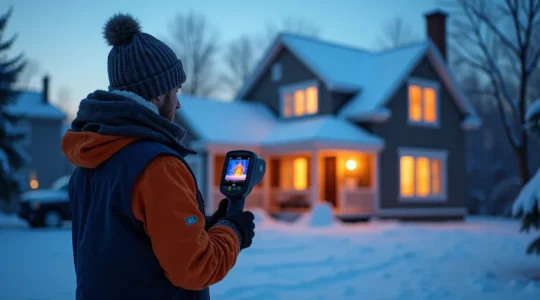
The biggest energy savings in your Quebec home often don’t come from a new furnace, but from controlling invisible airflows within the building envelope. Uncontrolled air leakage can be responsible for over a third of your home’s total heat loss,…
Read more
For most Quebec homeowners with a fossil fuel furnace, switching to the dual-energy rate offers significant savings, but only if the system is installed and managed correctly. It works by leveraging an efficient heat pump for mild cold and your…
Read more
In summary: Start with a mandatory Rénoclimat energy evaluation before any work begins; this is your strategic roadmap for all grants. Focus on high-return upgrades like cold-climate heat pumps, which offer the best grant amount per dollar spent. Verify the…
Read more
In summary: Your high bill isn’t just about the thermostat. The real, substantial savings are found in a systems-based approach to your home’s energy use. Eliminating “phantom loads” from electronics that are turned off but still drawing power is the…
Read more